
What Is an Oushak Rug? Look, Weave, Sizes and Care
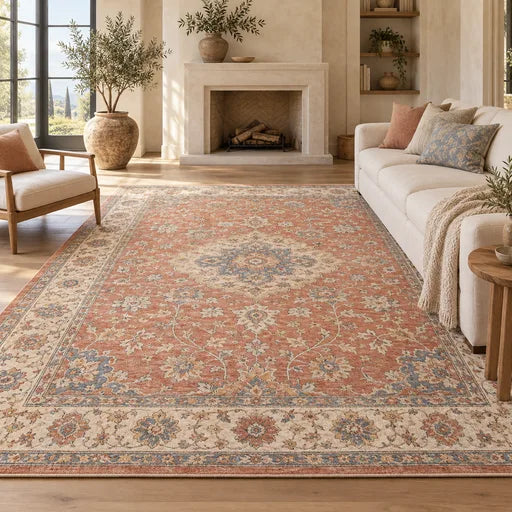
Quick answer: An Oushak rug is a Turkish rug woven in or in the style of Uşak, a town in western Anatolia. Oushaks are usually hand-knotted in thick wool, with large open medallions or floral designs and soft, muted colours such as terracotta, sage, gold and faded blue. The look is relaxed and airy rather than dense.
What is an Oushak rug, in plain terms?
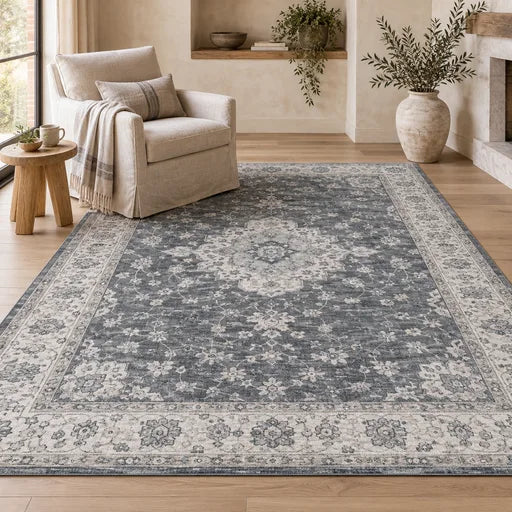
An Oushak rug is a Turkish rug woven in or in the style of Uşak, a town in western Anatolia that has been a rug-making centre for centuries. Old Oushak carpets are known for large, open designs, generous space between motifs and a soft, muted palette. Most are hand-knotted in wool, which is why they feel thick and springy underfoot.
The name is used in two ways. Strictly, it means a rug from the Uşak area. In the trade, "Oushak" has also become a style word for any rug with that relaxed, faded-looking, low-contrast character. When you shop, it helps to know which meaning a seller intends. We use it as a description of look and weave tradition, and we say so in each listing.
What does an Oushak rug look like?
Once you have seen a few, they are easy to spot. These are the features we look for:
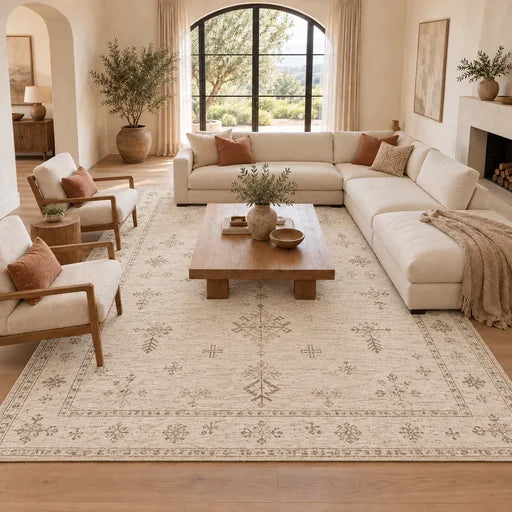
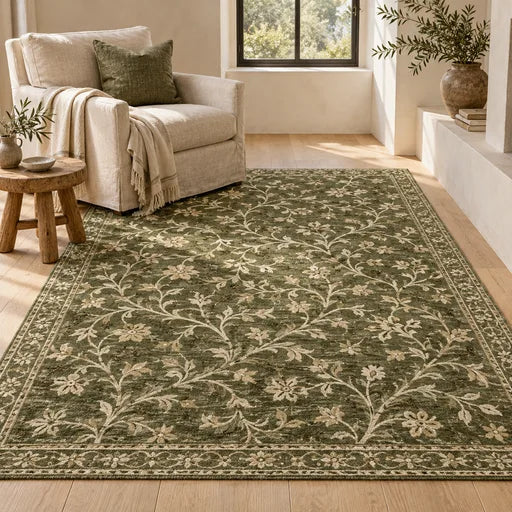
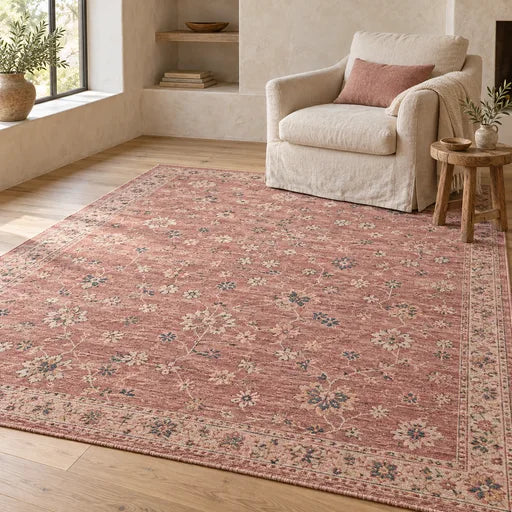
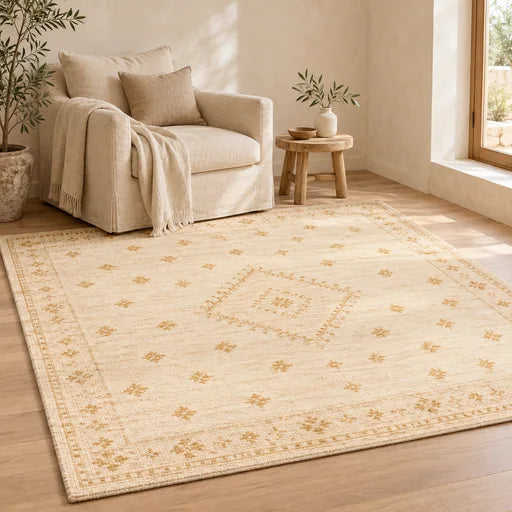
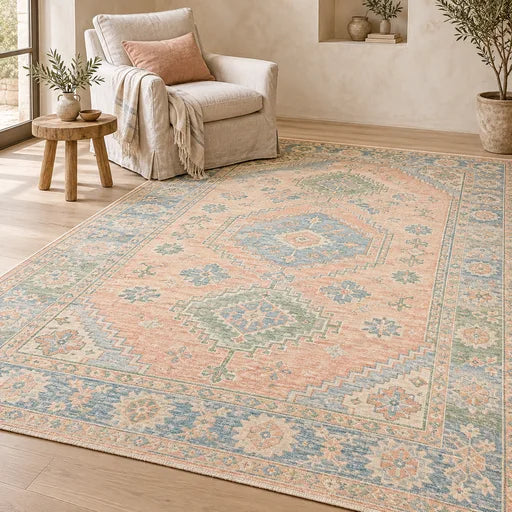
- Open fields. Large medallions, lattice or scattered floral forms floating on a plain ground, rather than a dense, all-over pattern.
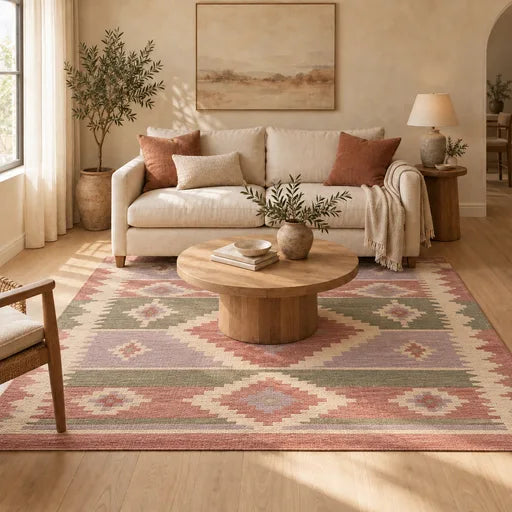
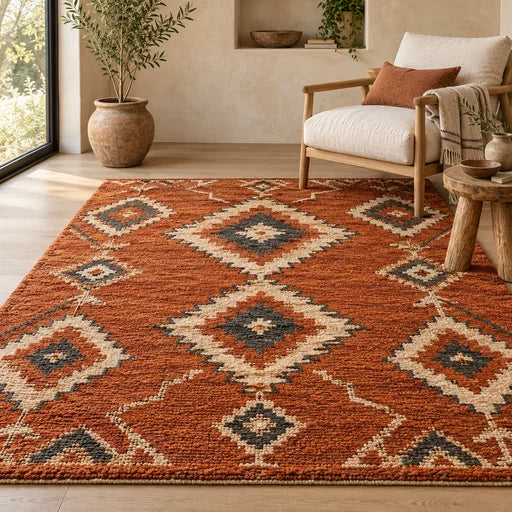
- Soft colour. Terracotta, faded red, apricot, sage and gold, soft blue, ivory and camel. Strong black outlines are rare.
- Thick wool pile. A lustrous, slightly coarse wool that is often cut longer than on finer city rugs.
- Loose, bold drawing. The motifs are big and slightly irregular, because they were drawn by eye on the loom and not from a graph.
- Gentle fading. Many vintage pieces have a worn-in surface and slight abrash, the visible bands of tone where a new batch of dyed yarn was started.
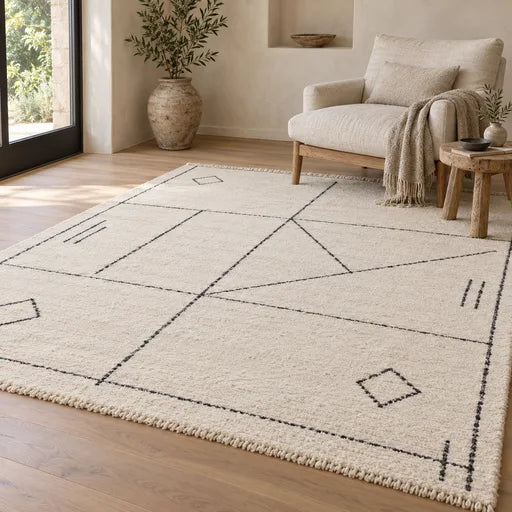
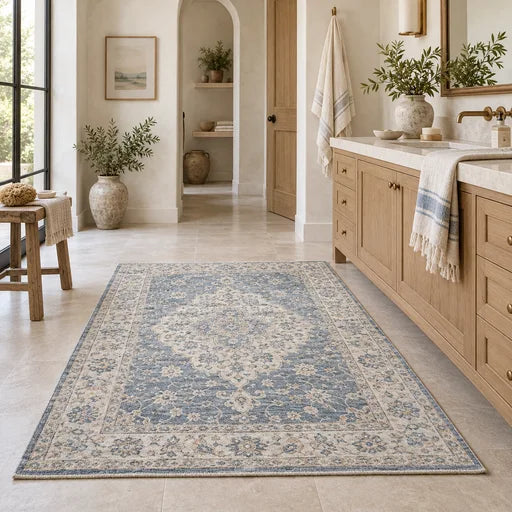
Some Oushaks are also pale on purpose. Those lighter, washed rugs are often called "pale" or "overdyed" Oushak. Our guide to overdyed Turkish carpets explains how that treatment works and how to recognise it.
How is an Oushak different from other Turkish rugs?
Turkey has many rug-weaving regions, and each has its own habits. Konya rugs tend to be geometric and bright. Kayseri pieces are finer and more formal. Hereke is known for silk and very high knot density. Oushak sits at the other end from Hereke: bigger drawing, thicker wool, softer colour. Our guide to Anatolian rug regions compares them side by side.
A quick comparison:
| Feature | Oushak | Konya | Kayseri |
|---|---|---|---|
| Drawing | Large, open, loose | Geometric, tribal | Formal, detailed |
| Colour | Soft, muted, earthy | Bold, high contrast | Rich, often with a sheen |
| Pile | Thick, springy wool | Medium to thick wool | Finer, denser |
| Typical feel | Relaxed, airy | Rustic, graphic | Classic, refined |
If you are also wondering how Oushaks compare with the wider "Oriental" category, we wrote a separate piece on Oushak vs Oriental rugs.
Are Oushak rugs hand-knotted?
Traditional Oushak carpets are hand-knotted in wool on a wool or cotton foundation. You can check this on the back of a rug. On a hand-knotted piece you will see the pattern clearly mirrored on the reverse, with slightly uneven rows of small knots. Machine-made rugs have a very regular back and often a glued or stitched backing. We go through the checks in our guide to identifying an authentic hand-knotted Turkish rug.
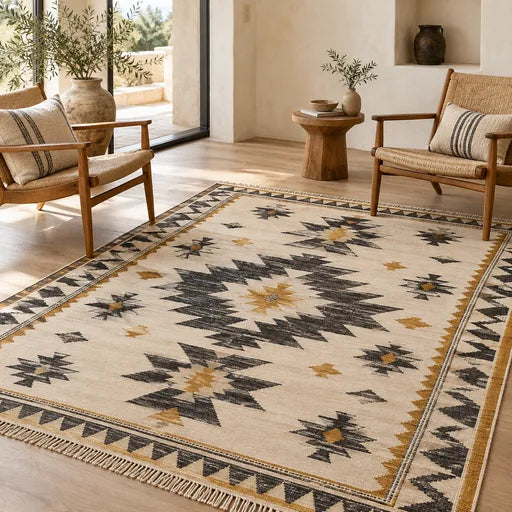
Not every rug sold as "Oushak" is knotted, however. Some flat-woven kilims are described as Oushak-style because of their colours. That is not a problem as long as the listing says what it is. Every piece we sell is a hand-made vintage or antique Turkish rug or kilim, and each listing states the weave type.
What sizes do Oushak rugs come in?
Because they are made one at a time, sizes vary a lot. The table shows the ranges we handle most often, with a typical use for each.
| Size (ft) | Size (cm) | Best use |
|---|---|---|
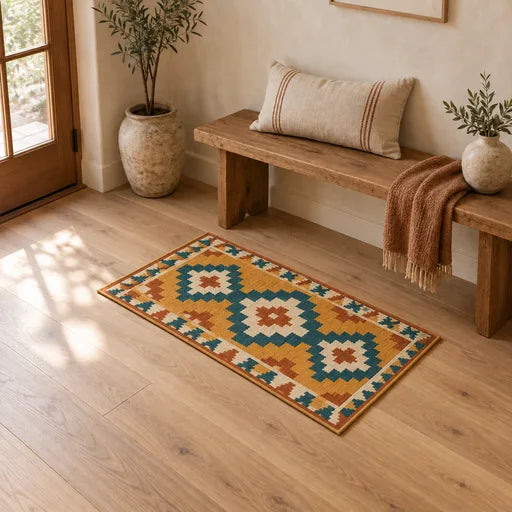
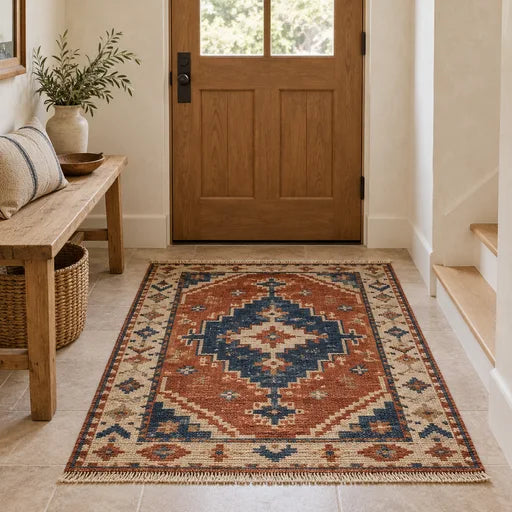
| 2 x 3 | about 60 x 90 | Entry, bedside, layering |
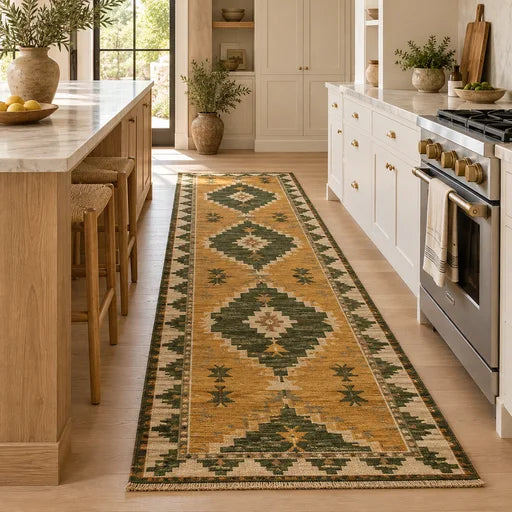
| 3 x 5 | about 90 x 150 | Kitchen, small hallway |
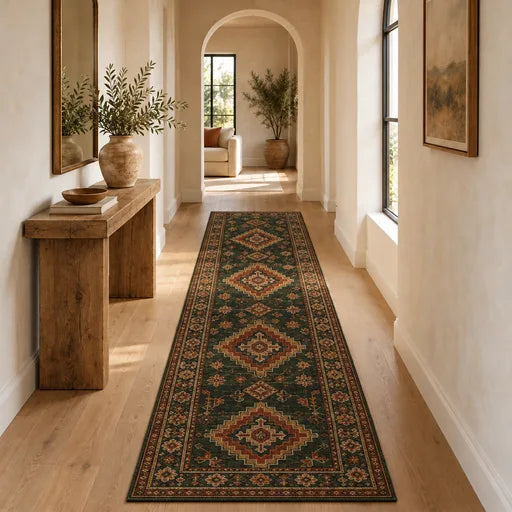
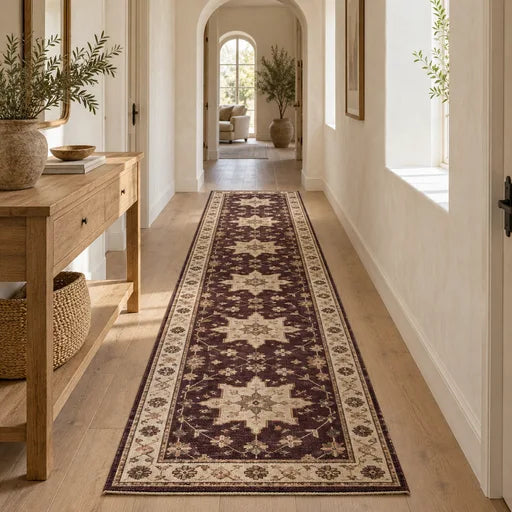
| 2.5 x 10 | about 76 x 305 | Hallway runner |
| 5 x 8 | about 150 x 240 | Bedroom, office, small living room |
| 8 x 10 | about 240 x 305 | Living or dining room |
| 9 x 12 | about 275 x 365 | Large living room, open plan |
Not all of these are in stock at any moment, since each rug is unique. You can browse the current Oushak rugs and filter by size on the collection page. If you need a runner, see runner rugs.
How do you care for an Oushak rug?
Wool is naturally forgiving, and the care is simple:
- Vacuum with suction only, or with the beater bar switched off, once a week. Never run it over the fringe.
- Rotate the rug 180 degrees every six months so wear and sun fading stay even.
- Blot spills straight away with a clean cloth. Do not rub.
- Use a breathable rug pad to stop slipping and to protect the back of the rug.
- Have it washed by a rug specialist every few years, not in a home washing machine.
Our full routine is in how to care for a vintage wool rug.
Where do Oushak rugs work best?
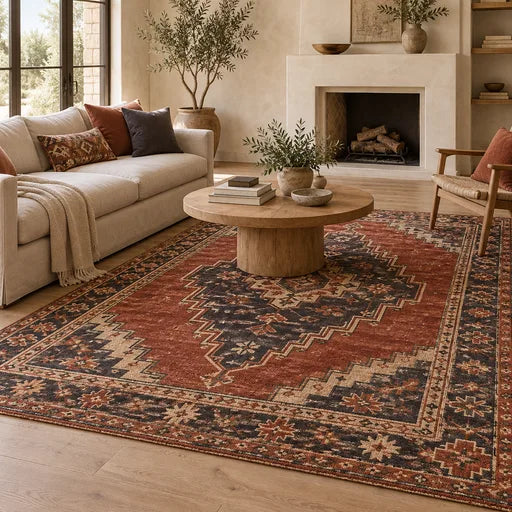
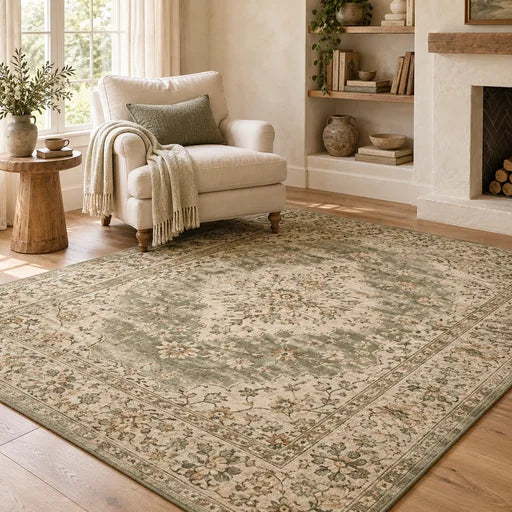
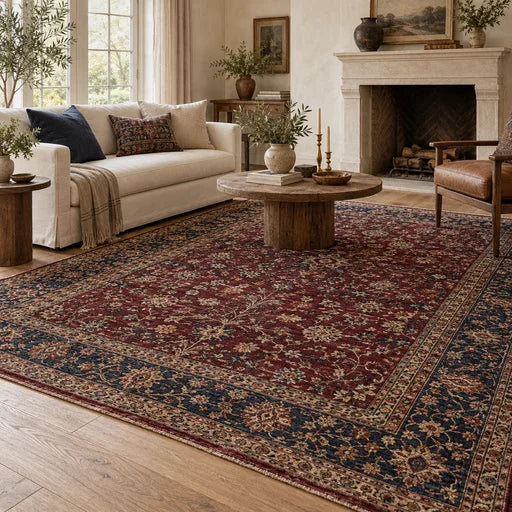
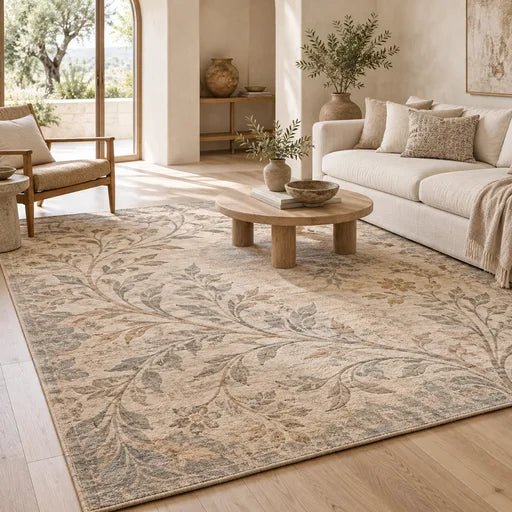
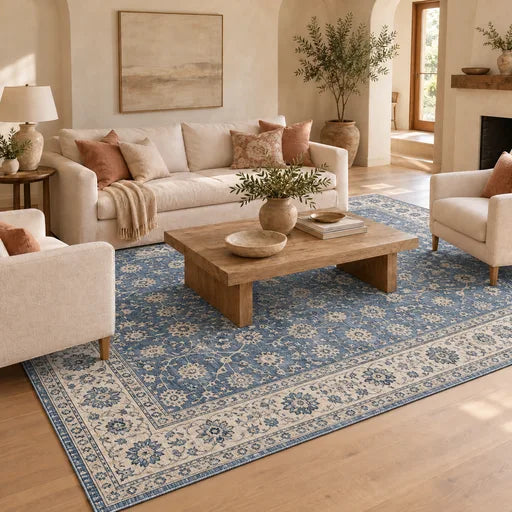
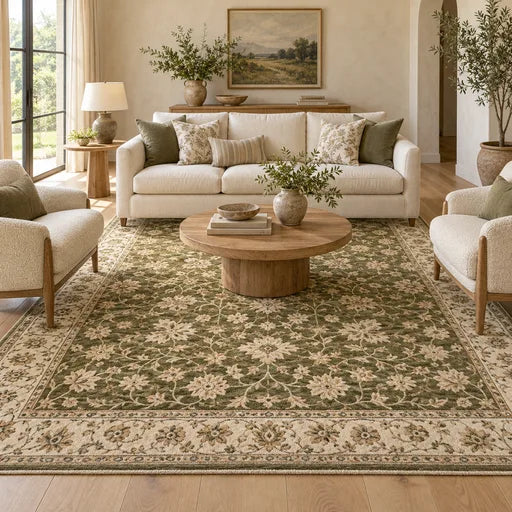
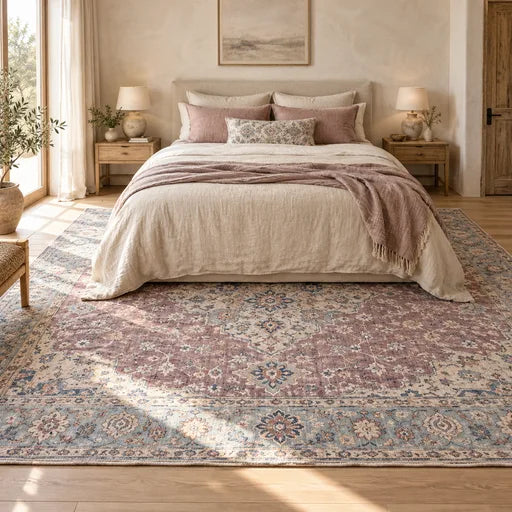
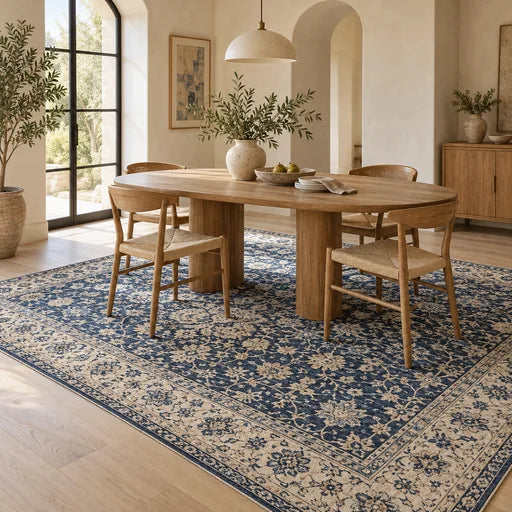
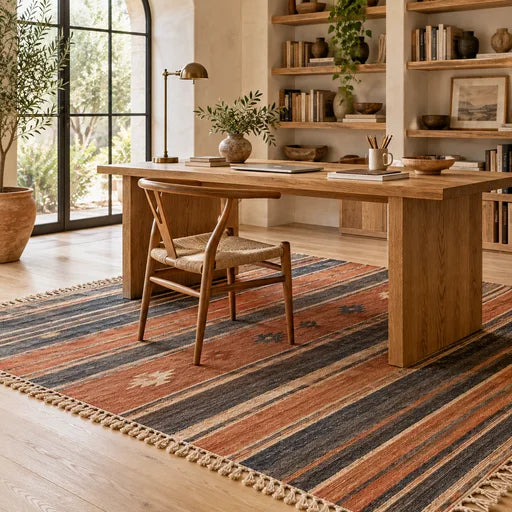
Their open drawing and soft palette suit rooms that need warmth without busy pattern. They sit well in living rooms with plain sofas, in bedrooms where you want a calm base, and in dining rooms where the field of the rug can hold the table and chairs. Because the colours are muted, they also pair easily with both wood and painted walls.
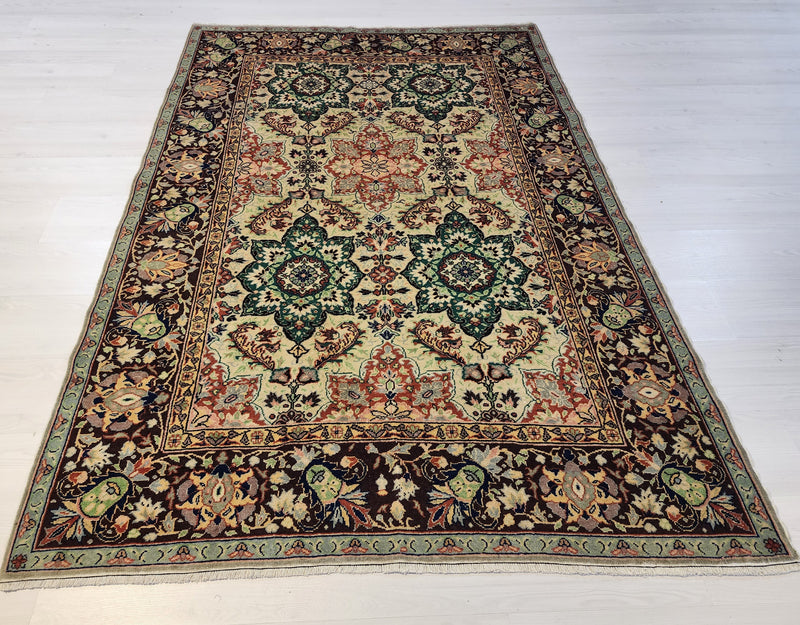
A good example from the current collection is Eirene, a vintage Oushak wool area rug. It shows the soft palette and open field described above.
What should you check before buying one?
Ask for clear photos of the front and back, the exact size in feet and centimetres, and the weave type. Look for even wear and no large holes or dry rot. Read the condition notes, and check the return policy. Ours is 14 days, with free worldwide shipping and import duties pre-paid for the US, UK, EU and Canada. Our checklist for buying a vintage rug online covers the rest.
Pieces from our collection
Every piece below is one of a kind and in stock today:
- Eirene — Vintage Oushak Wool Large Area Rug
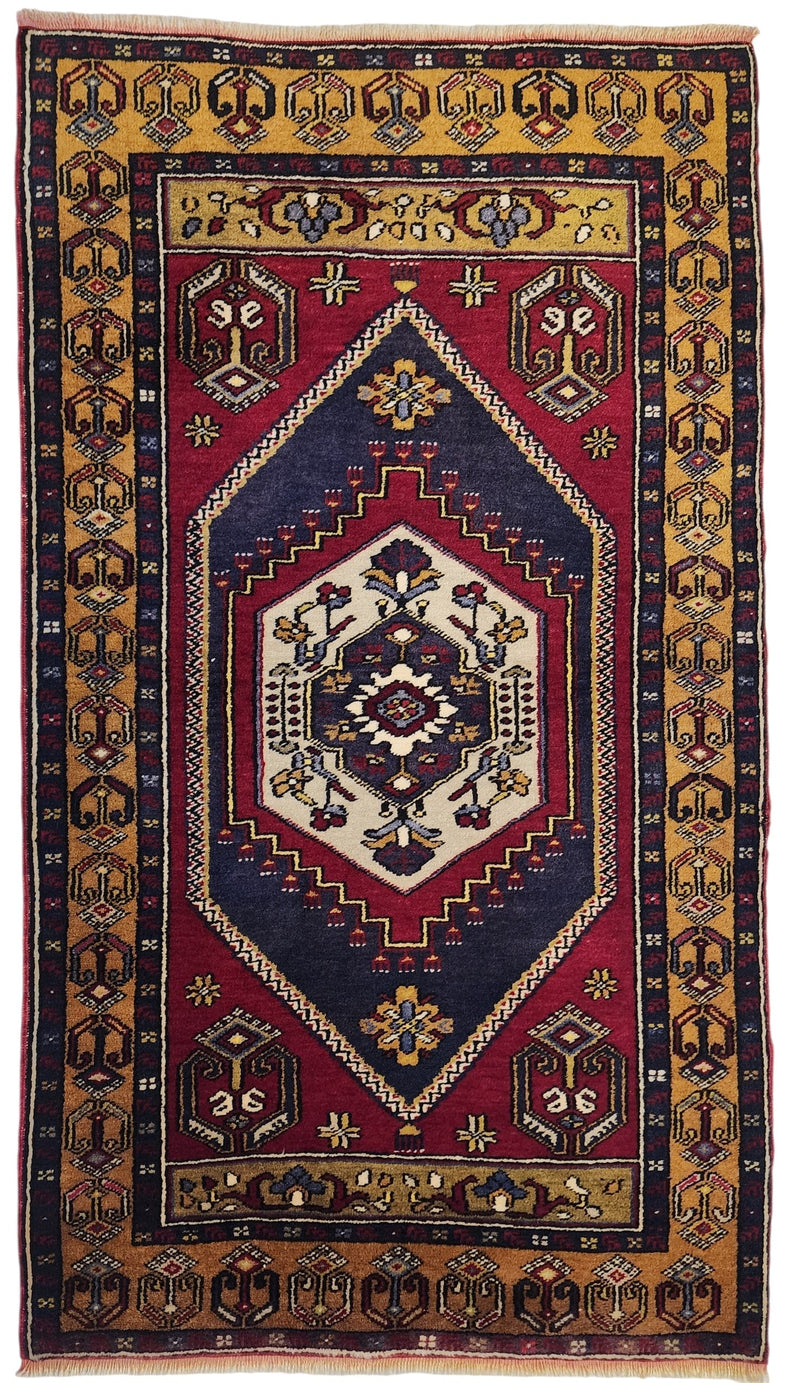
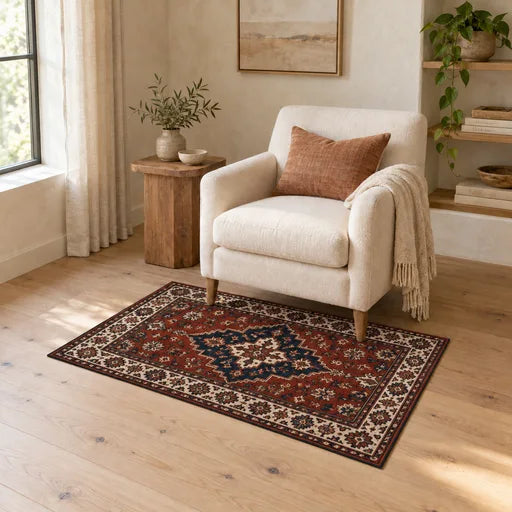
- Klio — Vintage Oushak Wool Small Rug
- Astynome — Antique Oushak Wool Runner Rug
Frequently asked questions
Is Oushak the same as Uşak?
Yes. Uşak is the Turkish spelling of the western Anatolian town, and Oushak is the common English spelling used by rug dealers. Both refer to the same weaving centre and the same family of designs, though 'Oushak' is also used loosely as a style name for soft-coloured rugs.
Are Oushak rugs good for high-traffic areas?
A hand-knotted wool Oushak is durable, since wool is resilient and the pile is fairly thick. It works in living rooms and hallways. Use a rug pad, vacuum regularly and rotate the rug now and then. Very pale or very fine pieces are better in lower-traffic spots such as bedrooms.
Do Oushak rugs go with modern interiors?
Yes. The open fields and soft colours act as a neutral base, so they pair well with clean-lined furniture, plain walls and natural materials. Many people use them to add warmth and texture to a minimal room without introducing a strong pattern.
How can I tell a real Oushak from a copy?
Turn the rug over. A hand-knotted piece shows the pattern sharply on the back with slightly uneven rows of knots, and the pile is wool. A machine copy has a very regular back, often with a latex or fabric backing, and the pile may be synthetic.
Written by the team at Heritage Nomadic Art Gallery in Sultanahmet, Istanbul, the gallery behind TurkishRug.com, where every rug and pillow is chosen, washed and photographed by hand. Last updated October 23, 2026.