How to Choose the Right Rug Size for Every Room
In two decades of selling rugs, the single most common regret we hear from clients is: "I should have gotten the bigger one." A rug that is one size too small does not just look wrong — it makes the room feel wrong. The furniture floats. The walking paths feel awkward. The whole space lacks anchor.
This is the guide we give every client before they buy. It is not glamorous — it is just measurements and common sense — but if you read this once and shop with it in mind, you will save yourself the cost of a returned rug.
The universal rule: bigger than you think
Almost everyone, on their first rug purchase, picks a size that is too small. The instinct is to choose a rug that fits in the middle of the room without touching the furniture. This is wrong.
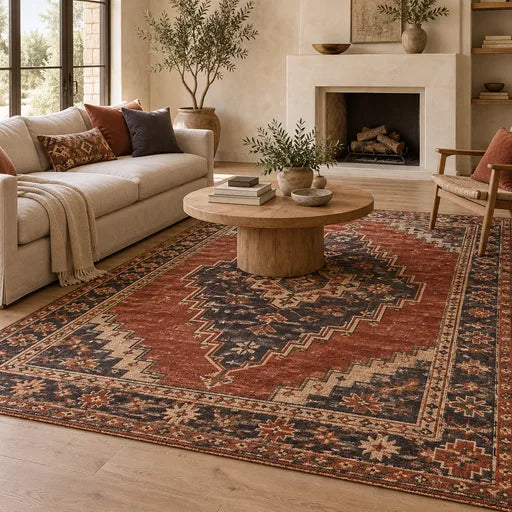
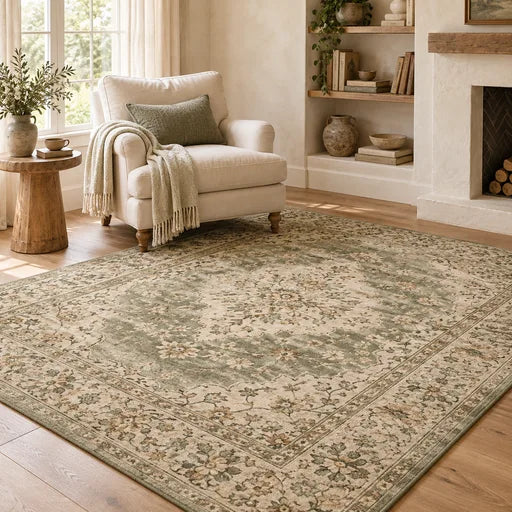
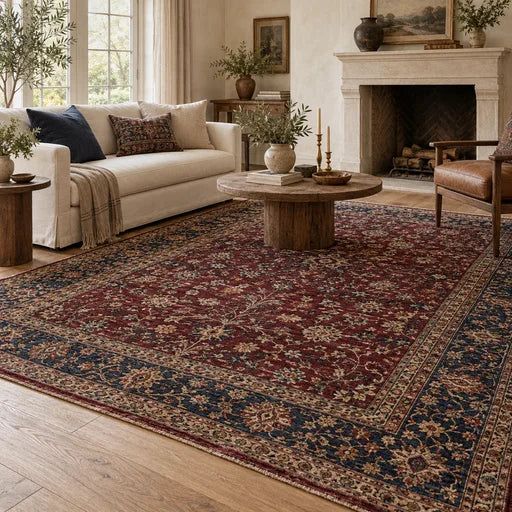
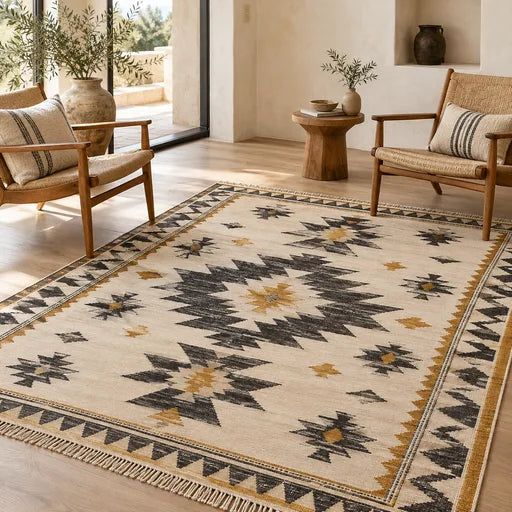
A rug should anchor the furniture grouping. At minimum, the front legs of every major seat should sit on the rug. Ideally, all four legs do. A rug that is too small isolates itself in the middle of the floor and makes the room look like a furniture showroom that has not finished setting up.
Living room
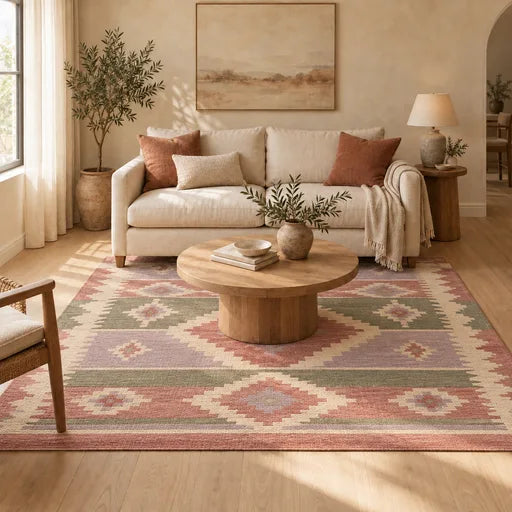
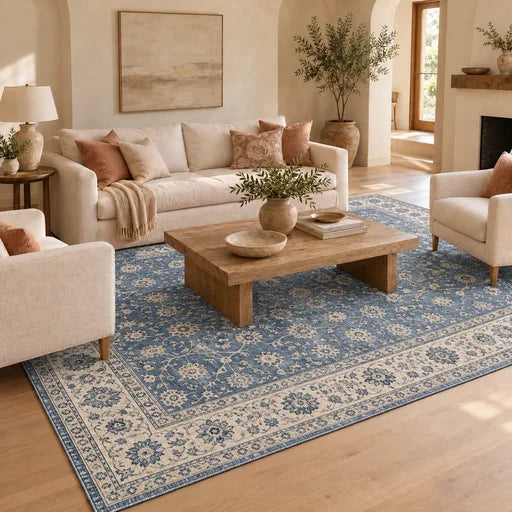
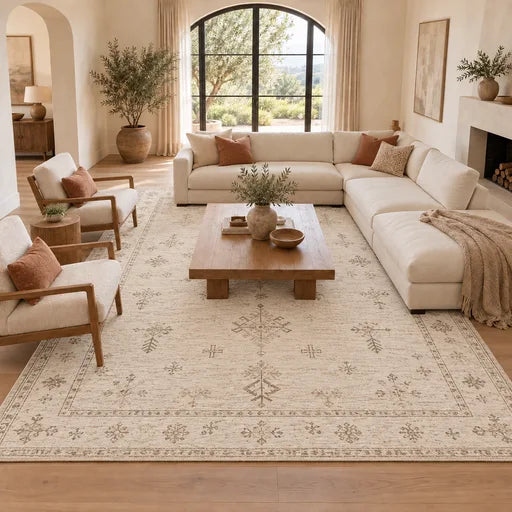
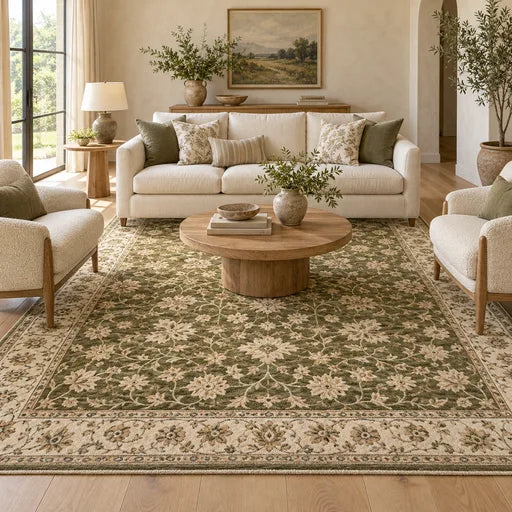
The living room rug needs to define the conversation area — the zone of sofas, chairs, and the coffee table.
Three configurations
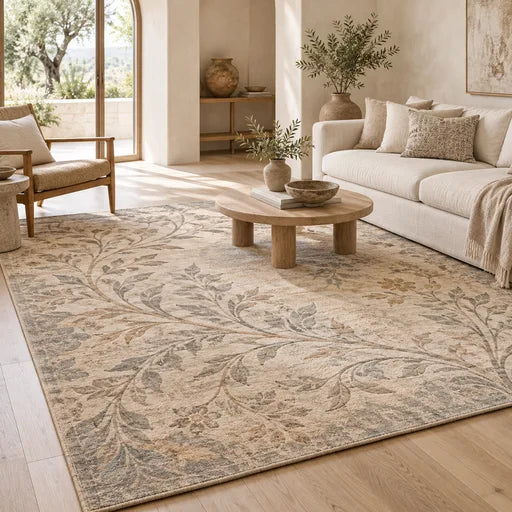
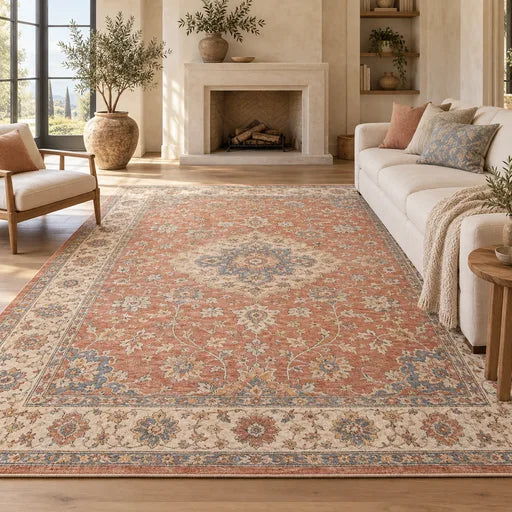
- All legs on the rug (best): the rug extends past the back of the sofa and chairs by 4-6 inches. For a standard 3-seat sofa + 2 chairs setup, this typically means a 9' × 12' or larger.
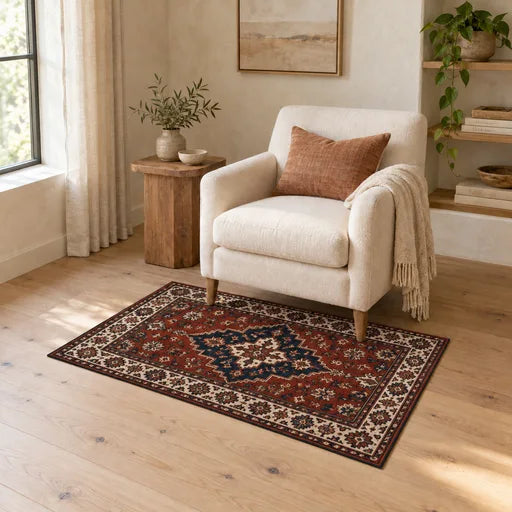
- Front legs only (most common compromise): the rug sits under the front 1/3 of the sofa and chair legs. The rug needs to be at least as wide as the sofa. A 8' × 10' works for most layouts.
- Floating between furniture (last resort): the rug sits in the middle, no legs on it. Use this only in small apartments where larger rugs would overwhelm the room. A 6' × 9' minimum.
The 18-inch rule
Leave at least 18 inches of bare floor between the edges of the rug and the walls. This creates a "frame" of floor around the rug that makes the room feel grounded rather than wall-to-wall carpeted. In smaller rooms, 12 inches is acceptable.
Bedroom
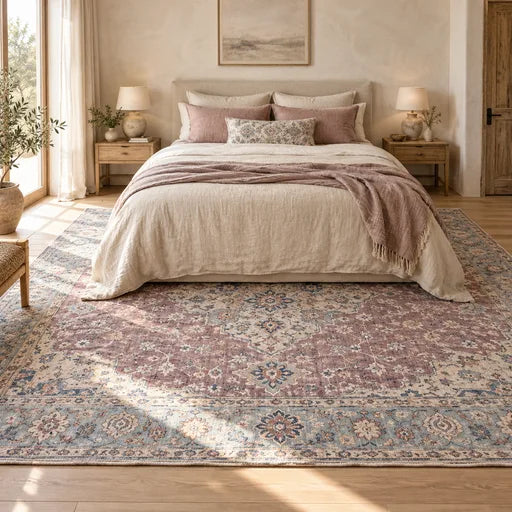
The bedroom rug should soften the first step out of bed. The bed itself does most of the visual work, so the rug is supporting.
Three configurations
- Under the bed, extending past the foot and sides: the rug starts about 1/3 of the way up the bed (under the mattress, not under the headboard). It extends past the foot of the bed by at least 18 inches and past the sides by at least 24 inches. For a king bed, this is typically 9' × 12'; for a queen, 8' × 10'.
- Two side rugs: a runner on each side of the bed, ~3' × 6'. This is the more affordable approach for larger bedrooms and looks clean with hardwood flooring.
- At the foot of the bed: a single horizontal rug ~5' × 7', sitting at the foot. Works in smaller bedrooms or with platform beds.
Dining room
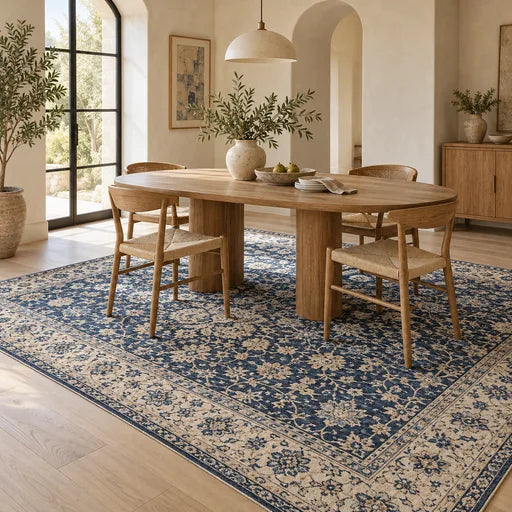
The dining room rule is geometric: the rug must be large enough that the chairs stay on it when pulled out from the table.
Measure your table. Add 24 to 30 inches on every side (the depth a chair travels when someone gets up). That is your minimum rug dimension.
- 4-person square or round table → minimum 6' × 6' or 8' diameter
- 6-person rectangular table → minimum 8' × 10'
- 8-person table → minimum 9' × 12'
If a chair leg falls off the rug when someone pulls out, you bought the wrong size.
Hallway and runner
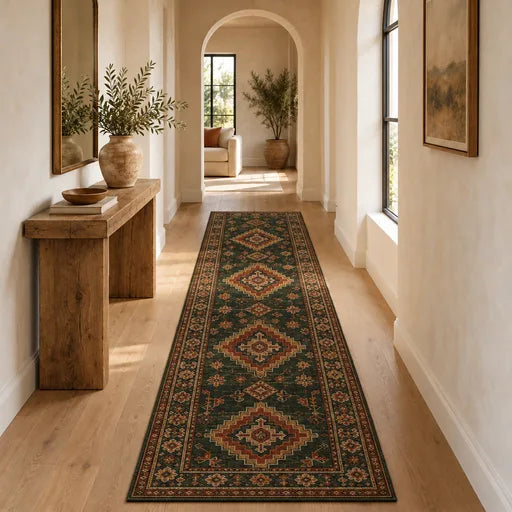
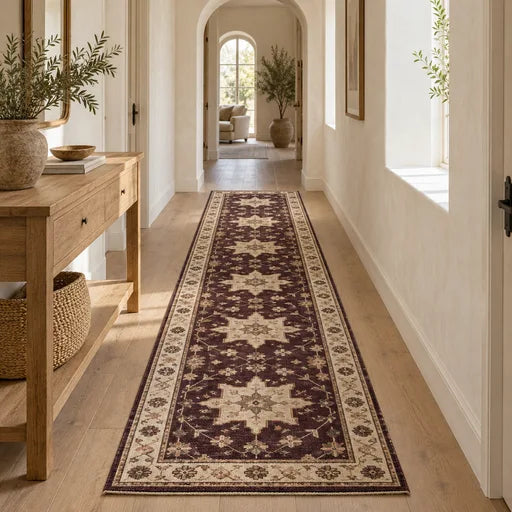
Hallway runners follow simple rules:
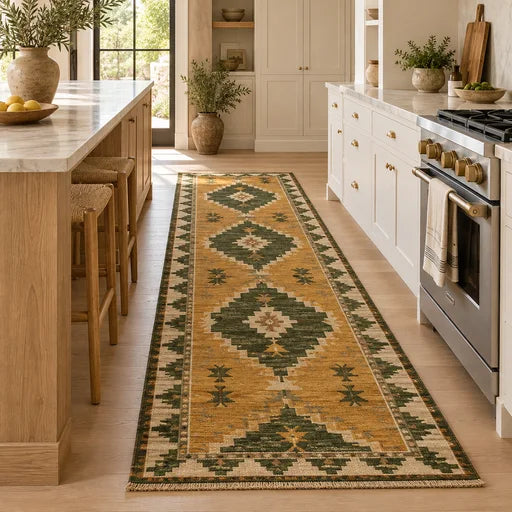
- Leave 4-6 inches of floor on each side of the runner (not against the walls)
- Leave 12-18 inches of floor at each end (do not run the rug into the door frame)
- Width: 2' to 3' for most residential hallways; 3'+ for wide entry hallways
- Length: 6'-12' depending on the hallway
Browse our runner rug collection for sizes in this range.
Entryway
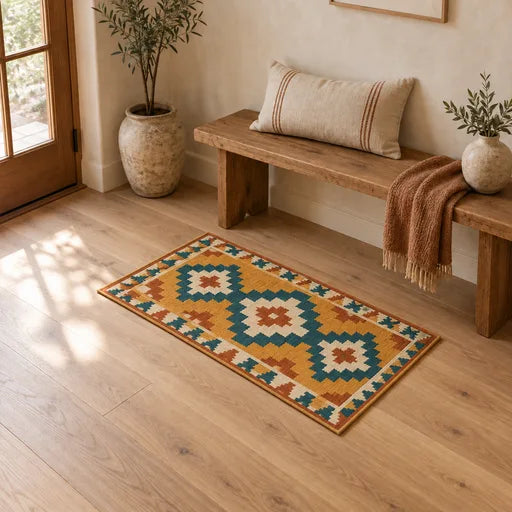
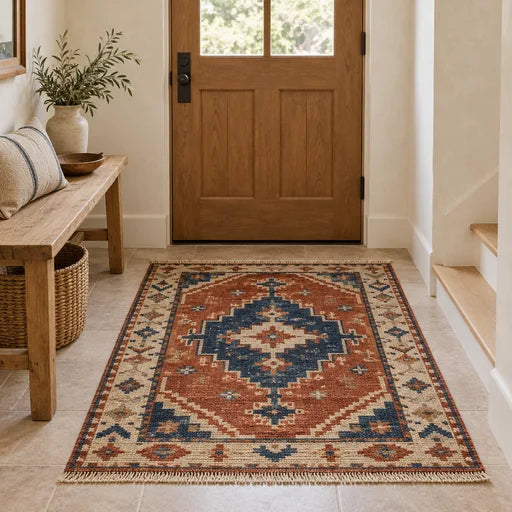
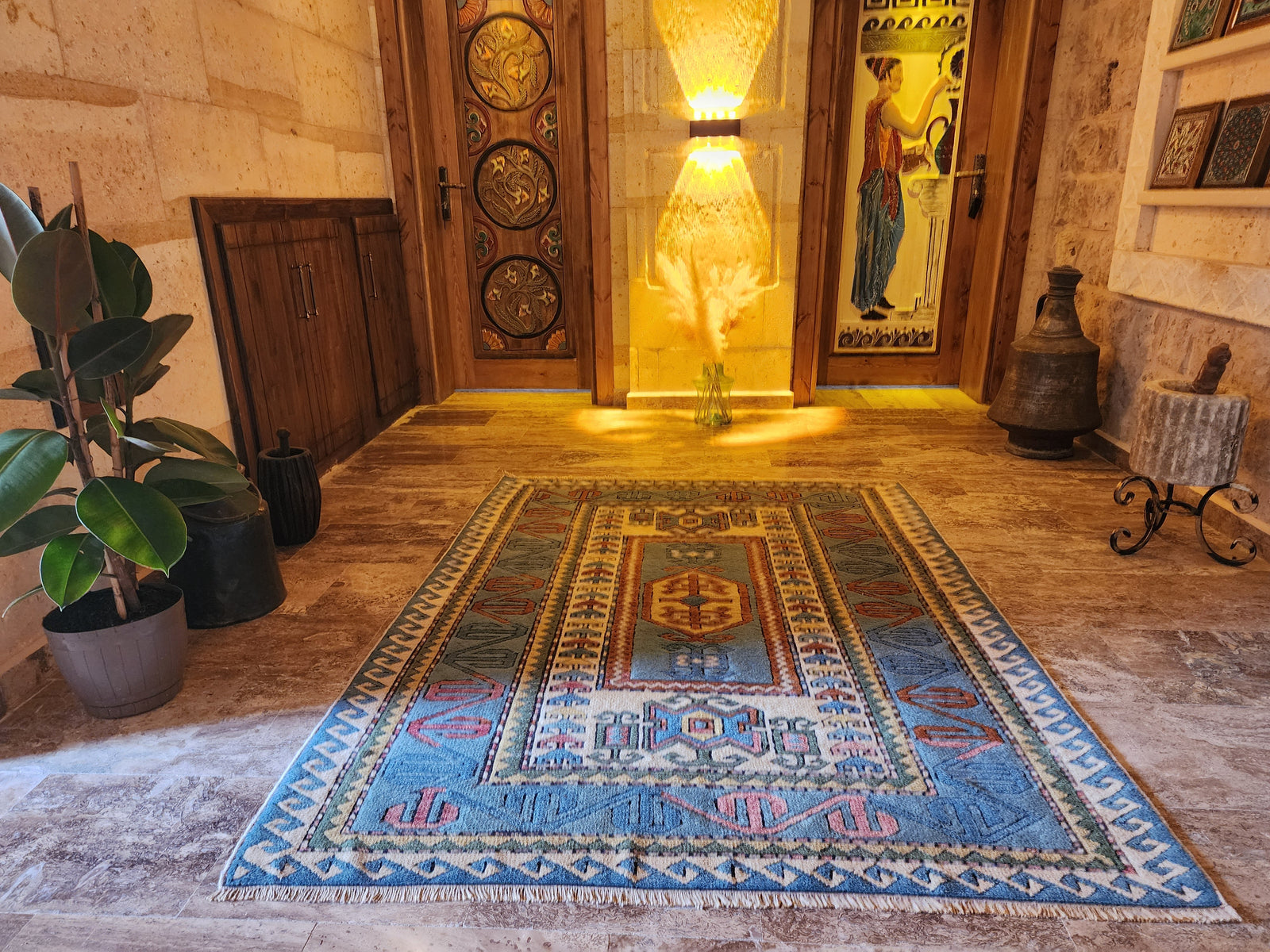
The entryway rug catches dirt and welcomes guests. It does not need to be large but it does need to be the right shape.
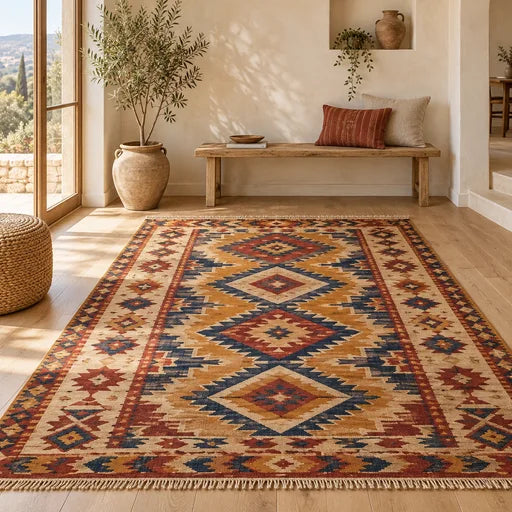
- Single front door → 3' × 5' or 4' × 6' rectangular
- Double door or wide opening → 5' × 7' or 6' × 9'
- Long hallway entry → 2'6" × 6'-8' runner
Material matters more in entries than elsewhere. Wool with a flatweave structure handles wet boots better than deep-pile hand-knotted pieces.
Kitchen
Kitchens are where natural fibre rugs face their toughest test. Spills, dropped knives, splashed oil. You want a kitchen rug that is:
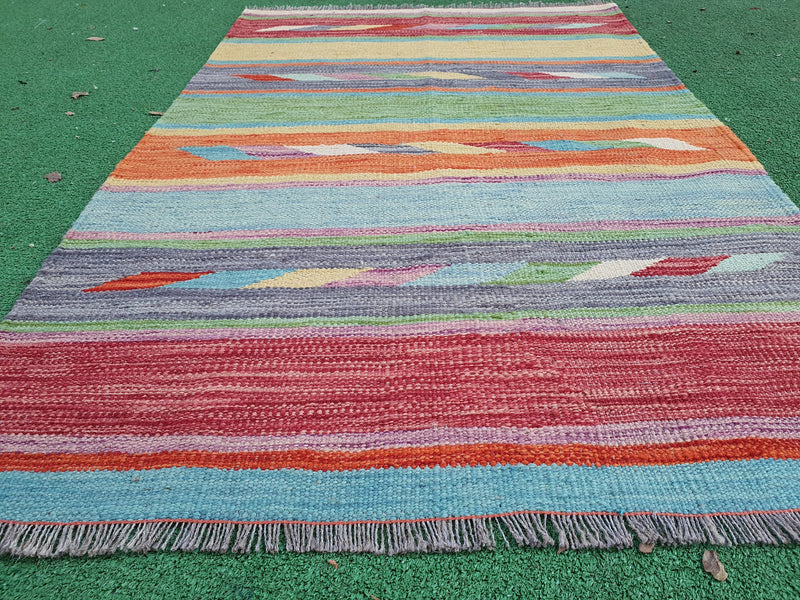
- Flat-weave (kilim) for easier cleaning
- Smaller (so it is easier to lift and wash)
- In a pattern that hides minor stains
A 2' × 3' or 3' × 5' kilim in front of the sink, or a 2' × 6' runner along the prep counter, is the typical answer. Our flatwoven kilim collection has many pieces suited to this use.
Bathroom
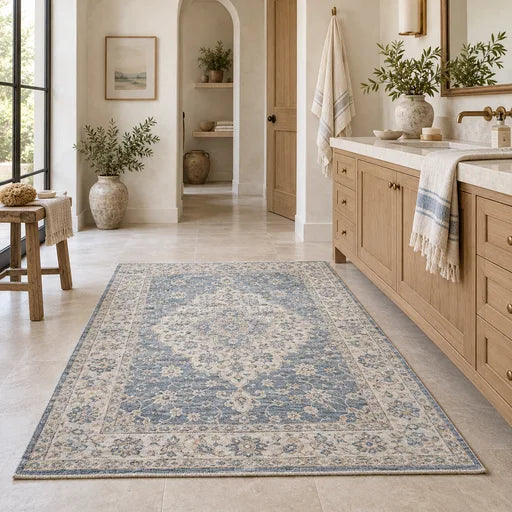
Hand-knotted wool rugs in bathrooms is, honestly, a judgement call. Moisture is the enemy. If you do it:
- Use a small, washable kilim, not a hand-knotted pile rug
- Keep it out of the immediate splash zone of the shower
- Air-dry it after wet days
Quick reference table
| Room | Standard size | Maximalist size |
|---|---|---|
| Living room (small) | 5' × 8' | 8' × 10' |
| Living room (standard) | 8' × 10' | 9' × 12' |
| Living room (large) | 9' × 12' | 10' × 14'+ |
| Bedroom (queen) | 8' × 10' | 9' × 12' |
| Bedroom (king) | 9' × 12' | 10' × 14' |
| Dining room | 8' × 10' | 9' × 12' |
| Hallway runner | 2'6" × 8' | 3' × 12' |
| Entryway | 3' × 5' | 5' × 7' |
| Kitchen accent | 2' × 3' | 3' × 5' |
One last thing: measure twice
Before you shop, measure the actual room. Then lay out painter's tape on the floor where the rug would go. Live with the tape outline for a day. Walk on it, sit on it, see how it fits the furniture. Most rug regrets are avoided right here.
Our full collection is sortable by size — so once you know what you need, you can filter directly to the right options.