Wool, Cotton or Silk: Which Rug Material Is Right for You?
Before you fall in love with a rug's pattern or colour, ask one question: what is it made of? The material decides almost everything that follows — how the rug feels underfoot, how long it lasts, how it cleans, how it ages, and what you should pay for it.
Anatolian and Oriental rugs are mostly woven in three fibres: wool, cotton, and silk. Each has its own physics, its own logic, its own price.
Wool — the default and the gold standard
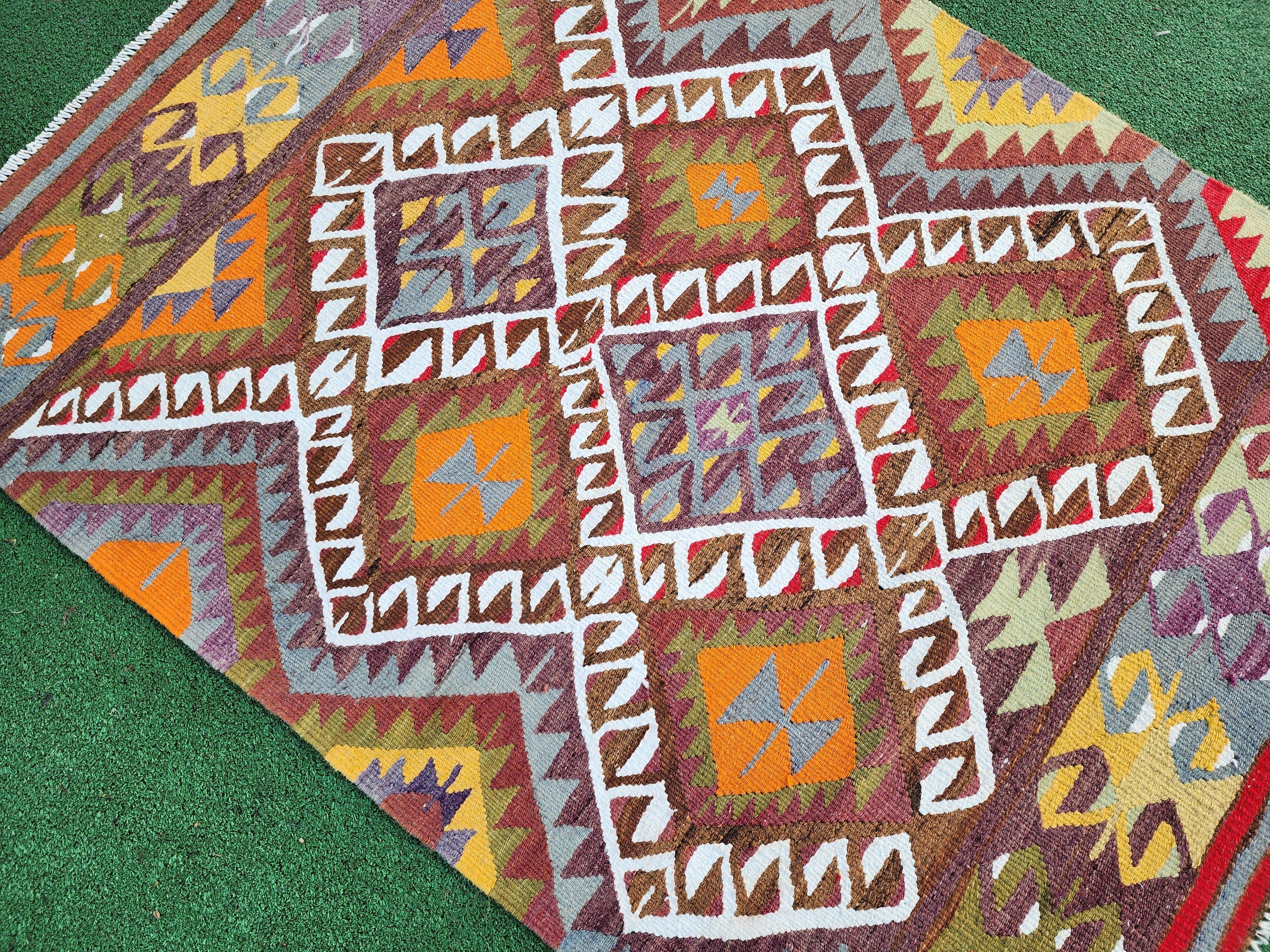
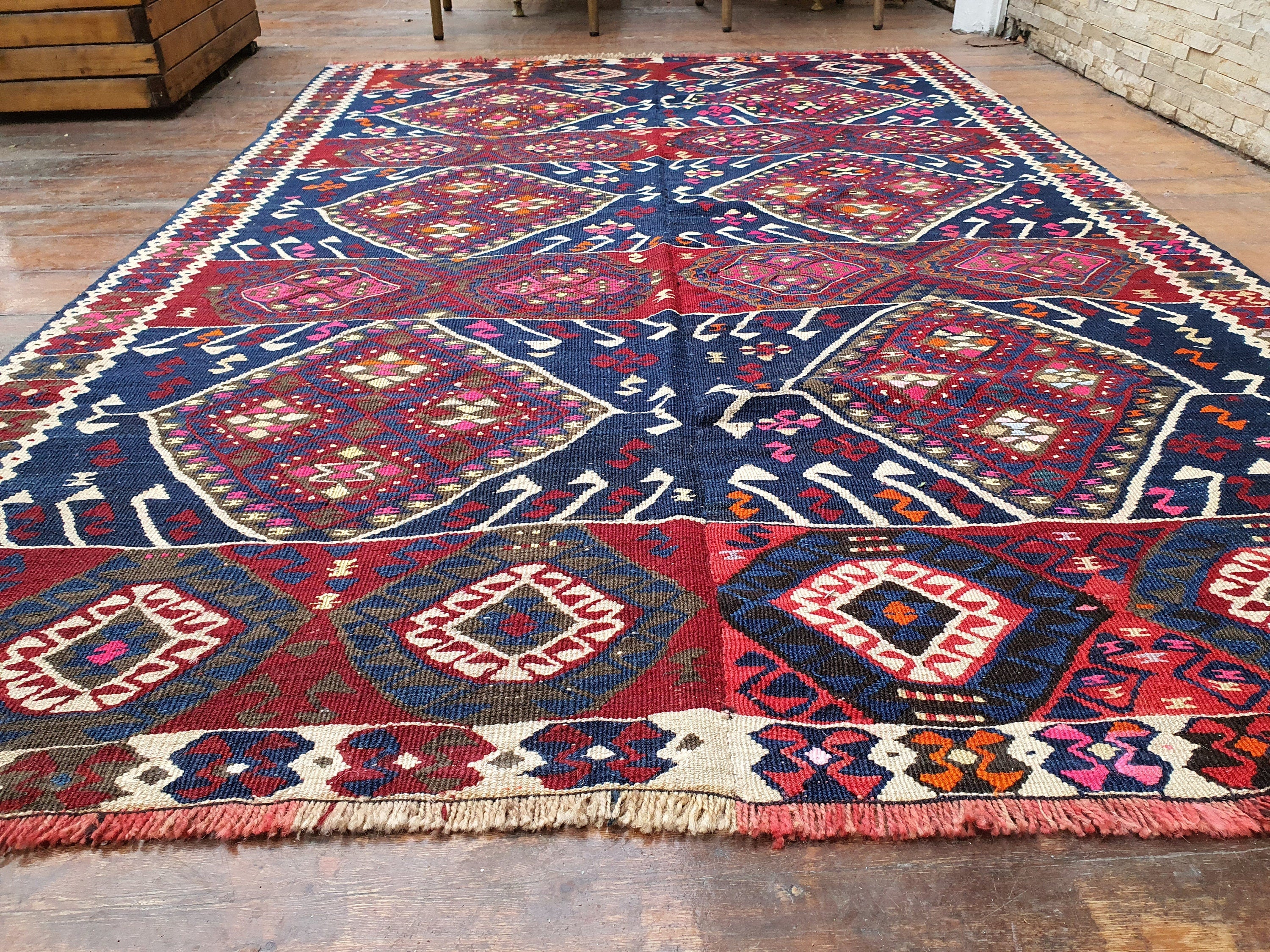
Wool is what nearly every great rug tradition is built on, and for good reason. Sheep wool is one of the few natural fibres that combines softness, resilience, natural stain resistance (because of lanolin), and dye affinity. A well-made wool rug can serve for a century with reasonable care.
Properties
- Resilience — wool fibre is naturally springy. Footprints recover, the pile bounces back, the rug refuses to look "tired" for a long time.
- Lanolin — the natural wax in sheep wool makes water bead on the surface. Spills can often be blotted up before they soak in.
- Dye depth — wool takes natural dyes beautifully. The colour is in the fibre, not on it.
- Patina — wool develops a soft sheen with age. The fibre tips polish from foot traffic in a way that no synthetic can mimic.
What to watch for
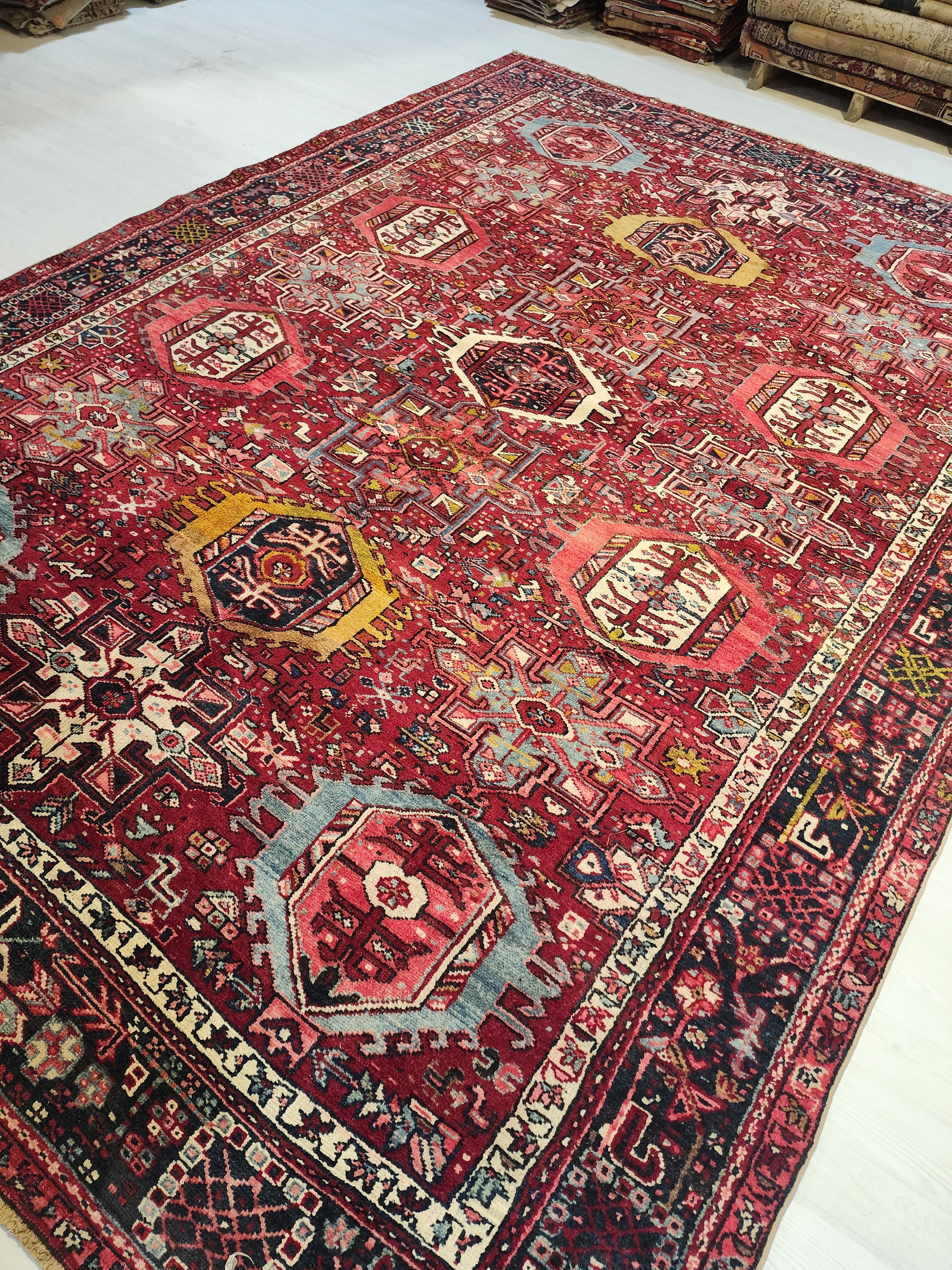
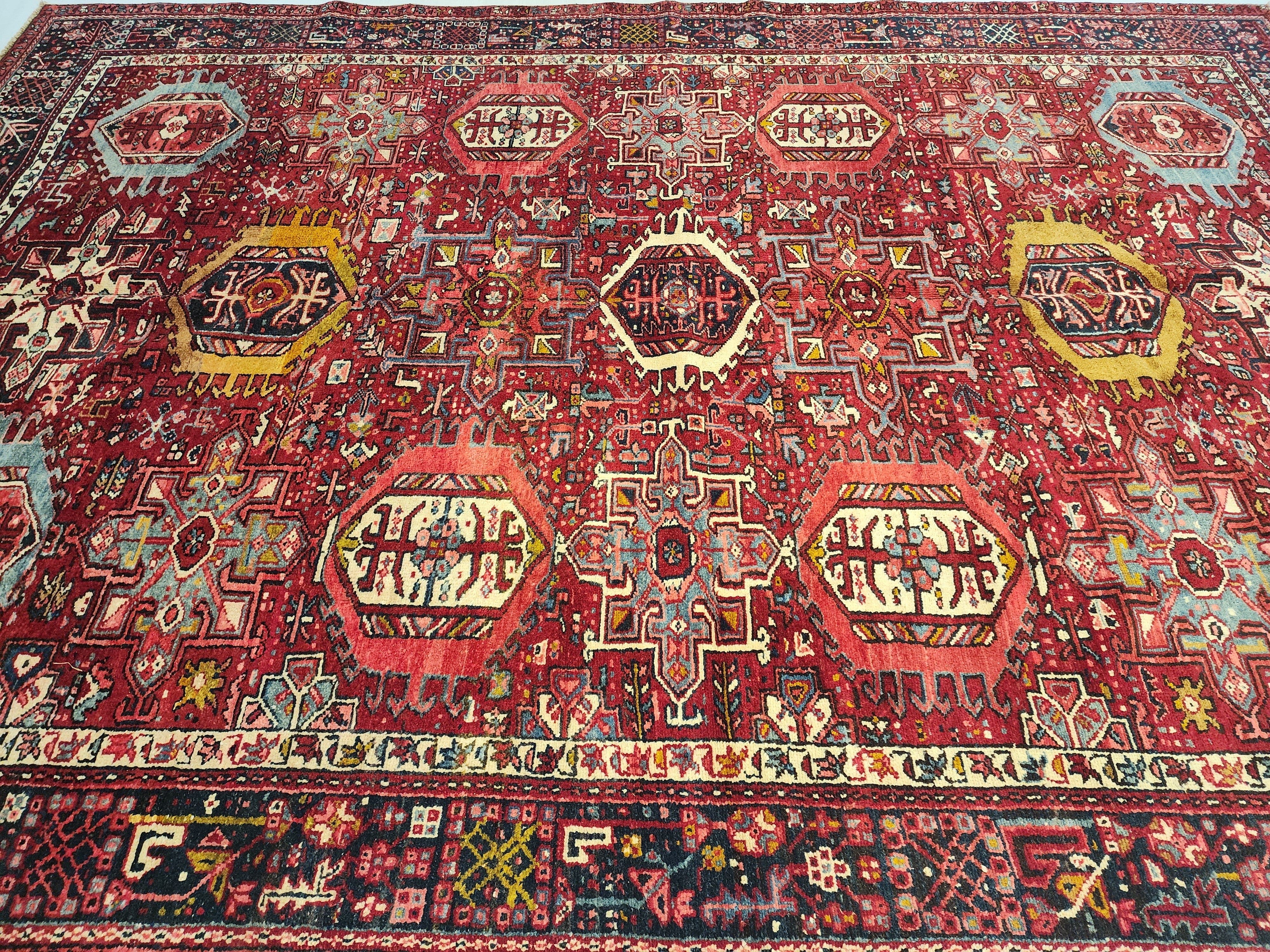
Not all wool is the same. The wool from a Turkish village in 1950 (hand-spun, from a specific breed of sheep, washed in stream water) is a different material from industrial wool from a 2020 factory. The premium properties listed above mostly belong to traditional wool: hand-spun, mineral-mordant-dyed, with the natural lanolin still partly intact.
If you are buying vintage or antique, you are almost certainly getting good wool. If you are buying new, ask about the source.
Best for
Living rooms, bedrooms, hallways, family rooms — anywhere with foot traffic. Wool is the workhorse.
Cotton — the foundation, not the show
Cotton in rugs is more often a foundation material than a pile material. Most Oriental rugs and many Anatolian rugs use cotton warp and weft, with wool tied as knots on top.
Pure cotton pile rugs do exist — they are usually flat-woven kilims, dhurries, or some modern hand-loomed pieces. But they are less common in the traditional Turkish tradition.
Why cotton makes a good foundation
- Dimensional stability — cotton holds its shape under tension better than wool. This is critical for finely-knotted rugs because the foundation determines whether the design stays geometrically accurate.
- Strength-to-weight — a cotton foundation is thinner and lighter than a wool foundation of equivalent strength, which lets weavers achieve finer detail.
- Cost — cotton has historically been cheaper than wool, allowing weavers to put their wool budget into the pile where it shows.
Properties as a pile
Pure cotton rugs (rare in our tradition but they exist as flatweaves) feel different from wool: cooler, less springy, more matte. They are also more absorbent — spills sink in rather than bead — so they work less well in dining rooms.
Best for
Hand-knotted rugs with cotton foundation are excellent for any application — the cotton is invisible inside the rug. Pure cotton pile (flatweave) is best in dry rooms with light traffic.
Silk — the luxury fibre with serious caveats
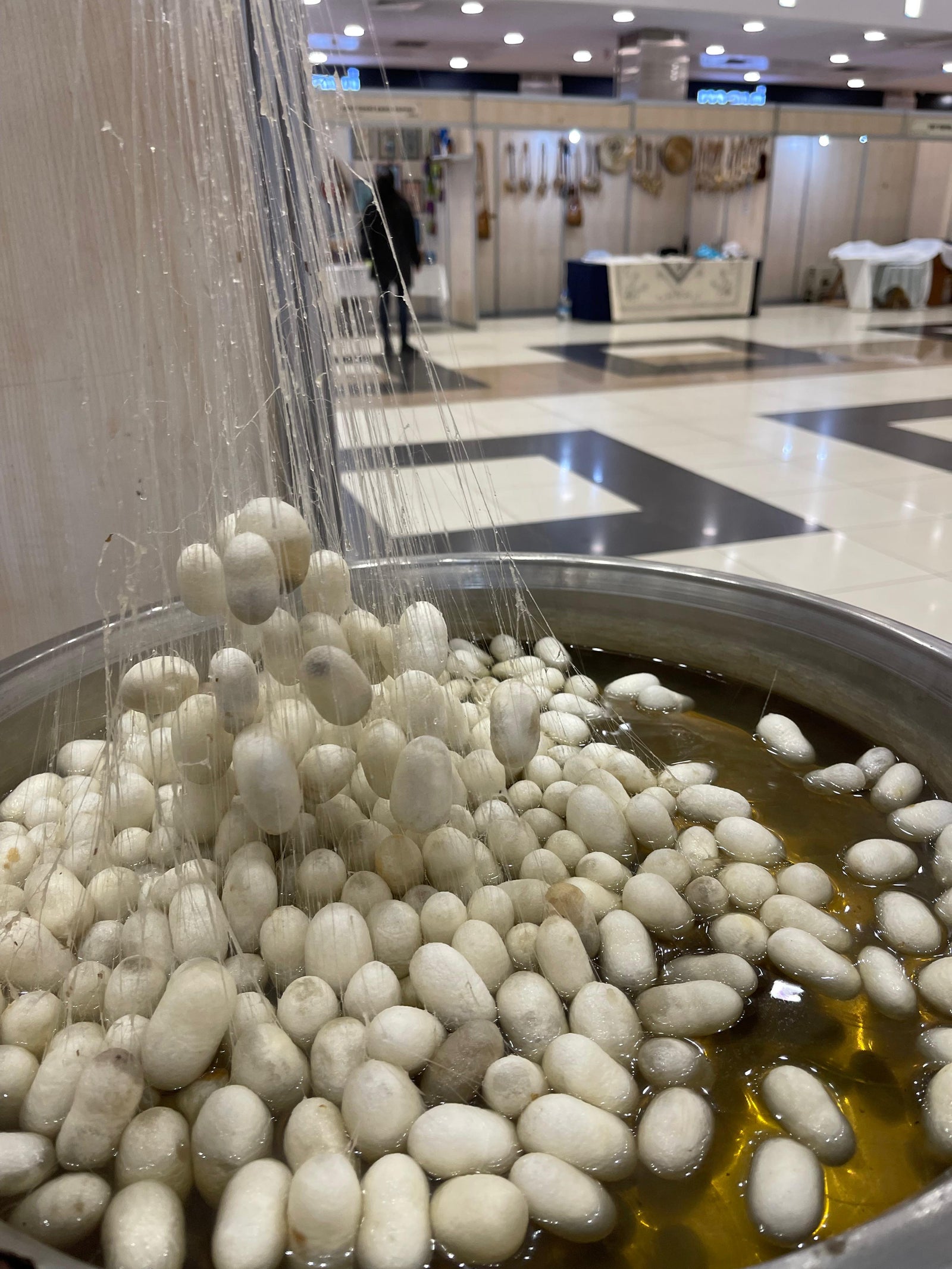
Silk is the most expensive fibre in the rug world, and the one most prone to misunderstanding. A genuine silk rug — pure mulberry silk pile on a fine cotton foundation, hand-knotted at 400+ KPI — is a luxury object. A "silk rug" advertised at 1/10 the price is almost certainly bamboo silk (viscose), which is a different material with a different lifespan.
Properties of real silk
- Light play — silk's smooth fibre reflects light directionally. Look at a silk rug from one angle, the colours are pale; from another angle, they are deep. This is what gives silk rugs their famous "shimmer."
- Fine detail — silk's strength-to-diameter ratio is the highest of any natural rug fibre, allowing the densest knot counts and the most intricate designs.
- Drape — silk rugs are flexible, light, almost cloth-like.
What silk is bad at
- Foot traffic — silk fibres flatten and scuff visibly. A silk rug in a doorway will show damage within months.
- Wet cleaning — silk requires specialist cleaning. You cannot blot a red wine stain on silk the way you can on wool.
- UV light — silk fades faster than wool. Direct sunlight will degrade it over years.
Best for
Low-traffic decorative spaces — bedrooms, formal living rooms, study desks under glass, wall hangings. Never a kitchen, never a foyer.
Bamboo silk and viscose — the cheaper "silk"
This deserves its own paragraph because the labelling is misleading. Bamboo silk is not silk — it is regenerated cellulose fibre (viscose) made from bamboo or wood pulp. It has the shimmer of silk at a fraction of the cost, but it does not have silk's strength.
Bamboo silk rugs flatten, scuff, and discolour faster than wool. They are not a long-term investment. We sell some bamboo silk pieces because they look beautiful for what they cost — but we are always clear about what they are.
What we sell most of
Honestly: wool. In any given month, 80–90% of our active inventory is wool-on-cotton or wool-on-wool. This is because wool is the right material for the way most people use rugs. It outlasts the room it was bought for.
Silk and bamboo silk are specialty purchases. Cotton is mostly foundation. Wool is the substance.
Decision framework
- If the rug will be walked on daily → wool, ideally with a cotton foundation
- If the rug is decorative or low-traffic → silk for a focal piece, bamboo silk for budget
- If the rug is in a wet area (kitchen, near a sink) → flatweave kilim (wool or cotton, easier to clean)
- If you want a rug to last 50+ years → wool, with proper care
Final word
Material is the rug's foundation in every sense — physical, financial, aesthetic. A great pattern in a poor material disappoints within years. A modest pattern in a fine wool is a friend for life.
When you browse our collection, the material is listed for every piece. If you ever want to ask whether a specific rug is genuinely natural wool, naturally dyed, or what the foundation is, just message us. We have answers for every piece we sell.