Oushak vs Oriental Rugs: What's the Difference?
Walk into any well-stocked rug gallery and you will hear two words tossed around almost interchangeably: Oushak and Oriental. Both are hand-knotted. Both are traditional. Both can look stunning in the same living room. But they are not the same thing — and once you know what separates them, you start to see the difference at a glance.
In our two decades of sourcing rugs across Anatolia and the Caucasus, we have been asked this question more than any other. Here is the honest, plain-language answer, free of marketing jargon.
Where they come from
Oushak rugs originate from western Turkey — specifically the town of Uşak in the Aegean region, which has been a major weaving centre since the 15th century. Oriental rugs, by contrast, are woven across a vast geography that today corresponds to modern-day Iran, with major centres in Tabriz, Kashan, Kerman, Isfahan, Qom and Nain.
The two traditions developed in parallel for centuries and influenced each other. Ottoman court patronage of Oushak weavers in the 16th–17th centuries put their rugs on the floors of European palaces long before Oriental rugs achieved that level of recognition in the West. So the rivalry is genuine — but it is also a story of mutual exchange.
The knot
This is the single technical detail that defines the two traditions:
- Oushak rugs use the symmetric (Ghiordes or Turkish) knot — each tuft is wrapped around two warp threads.
- Oriental rugs typically use the asymmetric (Senneh or Oriental) knot — the tuft loops around one warp thread and wraps loosely around the next.
The asymmetric knot allows finer detail and is what makes the most intricate Oriental floral patterns possible. The symmetric knot is more robust and gives Oushaks their characteristic durability. Hold both up to the light from behind and you can sometimes spot the difference in how the knot pattern reads.
Colour and palette
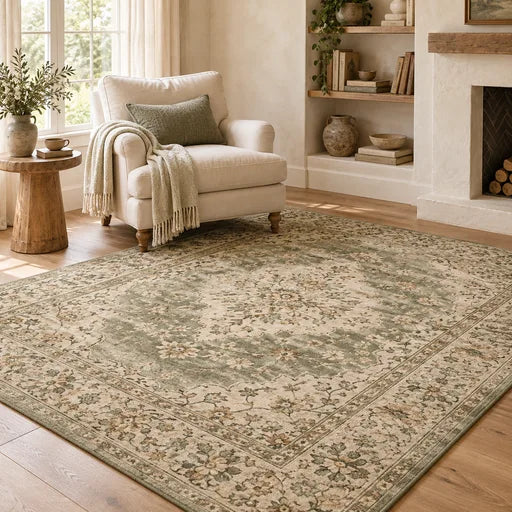
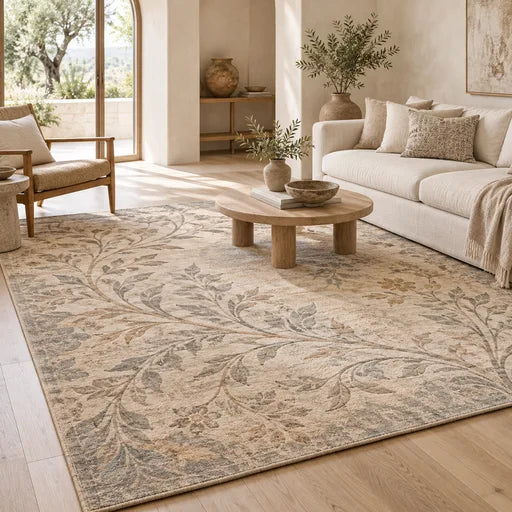
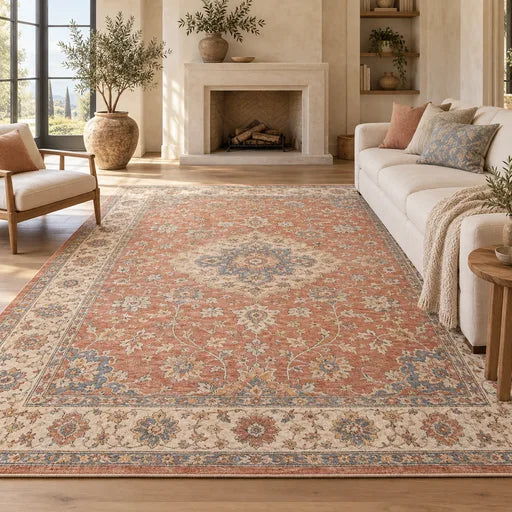
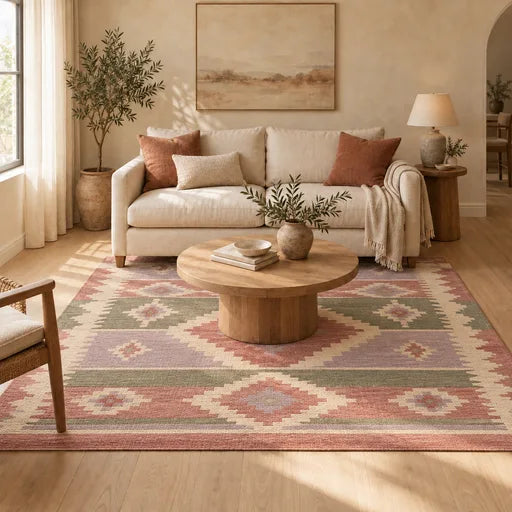
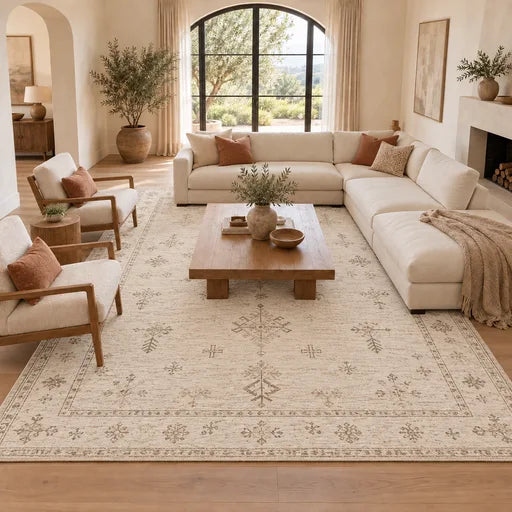
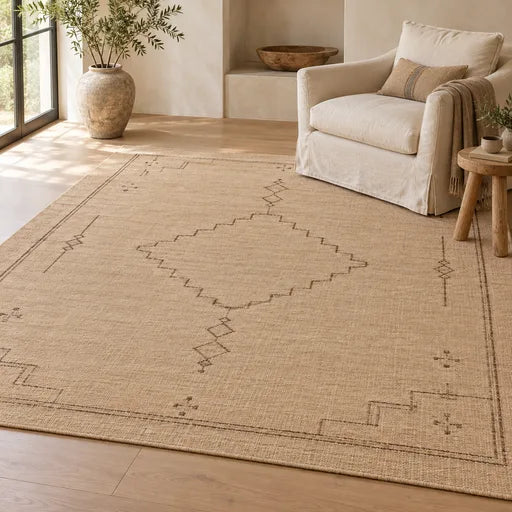
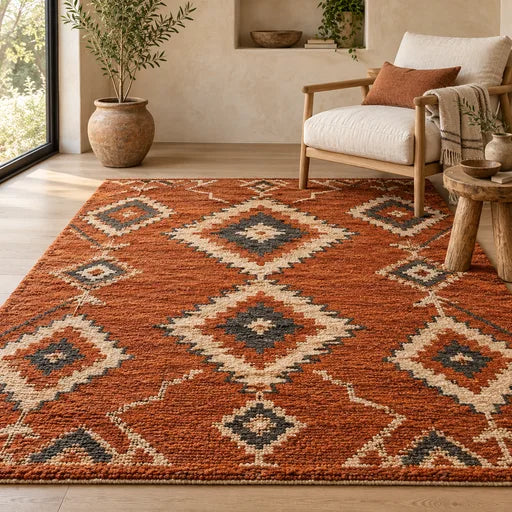
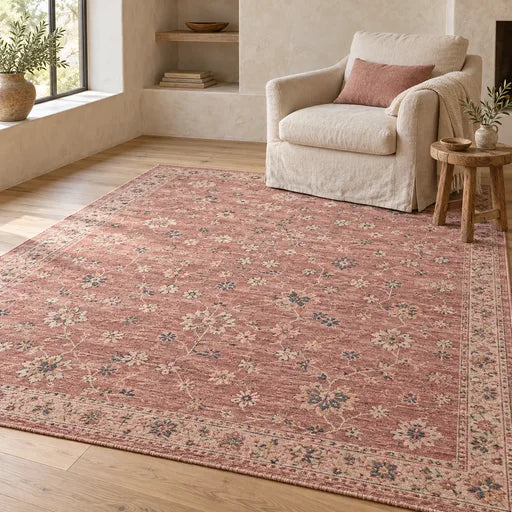
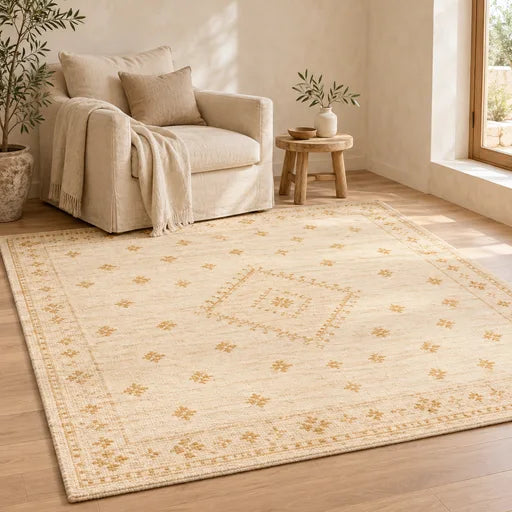
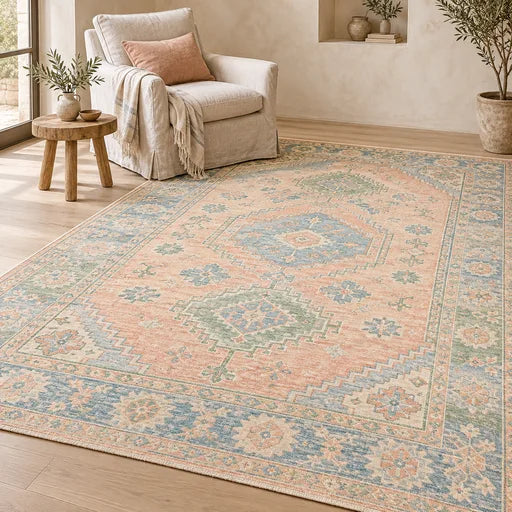
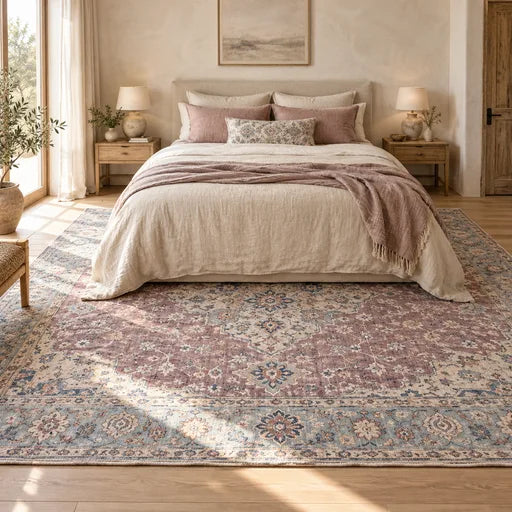
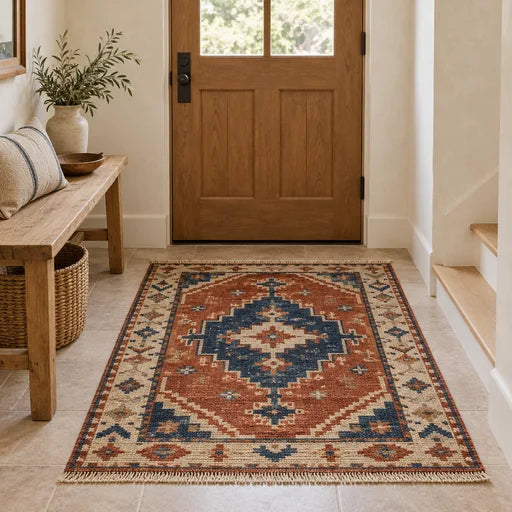
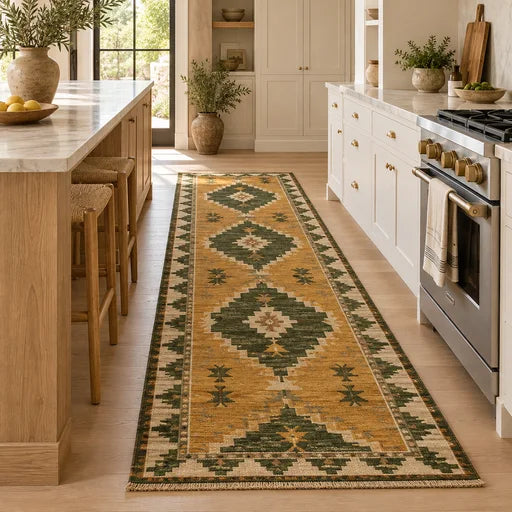
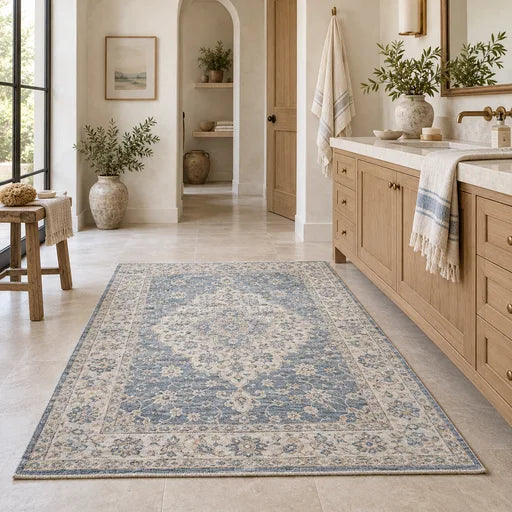
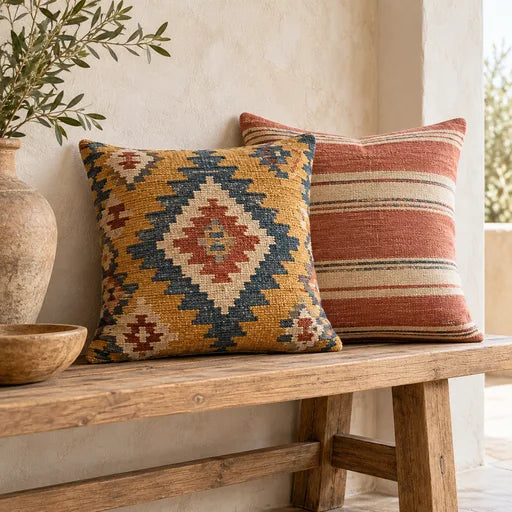
Oushaks are famous for their soft, mellow palette: faded reds and golds, soft ivories, washed-out greens, and the now-iconic "Oushak terracotta." They lean towards a calm, sun-faded look — even when newly woven, the colours feel sun-warmed and lived-in.
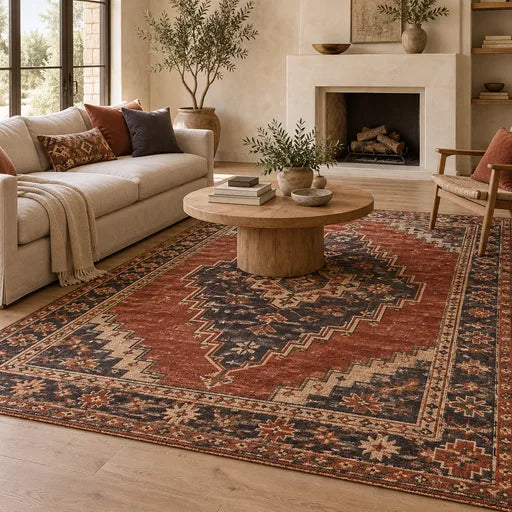
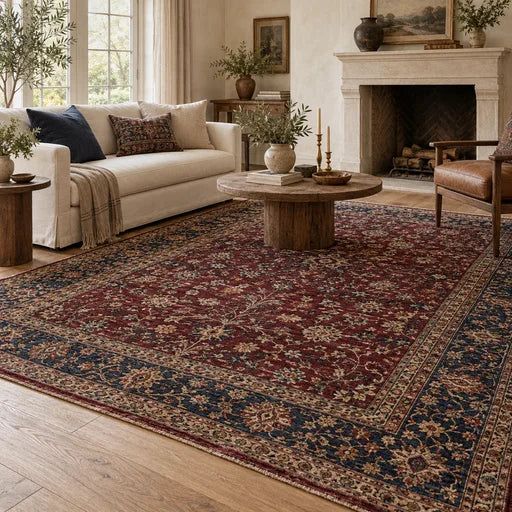
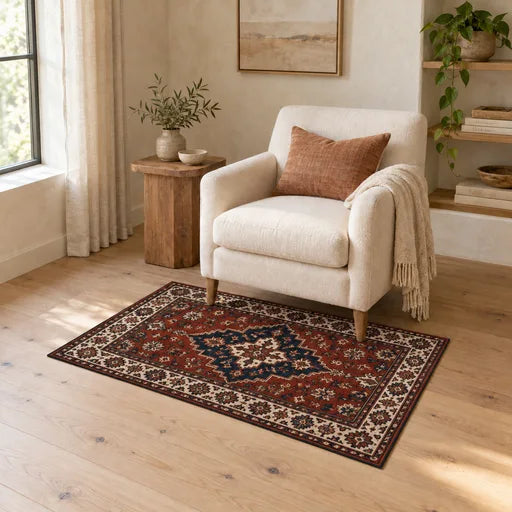
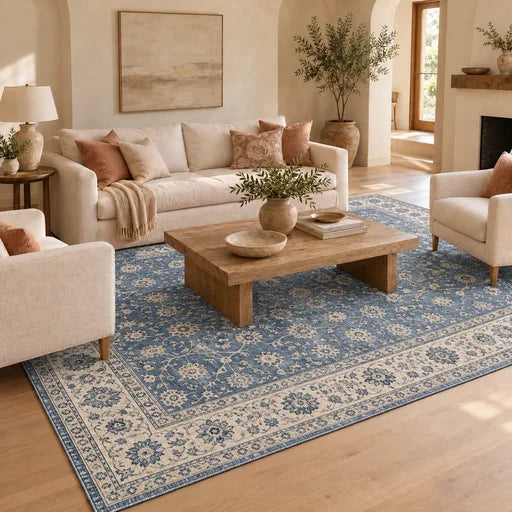
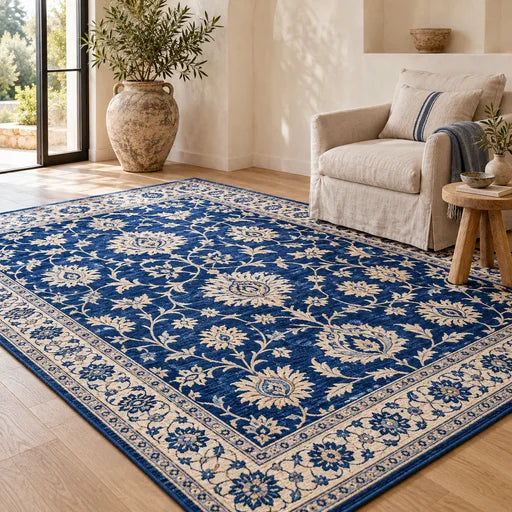
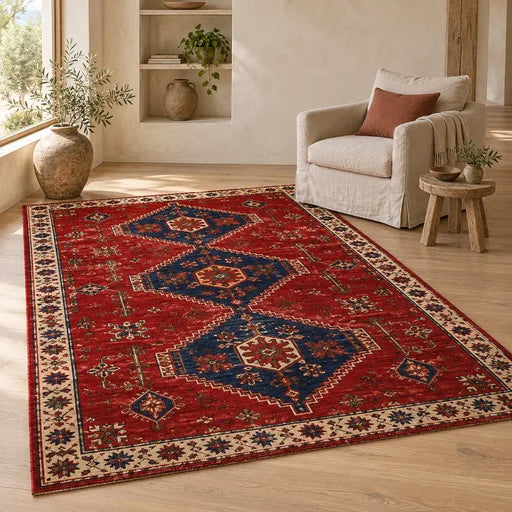
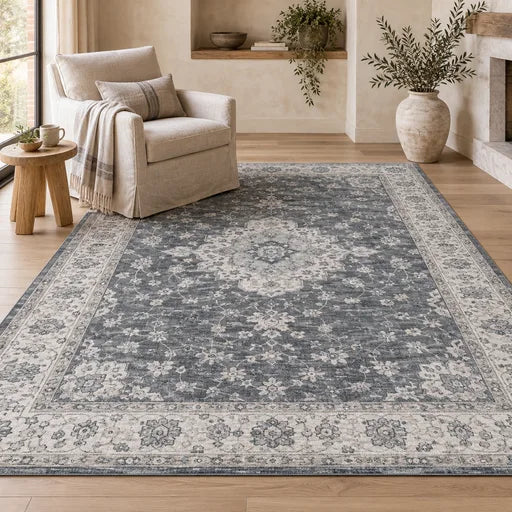
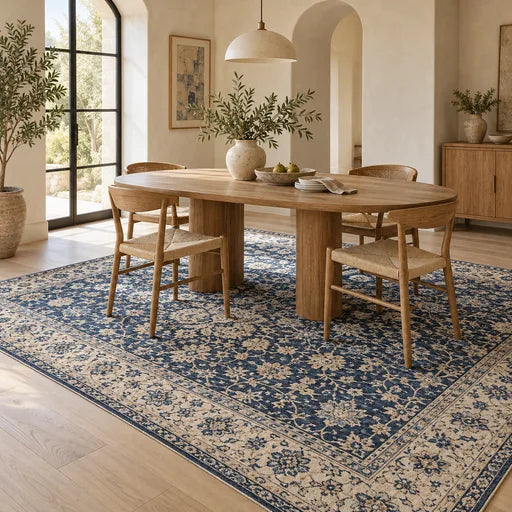
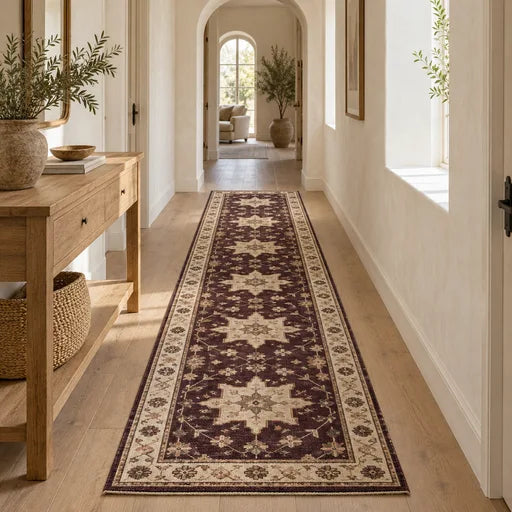
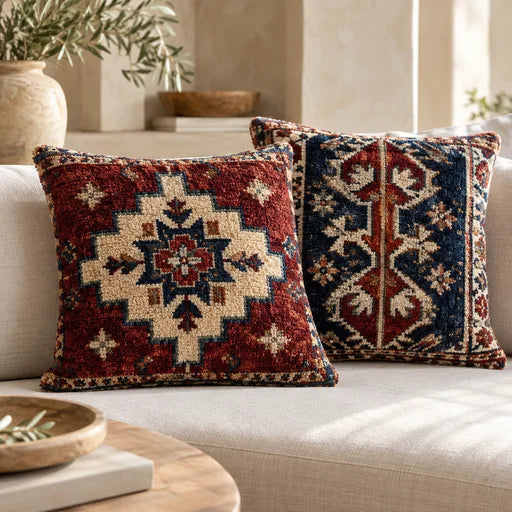
Oriental rugs run the full chromatic range. A classic Tabriz can be deep crimson with navy accents and ivory borders. A Kashan can be jewel-tone. A Qom silk can sing in a way that almost feels electric. There is no single "Oriental palette" because the country's regional traditions are so varied.
If a rug whispers, it is more likely Oushak. If it speaks confidently in saturated tones, it is more likely Oriental.
Pattern and design
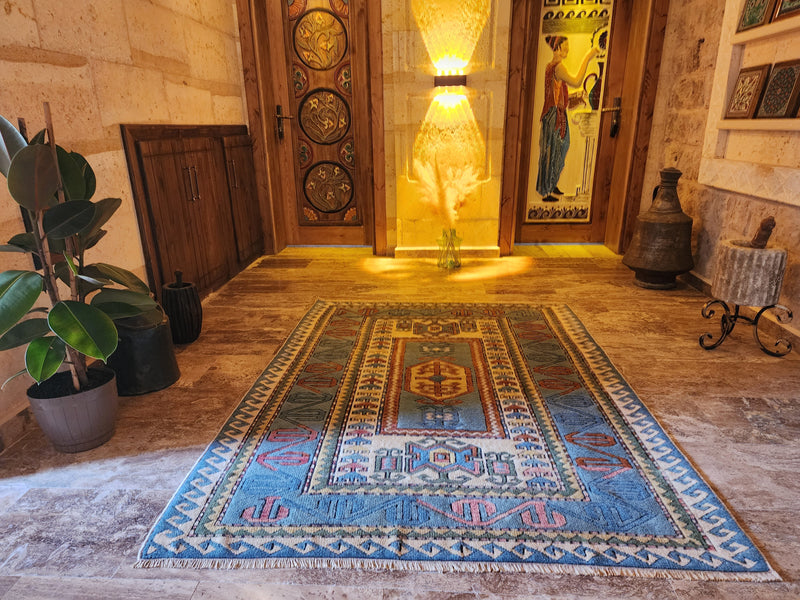
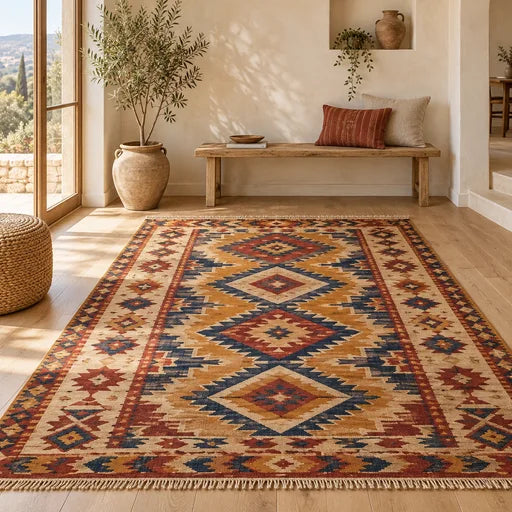
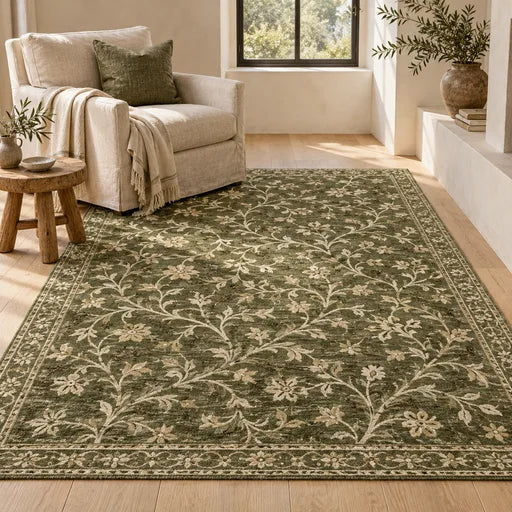
Oushaks gravitate toward large-scale medallions, open fields, and stylised floral motifs. The designs feel architectural — generous, breathing, often with one or two dominant elements anchoring the whole composition. There is room for the eye to rest.
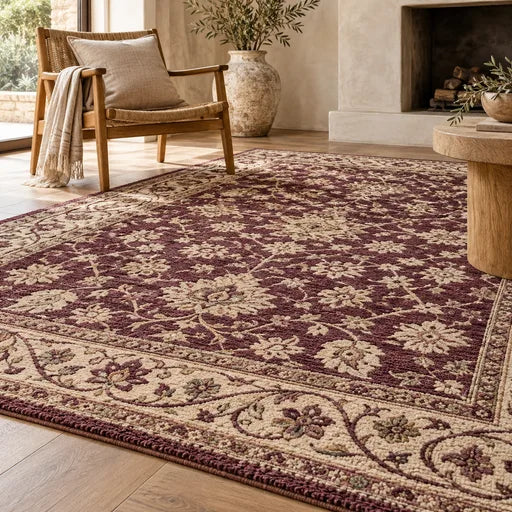
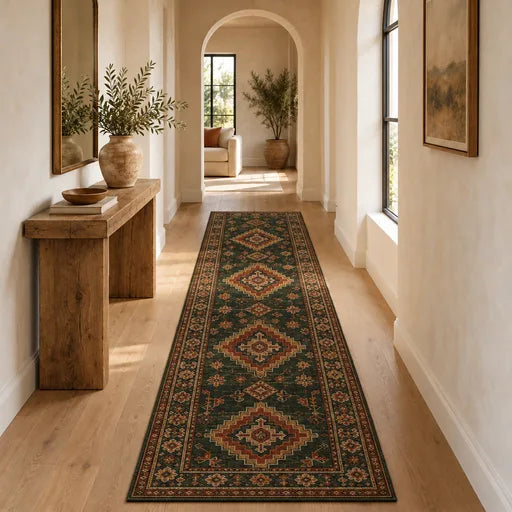
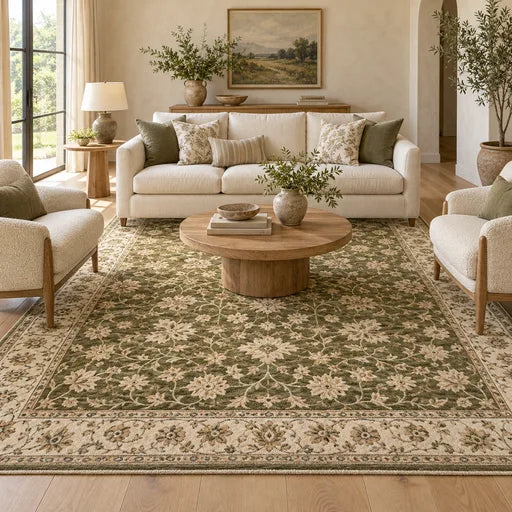
Oriental designs are typically denser and more intricate. A classical Oriental rug might layer central medallions over corner spandrels over arabesque vines over a millefleur background — each component woven with mathematical precision. The maximum complexity is reached in city workshop rugs like Isfahan and Nain.
Material
Both traditions use wool as the dominant pile material. Oushaks are almost always wool on cotton foundation. Oriental rugs vary: village Orientals lean wool on cotton; finer workshop rugs sometimes use silk highlights or full silk. Hand-knotted wool rugs dominate both categories in collectible vintage and antique segments.
How they age
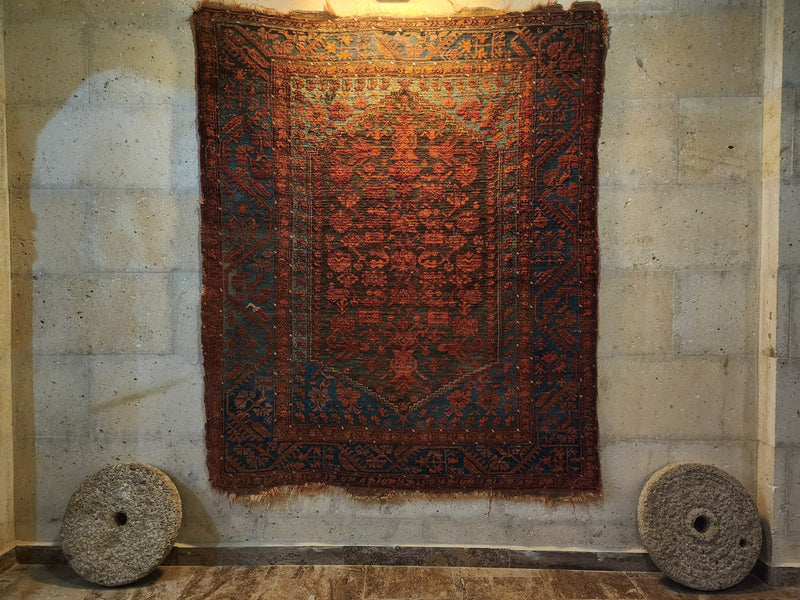
This is where it gets interesting. Oushaks age beautifully into themselves. The wool patinas, the colours soften further, and a 70-year-old Oushak often looks better than a new one. This is why vintage Oushaks command serious money in interior design markets.
Oriental rugs also age well, but their finer knots and denser patterns mean wear is more visible. A heavily walked Oriental rug can develop a worn band that is much more noticeable than the same wear on an Oushak.
Which one is right for your home?
This depends entirely on the room and the energy you want.
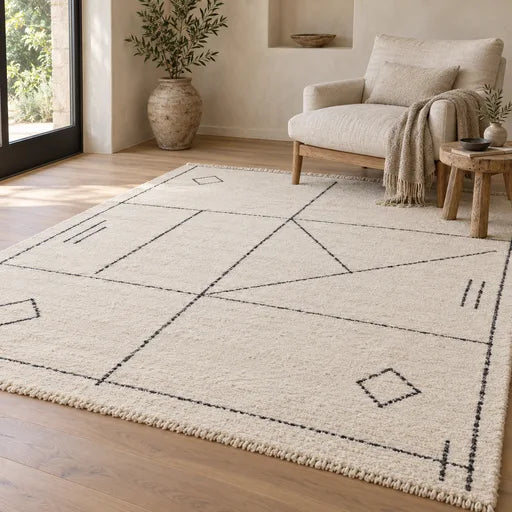
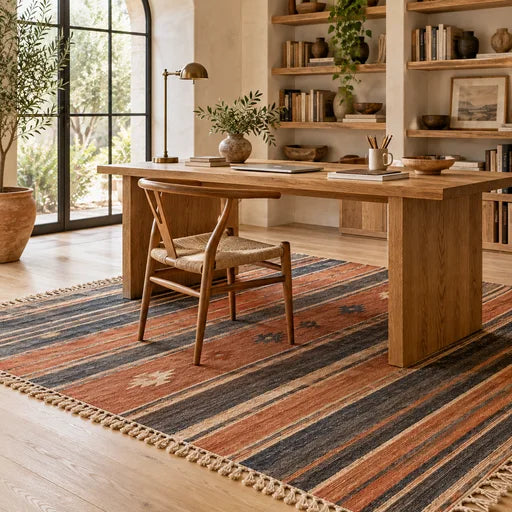
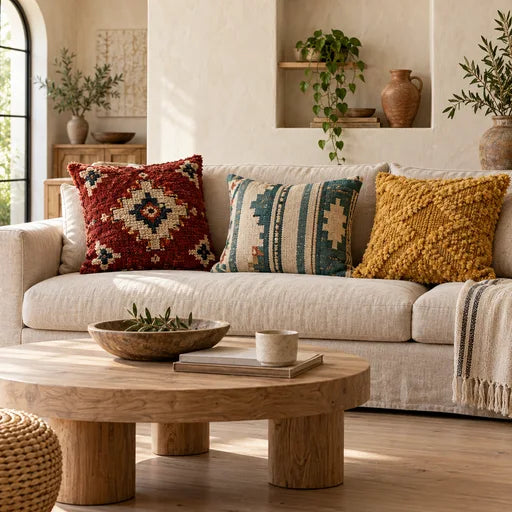
- Choose Oushak if your space is contemporary, minimal, or Scandinavian-leaning. The muted palette plays beautifully against modern neutrals. Oushaks also work superbly in farmhouse, boho, and Japandi interiors.
- Choose Oriental if your space is traditional, formal, or eclectic-maximalist. A classical Oriental rug becomes the focal point of a room. They also hold up well in formal dining rooms and libraries.
Price difference
For comparable size and condition, antique Oriental workshop rugs (Tabriz, Isfahan) generally command higher prices than antique Oushaks — partly because of the finer knot density, partly because Oriental rugs have stronger collector market recognition in Europe and North America.
That said, vintage Oushaks have seen significant price appreciation over the last decade because of their popularity in interior design publications. The gap is narrowing.
A note on authenticity
The biggest mistake buyers make is assuming "Oriental-style" or "Oushak-style" means the real thing. Both terms are used loosely by mass-market sellers to describe machine-woven or printed rugs that have nothing to do with the original tradition.
A real Oushak or Oriental rug is hand-knotted, takes weeks or months to weave, and shows minor irregularities that prove a human hand made it. The back tells the truth — if the back is as detailed as the front and the knots are visible individually, it is authentic. If the back looks like a printed mat, it is not.
Final word
Oushak and Oriental rugs are two of the world's great hand-weaving traditions. Each has its own logic, its own aesthetic, its own way of belonging in a room. The question is not which is "better" — it is which one fits the life you are building inside your home.
If you would like to see our current collection, browse our Oushak rugs and Oriental rugs, each piece hand-selected from villages we have worked with for years.