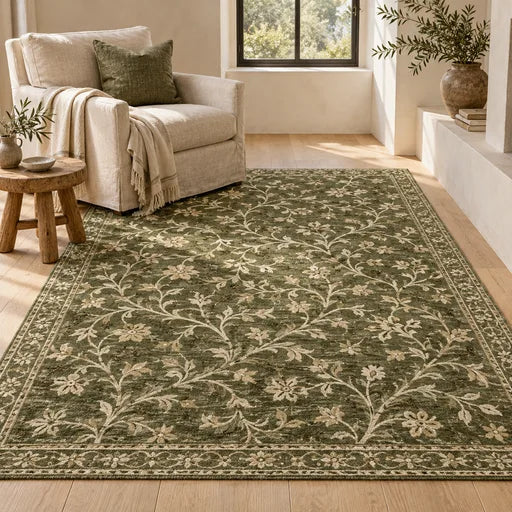
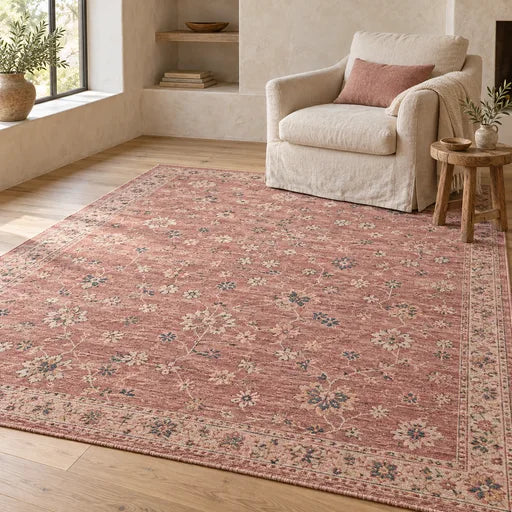
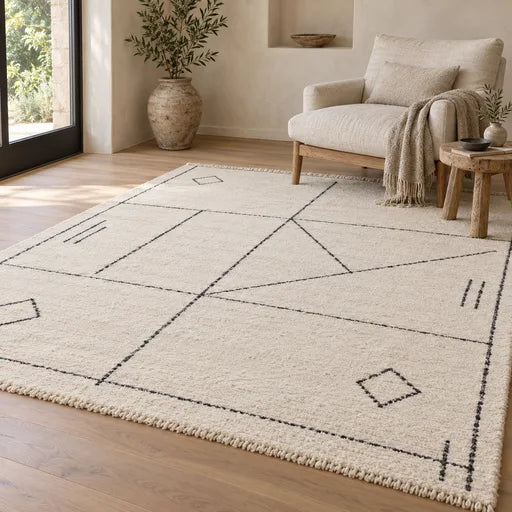
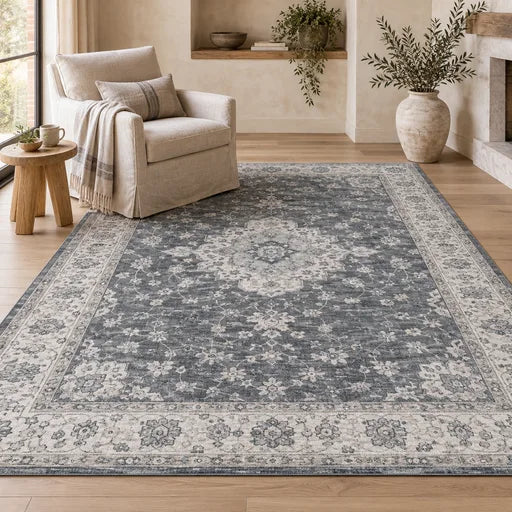
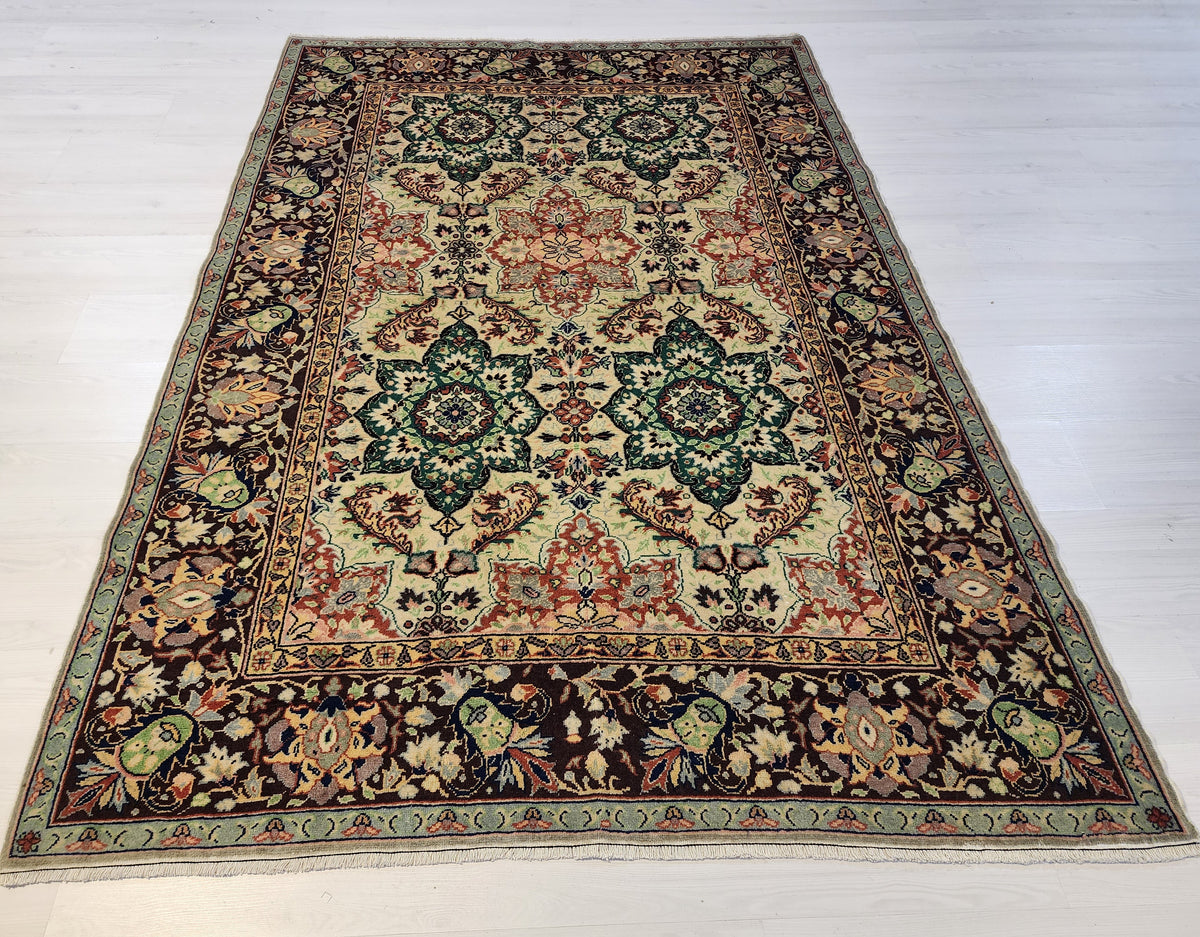
Green Turkish Rug: Shades, Rooms and Colours That Go With It
Quick answer: A green Turkish rug works in almost any room because green sits close to natural tones. Sage and olive suit bedrooms and living rooms, deep forest green suits hallways and offices. Pair it with cream, red, blue, brown or mustard, and choose a size so the front legs of the furniture rest on it.
Why does a green Turkish rug work so well?
Green is one of the easiest colours to live with, because it sits close to what we see outdoors. In a Turkish rug it also tends to appear as part of a mix, with red, blue, ivory or brown, so a green piece rarely feels flat. A green rug can anchor a room, or bring in a quiet accent, depending on how much of it appears in the field.
There is also a practical side. Greens in a rug hide everyday dust and small marks better than ivory or pale beige, and they sit well against wood floors. If you are comparing colours, our piece on a red Turkish rug in a living room is a useful contrast, and the neutral options are covered in choosing a neutral rug.
What shades of green do Turkish rugs come in?
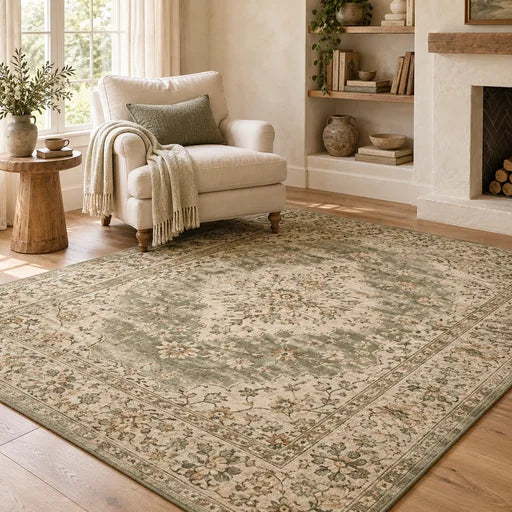
Green is a colour that was historically hard to dye in a single clean step. Weavers often built it by dyeing yarn with a yellow plant dye and then overdyeing it with blue. That is why many older greens look slightly varied from row to row. Our overview of natural dyes in Anatolian rugs explains the process.
These are the shades we see most:
- Sage and grey-green. Soft and dusty, common in washed or pale Oushak-style pieces.
- Olive and moss. Warm and earthy, found on tribal kilims and village rugs.
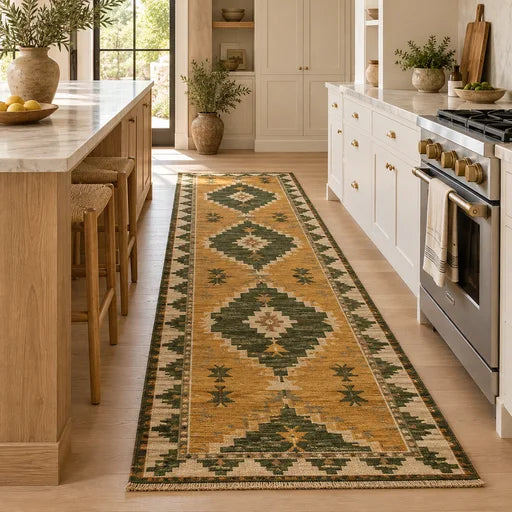
- Forest and bottle green. Deep and rich, often used as a border or medallion colour.
- Mint and pale turquoise-green. Light accents, usually small touches in a multicolour pattern.
Which rooms suit a green rug?
Living room
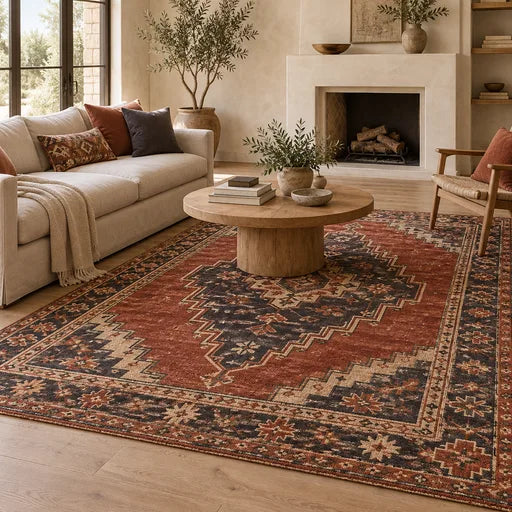
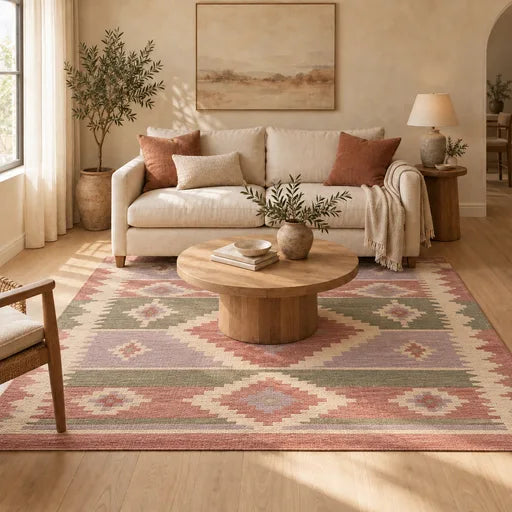
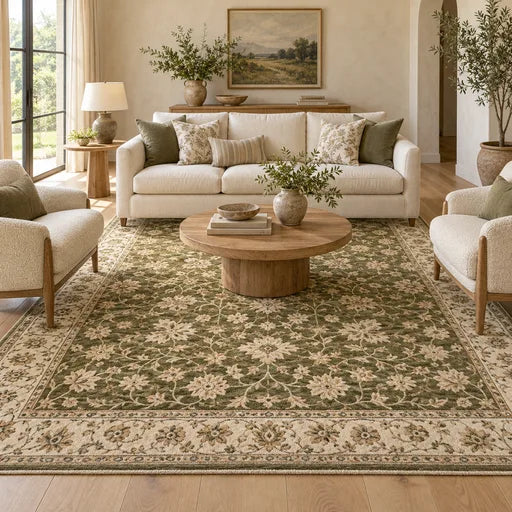
A green-and-red or green-and-ivory rug works beneath a sofa in cream, grey or tan. Pick the size so the front legs of the sofa and armchairs sit on the rug. For a standard seating area, that usually means 8 x 10 ft (about 240 x 305 cm) or 6 x 9 ft (about 180 x 275 cm). See how to choose a rug size for every room for the full rules.
Bedroom
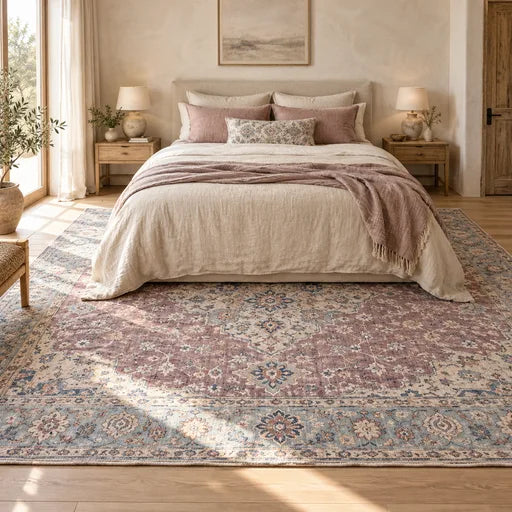
Muted sage and olive tones calm a bedroom. A 5 x 8 ft (about 150 x 240 cm) rug placed under the lower two-thirds of the bed gives you a soft surface on both sides.
Hallway and entry
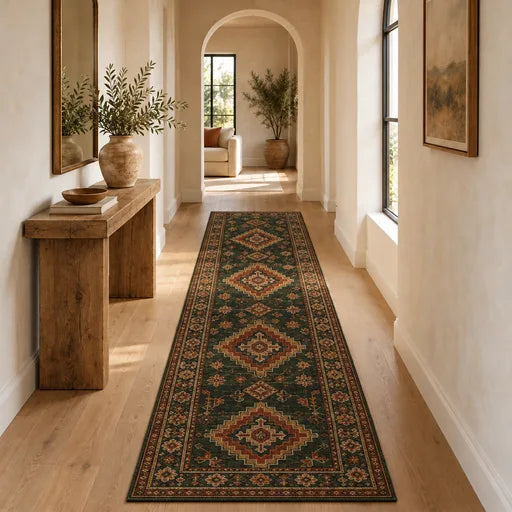
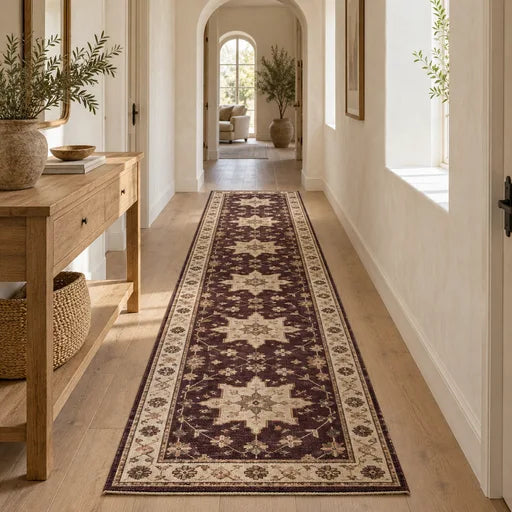
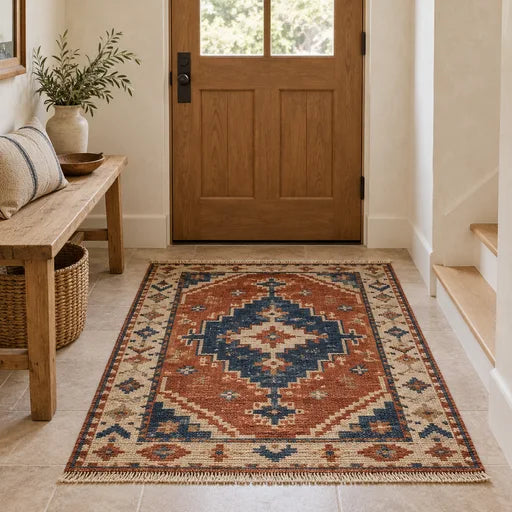
Dark greens hide shoe marks, so they are practical in hallways. A runner 2.5 ft (about 76 cm) wide leaves a few inches of floor visible on each side in a standard corridor. We cover widths in the narrow hallway runner guide.
Home office
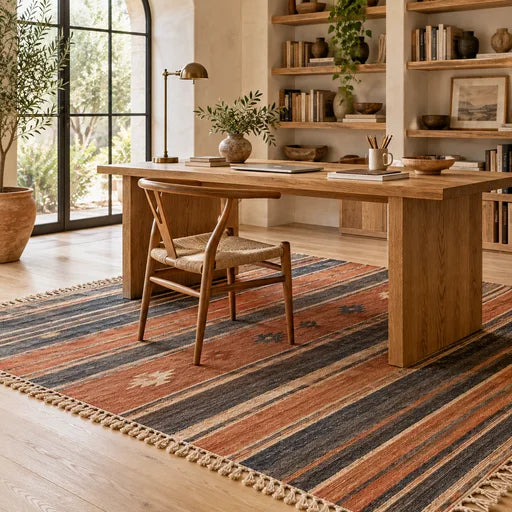
Green is a restful colour for a desk area. A 4 x 6 ft (about 120 x 180 cm) rug under a desk chair keeps the chair rolling on a level surface.
What colours go with a green rug?
| Pairing | Effect | Try it with |
|---|---|---|
| Green + cream or ivory | Fresh, light | White walls, linen sofa |
| Green + red | Classic, warm | Dark wood, leather chair |
| Green + blue | Calm, layered | Navy cushions, pale grey walls |
| Green + brown or camel | Earthy, natural | Rattan, tan leather |
| Green + mustard or gold | Rich, vintage | Warm lamp light, brass |
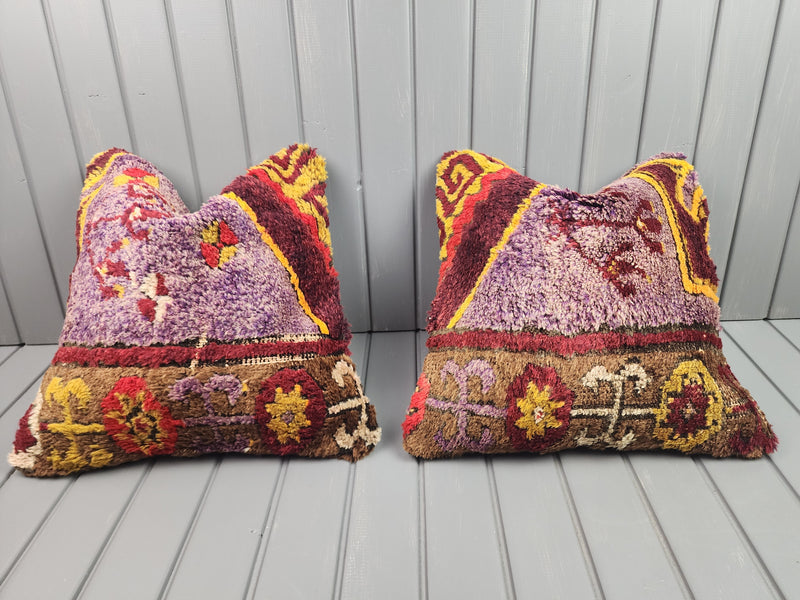
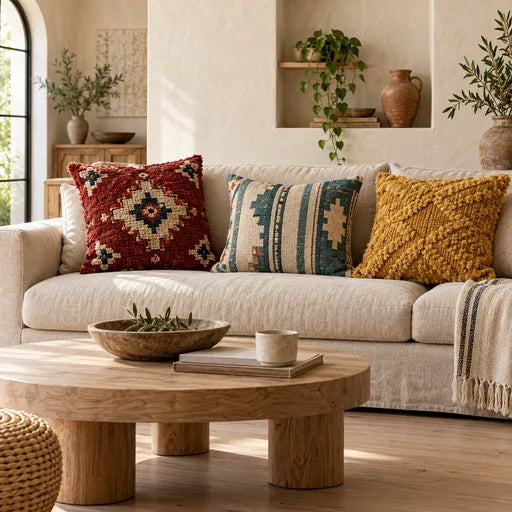
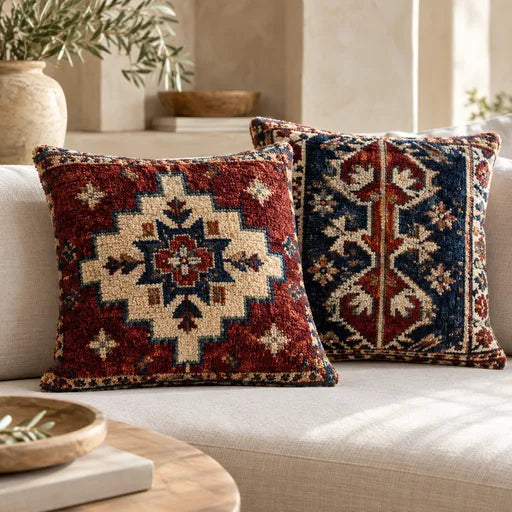
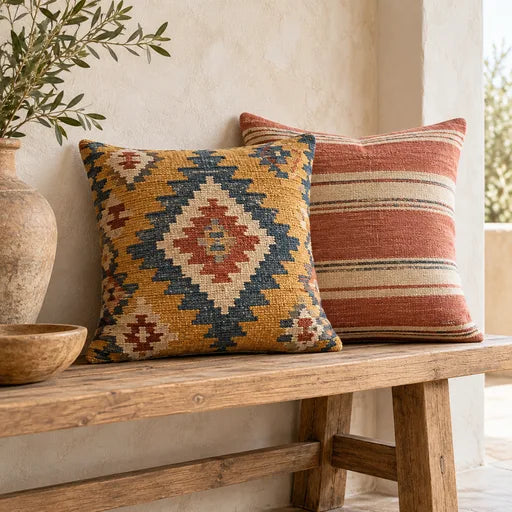
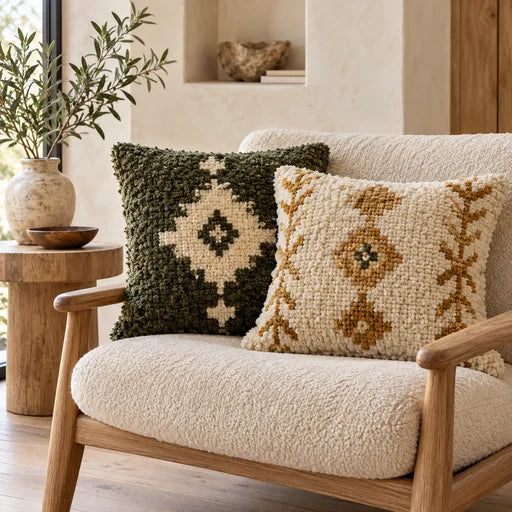
If you want matching accents, our rug pillow covers are cut from real rugs, so you can often find one that repeats a green from the floor.
How do you choose the right green rug?
- Look at the dominant colour. Many "green" rugs are mostly red or ivory with green details. Check the photos for how much green you really get.
- Judge the shade in daylight. Warm lamps shift greens towards yellow, cool daylight towards blue.
- Match the weave to the use. A pile rug feels softer underfoot, while a flat-woven kilim is lighter and easier to move. Our guide to kilim and pile rugs explains the difference.
- Measure the space and tape it out. Mark the rug edges with painter's tape before you order.
- Read the condition notes. Vintage rugs may show gentle wear, which is part of their look.
Which green pieces do we have right now?
Every rug is one of a kind, so stock changes. At the time of writing, Glykeria, a vintage Anatolian floral rug in beige, brown and green (5 x 7 ft) is a good example of a gentle, mixed green. For stronger contrast, look at the antique kilims in red and green. You can see everything currently available in the green rugs collection, and you can narrow it with the Turkish rugs collection.
How do you keep a green rug looking good?
Keep it out of long direct sun, which can fade any wool dye over time, and rotate it twice a year. Vacuum with suction only, blot spills at once, and use a breathable pad underneath. The routine is detailed in how to care for a vintage wool rug.
All our rugs ship free worldwide, with import duties pre-paid for the US, UK, EU and Canada, and a 14-day return window.
Is a green rug a safe choice if you change your decor often?
Mostly yes. Green is one of the colours that survives a change of sofa, curtains or paint. A rug that mixes green with ivory, brown or red gives you several colours to pull from, so when you repaint a wall or swap a chair you can usually find a tone in the rug that still matches. Rugs that are almost entirely one saturated green are harder to move between rooms, which is why we generally suggest choosing a mixed pattern if the rug has to last through several redecorations.
It also helps to think about the floor. On pale oak, a deep green rug gives strong contrast and defines the seating area. On dark walnut or stained boards, a lighter sage or a rug with cream in the field stops the room from feeling heavy. Tile and stone floors, which are cool in tone, take well to warmer greens with some gold or brown in them. In every case we suggest looking at the photographs on a screen in daylight and comparing them with a sample of your floor if possible.
Finally, remember that vintage greens soften over time. A rug that looks quite saturated when new may mellow slightly after a few years of normal light, and many people prefer it that way.
Pieces from our collection
Every piece below is one of a kind and in stock today:
- Glykeria — Vintage Anatolian Floral Rug, 5x7
- Halki — Antique Hotamış Kilim Rug, 5x11
- Sipylena — Antique Göçmen Kilim Rug, 7x10
- Kayster — Vintage Anatolian Wool Large Area Rug
Frequently asked questions
Does a green rug go with a grey sofa?
Yes. Grey is neutral, so sage, olive or forest green in the rug stands out gently against it. A rug with some cream or red in the pattern will link the grey sofa to warmer objects in the room, such as wood tables or terracotta pots.
Will a green Turkish rug fade?
All wool rugs can fade slowly in strong direct sunlight, green included. Place the rug away from south-facing windows where you can, close curtains at midday, and rotate the rug twice a year so any change is even across the surface.
Is a green rug good for a small room?
It can be. Lighter sage or mint greens with ivory in the pattern open up a small room, while deep greens make it feel cosier. Keep the rug large enough that at least the front legs of the furniture sit on it, so the space reads as one piece.
Can I mix a green rug with patterned cushions?
Yes, as long as the cushions share at least one colour with the rug. Choose cushions in a different scale of pattern, for example small geometric kilim covers on a larger medallion rug, and keep to three or four colours overall.
Written by the team at Heritage Nomadic Art Gallery in Sultanahmet, Istanbul, the gallery behind TurkishRug.com, where every rug and pillow is chosen, washed and photographed by hand. Last updated October 23, 2026.