The Story of Natural Dyes: How Anatolian Weavers Color Wool with Roots, Bark & Flowers
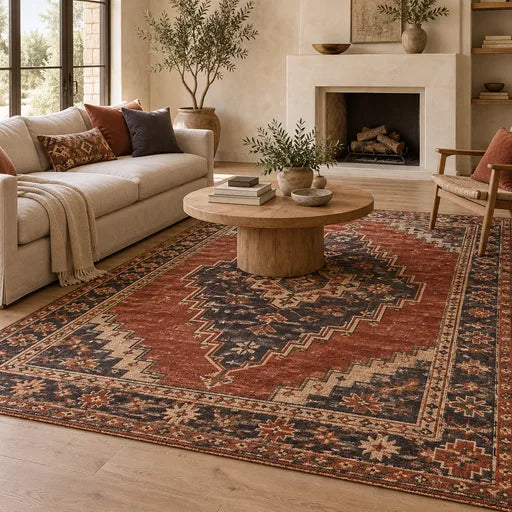
The colors in a hand-knotted Anatolian rug — the deep reds, the moody indigos, the golden yellows, the soft greens — come almost entirely from plants and minerals. For thousands of years, before chemistry, before factories, before color charts, weavers in Anatolian villages learned which roots gave red, which leaves gave yellow, which insects gave purple, and which woods gave brown.
This knowledge is one of the quiet miracles of human craft. Some of it is being lost. Some of it has been carefully preserved by master weavers who still source plant dyes the way their grandmothers did. Here is what you are looking at when you see the colors in a vintage piece.
Why natural dyes matter
Three reasons the dye source matters for a rug's character and value:
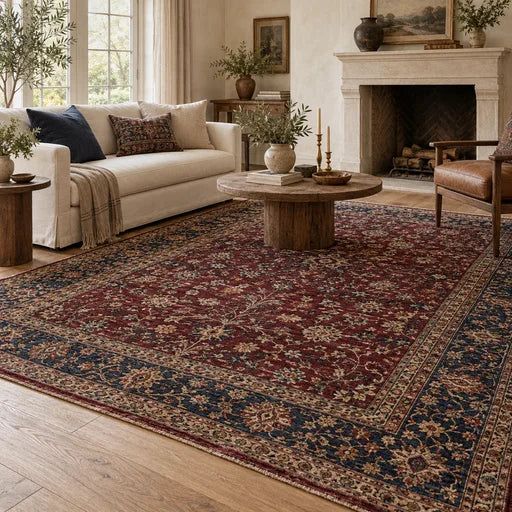
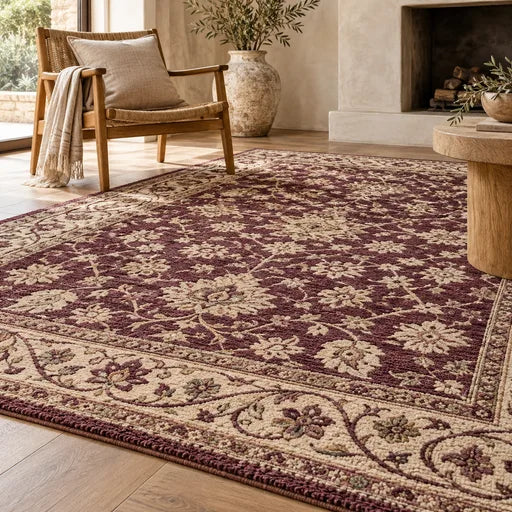
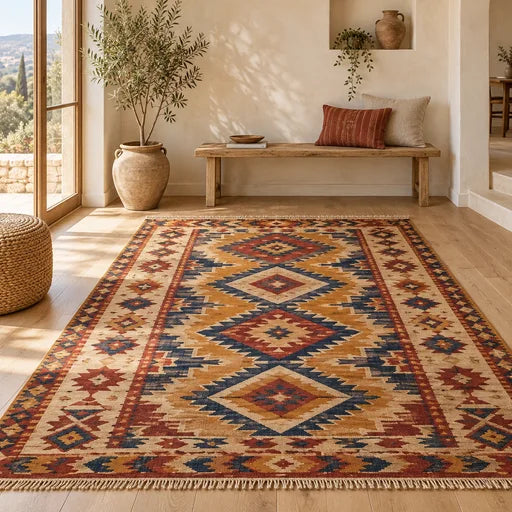
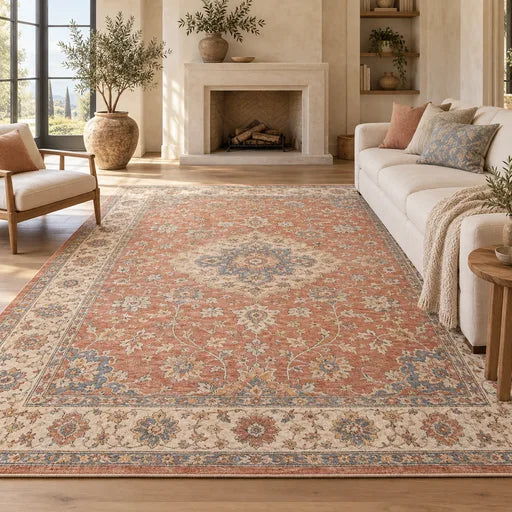
- Color depth: Natural dyes do not produce a uniform flat color. Each batch is slightly different, and within a single dye lot the wool absorbs unevenly. The result is the famous abrash effect — subtle horizontal banding of color across a rug — that gives vintage pieces their layered, alive look.
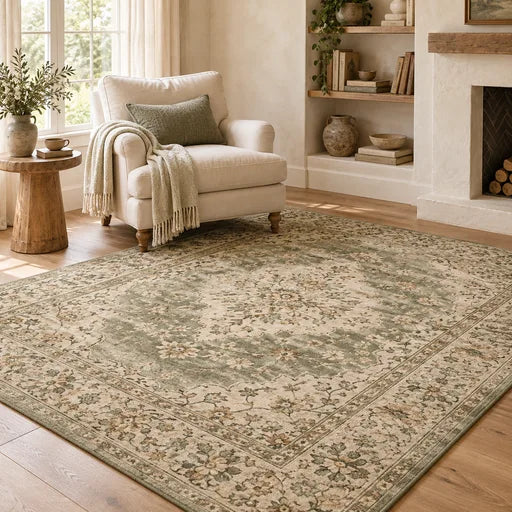
- Aging behavior: Natural dyes fade gracefully over decades, gently softening rather than turning ugly. Synthetic dyes often fade unevenly and to unflattering colors.
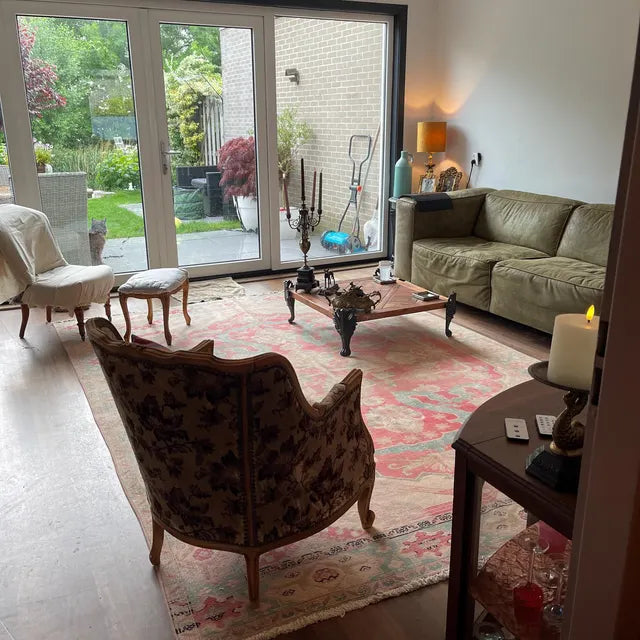
- Light interaction: Plant-dyed wool reflects light differently than synthetically dyed wool. The colors look richer in daylight, deeper in lamplight, and shift slightly throughout the day as the sun moves.
Most pieces in our vintage rug collection and almost all of our antique rugs use natural dyes. Newer pieces often mix natural and synthetic depending on the region and the specific weaver.
Red — Madder root (Kök Boyası)
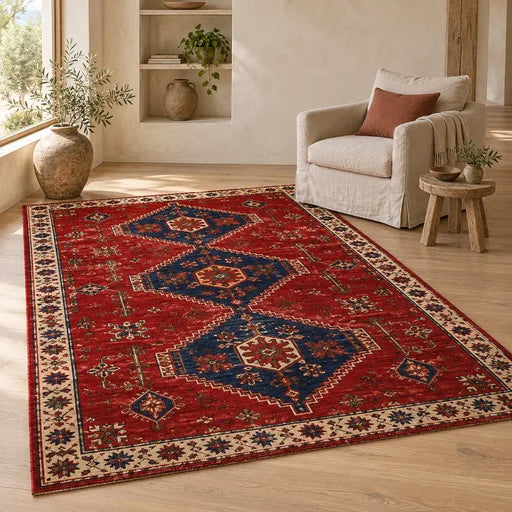
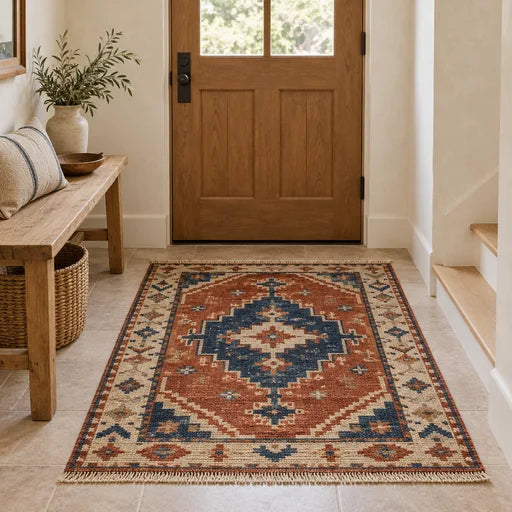
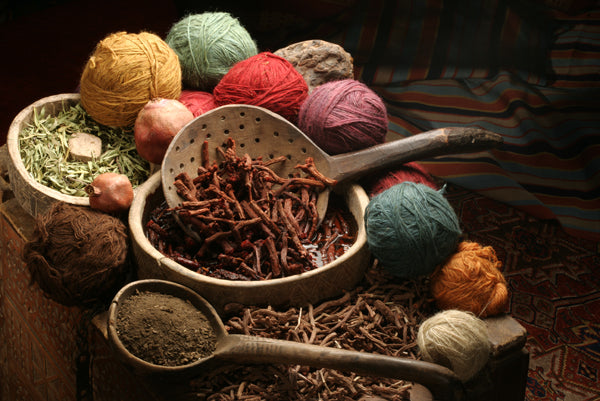
Madder is the queen of Anatolian dyes. It produces the rich reds, soft pinks, deep burgundies, and even some orange tones found in classical Anatolian rugs. The dye comes from the root of the madder plant (Rubia tinctorum), which has been cultivated in central Anatolia for over two thousand years.
How it is made
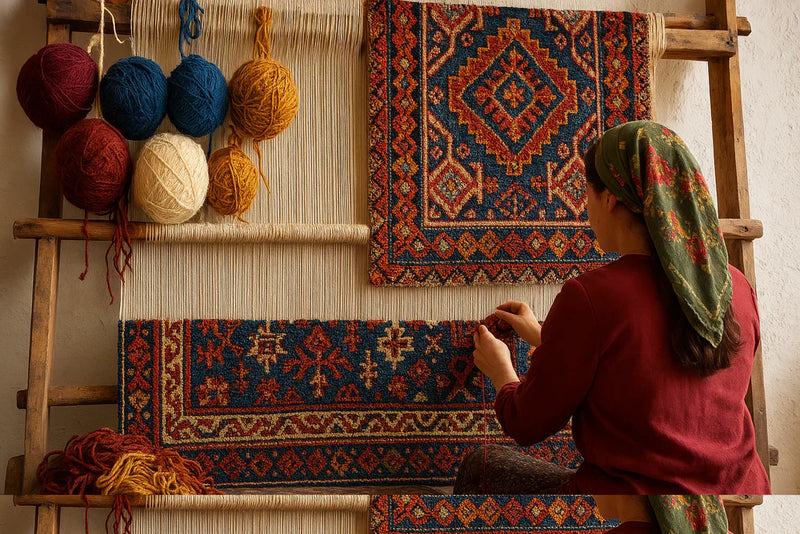
The dried madder roots are crushed and soaked in water. Sometimes the dye is left to ferment for days; sometimes it is heated gently. Wool that has been pre-treated with a mordant (most commonly alum, which the weavers in some villages still get from local mines) is then dyed in the madder bath, sometimes for hours, sometimes overnight.
The shade of red depends on:
- The age of the roots (older roots, deeper red)
- The mordant used (alum gives clear red; iron gives darker, more purple tones)
- The dye bath temperature (cool dye gives pink; hot dye gives blood red)
- The water itself (mineral content of local water shifts the final color)
This is why two madder reds from two villages 50 kilometers apart can look noticeably different. They are dyed with the same plant but with different water and different methods.
Blue — Indigo (Çivit)
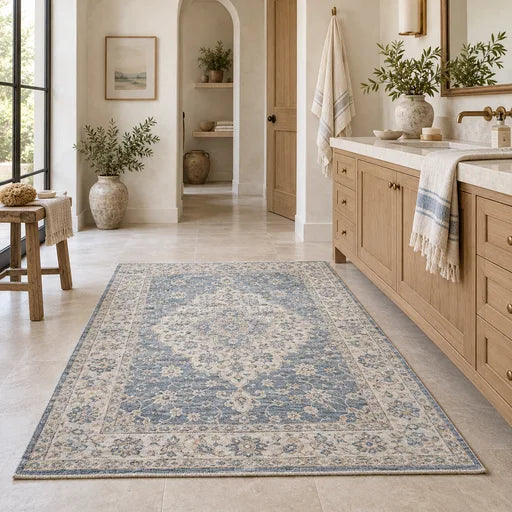
Indigo is the second pillar of Anatolian dyeing. The blues in a hand-knotted rug — from pale sky to deep navy — almost always come from indigo, the same plant dye used in jeans, only refined over millennia.
How it is made
Indigo dyeing is one of the most chemically curious processes in traditional craft. The leaves of the indigo plant (Indigofera tinctoria) do not directly dye wool. They have to be fermented to produce a precursor compound (indican), which is then oxidized in air to become the iconic blue color.
The process: leaves soaked in water for days, fermenting; the resulting liquid is mixed with an alkaline (traditionally wood ash, sometimes urine, the original "natural ammonia"); the wool is dipped into this pale yellow-green solution, then pulled out and exposed to air. The blue color develops in front of your eyes as the indigo oxidizes. The wool is then re-dipped, sometimes 5-10 times, to deepen the blue.
The deeper the blue, the more dips. The most saturated antique navy blues are the result of a week of patient work.
Yellow — Weld and Reseda
Weld (Reseda luteola) gives the bright clear yellows you see in old Anatolian pieces — particularly in the borders of village rugs. Other yellow sources include saffron (rare and expensive, mostly used in fine workshop rugs), pomegranate skin (more muted yellow-gold), and onion skin (brownish-yellow, common in domestic dyeing).
Pure yellow dyes are the most fugitive of the natural colors — meaning they fade fastest in sunlight. Many old village rugs have yellows that have softened to cream or beige over decades. This is normal aging and part of what gives vintage pieces their characteristic soft palette.
Brown — Walnut and Oak
Walnut hull (Juglans regia) and oak gall (Quercus) are the two main sources of brown in Anatolian weaving. Both produce a range from warm caramel to deep chocolate to almost-black brown depending on concentration and mordant.
Brown wool is often used for the outermost contours of patterns — the dark outline that separates a red field from a blue border. These darks were important visually and the dye was easy to make from materials at hand (walnut hull is a byproduct of nut harvesting; oak galls are common forest finds).
Interestingly, both walnut and oak contain natural tannins that not only dye but also help fix other colors. Wool dyed with walnut and then re-dyed with madder takes the red more deeply and permanently than wool dyed with madder alone.
Green — Indigo + Weld
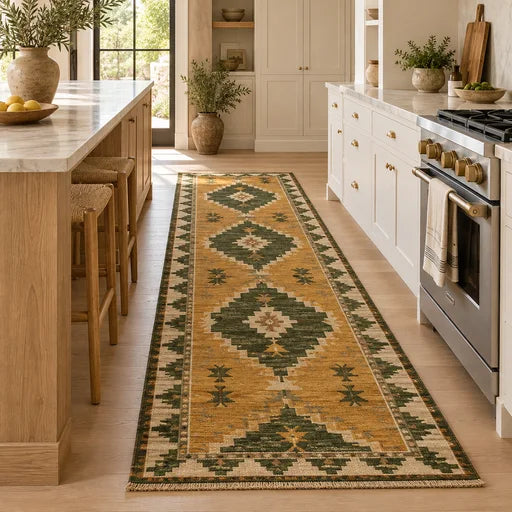
There is no naturally green dye plant in traditional Anatolian weaving — green is created by sequential dyeing. The wool is first dyed yellow (weld) and then dyed blue (indigo). The combination produces the soft greens characteristic of village rugs: olive, sage, faded forest green.
Because green required two dye baths, it was traditionally more expensive and labor-intensive than red or blue. You see proportionally less green in old Anatolian rugs than you might expect — when it appears, it is often used sparingly for contrast.
Purple — Logwood and shellfish
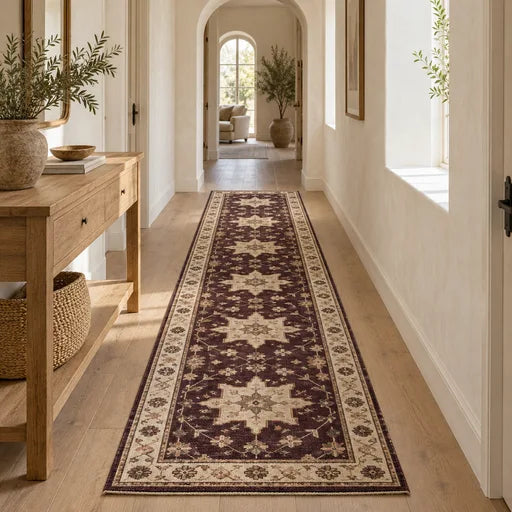
True purple is rare in Anatolian weaving. The classical source — Tyrian purple from murex shellfish — was a luxury good of the Mediterranean ancient world, far too expensive for village weaving. The purples you see in vintage pieces are usually made from logwood (an imported tropical wood) or by combining madder with iron mordant to shift red toward burgundy-purple.
The transition to synthetic dyes
Synthetic aniline dyes were invented in 1856 and reached Anatolian markets within a few decades. The shift was gradual:
- 1880s-1900: First synthetic dyes available in major Turkish cities, often poorly understood, sometimes producing rugs that faded into garish colors within years
- 1900-1930: Synthetic dyes spread to village markets; many village weavers adopt them partially while keeping traditional reds and blues from plants
- 1930-1970: Mixed-dye period — most village rugs of this era contain both natural and synthetic dyes; better synthetic chemistry produces more stable colors
- 1970 onward: Synthetic dyes dominate commercial production; natural dye weaving becomes a specialty craft preserved by individual masters
The "vintage" pieces from the 1950s-70s sweet spot we mostly sell often contain mixed dyes. The reds and blues are usually still natural (these were the most affordable plant dyes); the yellows and greens may be synthetic.
How to tell natural from synthetic in a finished rug
Without lab testing, you cannot know with certainty. But three signals strongly suggest natural dyes:
- Abrash: subtle horizontal banding within a single color field — almost always indicates natural dye
- Color depth on the base versus the tip of the pile: natural dye penetrates more uniformly through the fiber; synthetic dye sometimes sits more on the surface
- Aging pattern: if the rug is old and the colors have softened beautifully and evenly, the dyes are almost certainly natural
The weavers who still use natural dyes
In a few Anatolian villages — particularly in the DOBAG (Doğal Boya Araştırma ve Geliştirme) project regions around Çanakkale, and in specific weaving households in Konya and Sivas — masters are still using plant dyes prepared the traditional way. Their pieces are increasingly rare and increasingly valued.
When we source from these regions, we know the dye sources. The information is part of what we are buying. Most pieces in our wool rug collection come from such sources.
The cultural significance
Natural dyes are not just about the color of a rug. They are about a thousand-year continuity of knowledge — what grows where, what mordants work, how water affects shade, when to harvest madder, how long to ferment indigo. This knowledge is held in village households, often by elderly women, and it is rarely written down. When a village stops weaving, the knowledge often goes with it.
Every vintage rug with natural dyes is, in a small but real way, a record of that knowledge. The reds are the woman who knew madder roots. The blues are her son's wife who learned to ferment indigo. The greens are the careful work of dyeing twice. You are walking on three or four generations of craft history.
Final word
The colors are the soul of an Anatolian rug. They are also one of the things that separates a piece you live with for fifty years from a piece that looks washed out by year three. When you choose a vintage rug, you are choosing a palette that has already proved its longevity — a piece that has been sitting in light and life for decades and still looks beautiful.
If you want to know about a specific piece's dye sources, ask. For pieces we have sourced from natural-dye weavers we know personally, we can tell you. Browse the collection and message us about anything that catches your eye.