How to Fix a Faded Rug: What Works, What Doesn't and When to Call a Restorer
Quick answer: To fix a faded rug, first check whether it is faded or just dirty: a careful wool-safe wash often brings back brightness. True sun fading cannot be reversed at home. Rotate the rug, filter direct light, and use a pad to stop it worsening. For visible patches, a professional restorer can colour-match small areas; avoid household dyes and markers.
Can You Actually Fix a Faded Rug?
Partly, and it depends on why the colour went. Fading from sunlight is a loss of dye in the wool itself, and nothing you buy in a bottle puts it back. What you can do is stop it getting worse, clean away the grey film that makes a rug look more faded than it is, and, if the rug is worth it, have a professional restorer touch in or re-dye the worst areas.
Before you try anything, work out which of four problems you have. They look similar from across the room and need very different treatment.
| What you see | Likely cause | Can it be fixed? |
|---|---|---|
| Dull, greyish colour that brightens when you brush a patch | Dust and soil trapped deep in the pile | Yes, with proper washing |
| One side or a band across the rug is paler, edges still strong | Sun from a window, uneven exposure | Stop the damage; limited repair |
| Colour has "run" or bled into the cream areas | Unstable dye plus moisture | Only by a specialist, and the sooner the better |
| Whole rug evenly soft and pale, with a slightly chalky look | Age, wear and years of washing; sometimes deliberate in an Oushak | Usually not, and often not a flaw |
Is It Faded, or Just Dirty?
This is the first test we do on any rug that comes in. Turn back a corner and look at the base of the pile, down by the knots. Colour there is protected from light and shows you what the rug looked like when it was new. Then compare it with the surface.
If the base is only a little stronger than the top, you have normal ageing. If the base is rich and the surface is flat and grey, the rug is dirty, and a thorough wash will give back much of what you think is lost. Our guide to caring for a vintage wool rug covers vacuuming and washing in detail.
A quick colour check
- Fold back a corner and look at the underside and the base of the pile.
- Rub a damp white cloth on a small hidden patch. If colour comes off onto the cloth, stop; the dyes are unstable and the rug needs a professional.
- Shine a bright light along the surface. Shadows in the pile that look grey point to soil, not fading.
- Compare an area that has always sat under furniture with one that has been in the sun. The difference is your sun damage.
What Causes Rugs to Fade?
Ultraviolet light is the main culprit. Wool is a protein fibre, and sunlight breaks down both the fibre and the colour in it. A rug lying in a south-facing window can lose noticeable depth over a few seasons, particularly in reds and blues.
Other causes are less obvious:
- Harsh cleaning. Bleach, strong alkaline detergents and optical brighteners strip dye. Household carpet cleaners are made for synthetic carpet and are too aggressive for wool.
- Repeated wet washing without proper rinsing. Leftover detergent holds dirt and dulls the surface.
- Foot traffic. Abrasion wears the tips of the pile first, and the tips carry the strongest colour.
- Heat and underfloor heating. Long, dry heat makes wool brittle over time.
- Age. Natural dyes soften with time. That soft tone is what many people buy an antique rug for.
To see how colour is made in the first place, read our article on natural dyes and Anatolian rug colours.
How Do You Stop a Rug Fading Further?
Prevention is the part you fully control, and it is far cheaper than repair. These steps work for any wool rug.
- Rotate it. Turn the rug 180 degrees every three to six months so the light and the wear are shared evenly. This also avoids a hard line between pale and strong areas.
- Filter the light. Sheer curtains, blinds or a UV-filtering window film cut direct sun on the floor. You don't need a dark room; you need to avoid hours of direct beam.
- Move it, if you can. A rug in a hallway or beside a north-facing window ages far more gently than one in front of patio doors.
- Use a pad. A felt and natural-rubber pad cushions the pile so it wears less. See our notes on choosing a rug pad.
- Vacuum without the beater bar. Use suction only, or a brush head on a low setting, and go with the direction of the pile.
- Treat spills early. Blot with a clean cloth and cool water. Never rub.
Can You Restore Faded Colour at Home?
Honestly, not in any way we would trust on a hand-made rug. Here is what people try and what we would say about each.
Washing to bring back brightness
If dirt is the problem, a gentle wash with a wool-safe, pH-neutral detergent, cool water and a very thorough rinse is the safest step. Do a hidden colour test first, as above. For valuable or very old pieces, send the rug to a specialist who washes rugs flat and dries them properly, because trapped moisture causes its own damage.
Vinegar rinses
A small amount of white vinegar in the final rinse is often suggested to help neutralise detergent. It will not bring back lost colour. Keep it dilute and rinse again.
Fabric markers, wool dye and paint
We advise against these. Household dyes don't match old wool, they sit on top of the pile, and they can leave a stiff, shiny patch that is hard to reverse. A badly done touch-up can reduce the value of an antique far more than the fading did.
What Can a Professional Restorer Do?
A skilled restorer can work on a faded area in two ways. The first is spot colour matching: they re-dye individual wool strands or add matched yarn, working in a small area so the rug keeps its character. The second is a full re-dye, which is rare, expensive and changes the rug. Most restorers will talk you out of it unless the rug is badly uneven.
Ask a restorer for examples of earlier work, a written quote, and what they will do if the colour doesn't take. Compare the cost with the value of the rug; for a modest piece it can be better to keep it and accept the softer tone. Our article on hand-made rug repair explains what repairs involve.
Is a Faded Rug a Problem or a Feature?
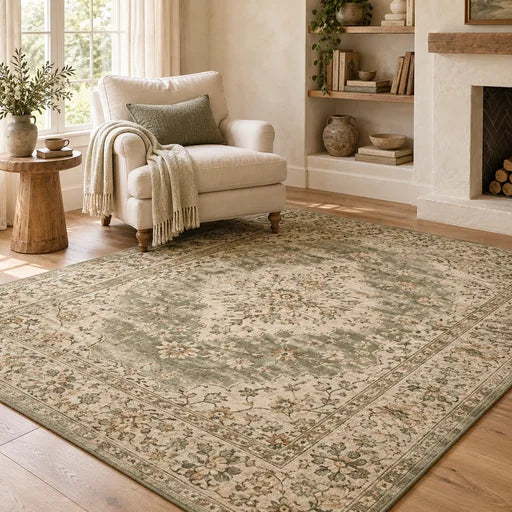
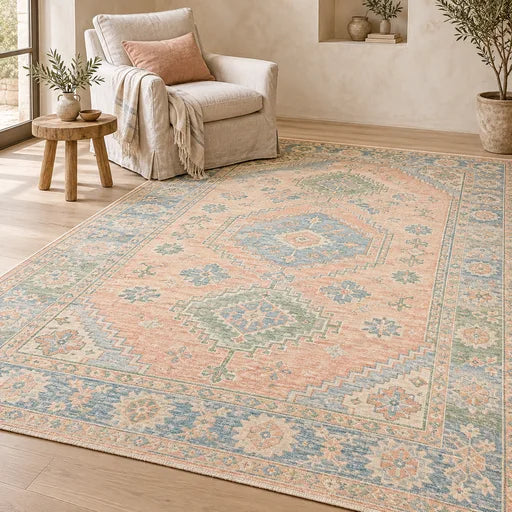
It depends on the rug, and this is where we would push back on the idea that faded always means damaged. Many people look for rugs with a pale, soft palette. Oushak rugs in particular are often woven or finished in muted terracotta, sage and gold, and many have been gently washed or overdyed to a pastel tone. That worn-in look is a style, not a defect. See what an Oushak rug is and our Oushak rugs.
The difference to watch for is uneven fading. Soft overall colour reads as intentional. A bright strip next to a pale one, or a pale patch where a sofa leg has shielded the rest, reads as damage. Abrash, the subtle bands of shade in hand-dyed wool, is a different thing again: it comes from different dye batches and is considered part of the beauty of a village rug.
Rooms where a pale rug works well
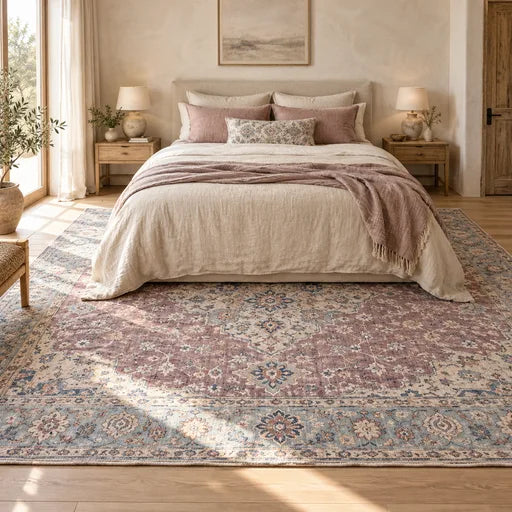
- Bedrooms. Low light and soft tones suit each other. Browse our bedroom rugs.
- Entryways and small corners. A 3x5 ft (90x150 cm) piece takes the wear and can be rotated easily.
- Living rooms with filtered light. A large pale rug brightens the room, provided the window is shaded.
Buying a Rug That Will Hold Its Colour
If you are shopping and want to avoid this problem, a few checks help.
- Part the pile and check that the colour at the base matches the surface closely.
- Ask if the rug has been washed and how recently. We prepare every piece before it is listed; read how in preparing our vintage and antique rugs for sale.
- Look at the back. Colour that shows as strong on the underside tells you how much light has bleached the face.
- Be realistic about placement. A beautiful rug in the sunniest spot will fade; the same rug in a shaded room may look almost unchanged for decades.
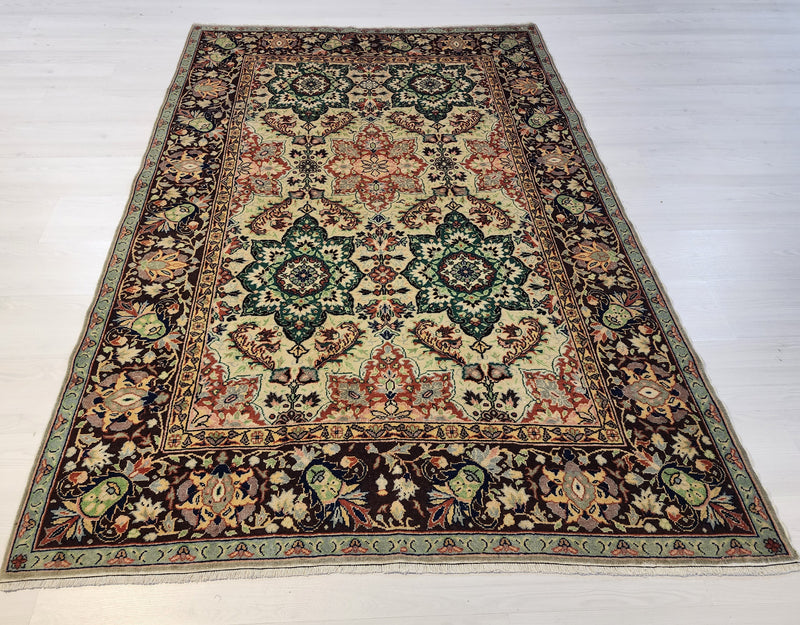
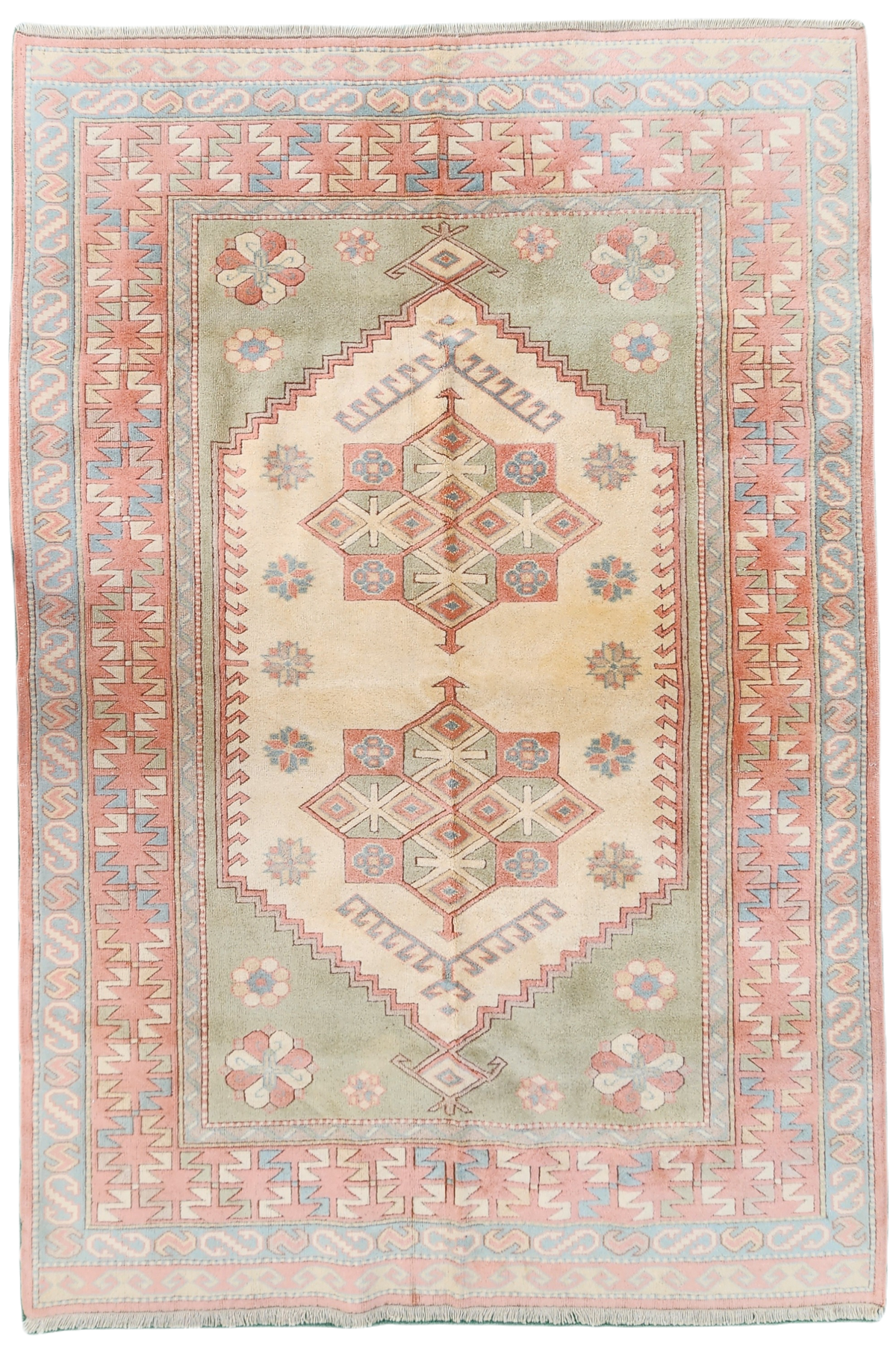
Every piece we sell is vintage or antique, hand-made in Turkey, and one of a kind. If you would like a pale palette from the start, look at this 8x5 ft pastel antique Anatolian rug, or browse our vintage rugs. Shipping is free worldwide with a 14-day return window.
Which Rug Sizes Are Easiest to Rotate?
Rotation is the habit that keeps colour even, so it helps to choose a rug you can handle. A 5x8 ft rug is manageable alone; a 9x12 ft needs two people.
| Size (ft) | Size (cm) | Rotation |
|---|---|---|
| 3x5 | 90x150 | Easy, one person |
| 5x8 | 150x240 | One person, some effort |
| 6x9 | 180x275 | Two people ideal |
| 9x12 | 275x365 | Two people, move furniture first |
Rotating a large rug only twice a year is still better than never. Mark one corner with a small tag so you remember which way it faced last time.
Pieces from our collection
Every piece below is one of a kind and in stock today:
- Aphrodite — Antique Oushak Wool Area Rug
- Ianthe — Antique Anatolian Wool Area Rug
- Magnesia — Vintage Karaova Rug, 6x10
- Eidyia — Antique Oushak Wool Small Rug
Frequently asked questions
Can sun-faded wool colour be restored?
Not fully. Sunlight removes dye from the wool, so nothing can bring it back on its own. A restorer can re-dye or colour-match small areas, which improves the look, but the result is a repair rather than the original colour. Preventing further fading is usually the best use of your effort.
How often should I rotate a rug to avoid fading?
Turn it 180 degrees every three to six months. If the rug sits near a bright window, lean towards three. Rotating spreads light and foot traffic evenly, so you avoid a clear line between pale and strong areas that makes a rug look unevenly faded.
Is it safe to use vinegar on a faded rug?
A small amount of diluted white vinegar in the final rinse is generally fine for wool and helps remove detergent, but it will not restore colour. Always test a hidden spot first, rinse well, and never soak a rug whose dyes come off on a damp white cloth.
Does a faded look lower the value of a Turkish rug?
Not always. A soft, even, muted tone is prized in many Oushak and antique pieces. Uneven fading, where one strip is much paler than the rest, or worn pile, tends to matter more. Condition, structure and design count alongside colour.
Will a rug pad help stop fading?
A pad doesn't block light, but it cushions the pile so it wears less, and worn pile tips are where colour is lost first. Combine it with rotation and window shading for the best protection against uneven, patchy fading over the years.
Written by the team at Heritage Nomadic Art Gallery in Sultanahmet, Istanbul, the gallery behind TurkishRug.com, where every rug and pillow is chosen, washed and photographed by hand. Last updated November 2, 2026.