Understanding Anatolian Rug Symbols: Tree of Life, Evil Eye, Ram's Horn & More
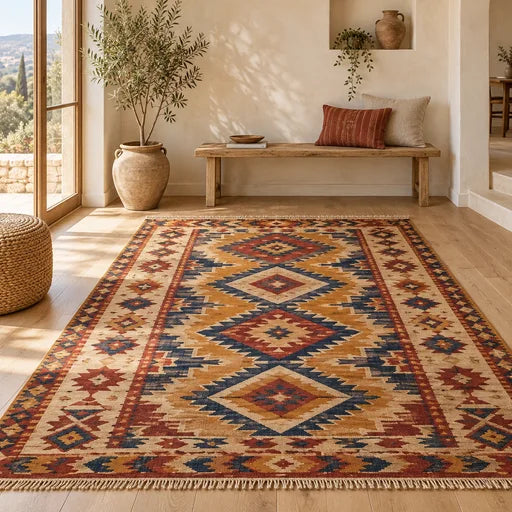
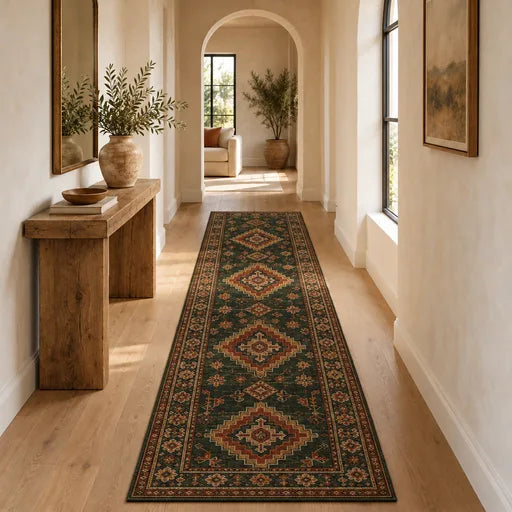
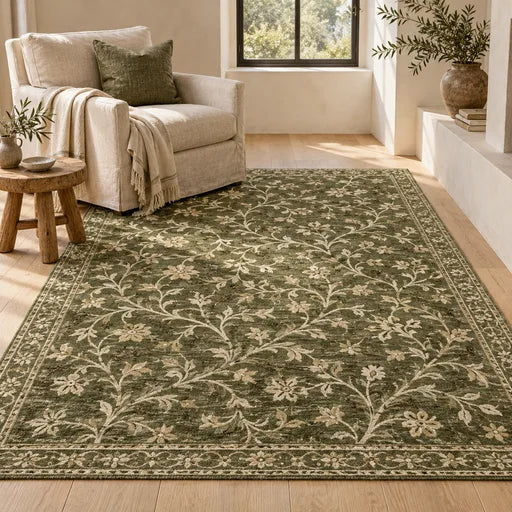
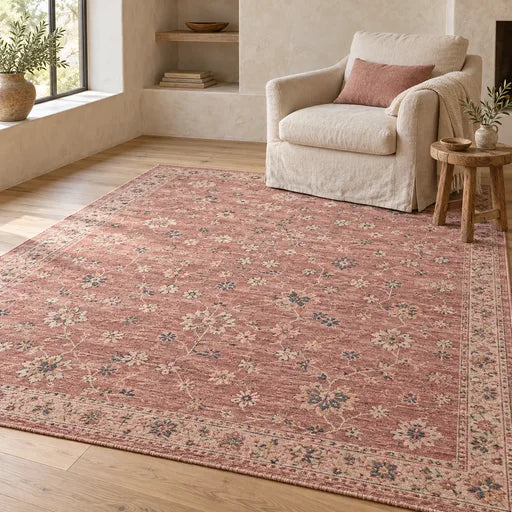
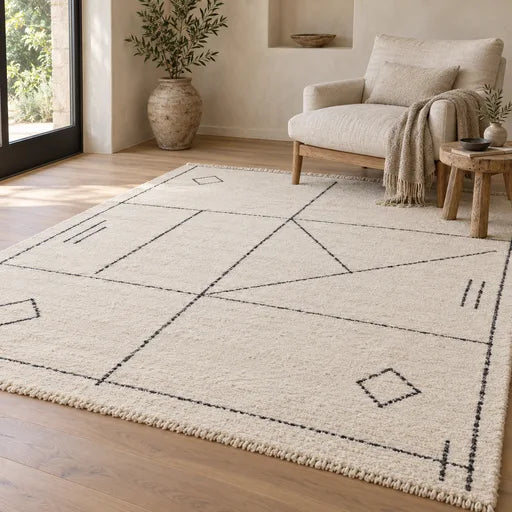
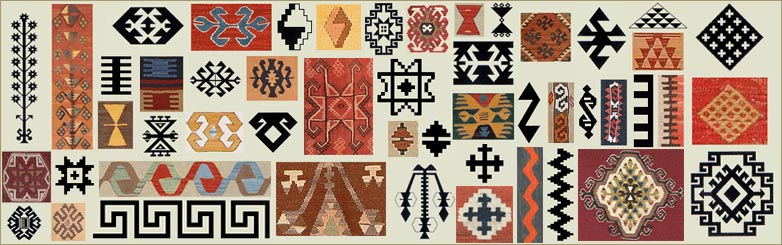
If you have ever spent more than a minute looking at a hand-knotted Anatolian rug, you have probably noticed the same shapes appearing again and again. A diamond. A pair of hooks. A row of small Xs. A central tree-like figure stretching from one end to the other. These are not random decorations. Anatolian rug weavers have been using a shared visual vocabulary for thousands of years, and almost every motif you see on a village rug carries a specific meaning — wishes for prosperity, prayers for protection, statements of identity.
This guide walks through the most common symbols you will see on the pieces we source from villages across Turkey. We are not folklorists; we have learned this vocabulary from the weavers themselves, often in the same houses where these patterns have been woven for centuries.
Tree of Life (Hayat Ağacı)
One of the oldest and most widespread motifs in Anatolian weaving. The Tree of Life appears in rugs from almost every region — Konya, Kayseri, Sivas, the eastern villages, the Aegean towns. It is typically a vertical, branching form, sometimes stretching from one short end of the rug to the other, sometimes contained within a central medallion.
The Tree of Life represents the connection between the earthly world and the heavens. In pre-Islamic Anatolia, it was tied to ancient nature cults — Hittite and Phrygian roots stretching back four thousand years. In Islamic weaving it was reinterpreted as a symbol of eternal life and paradise. In village folk weaving, it is also simply a wish — for fertility, for a long lineage, for the family to continue.
You will see Trees of Life most prominently on Oushak rugs and on prayer-shaped rugs from the western Anatolian regions.
Evil Eye (Nazar)
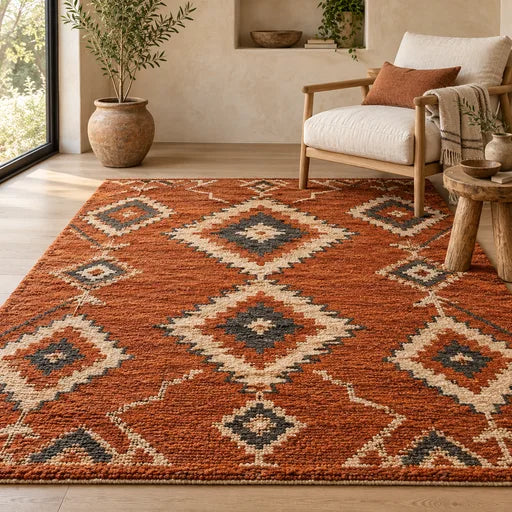
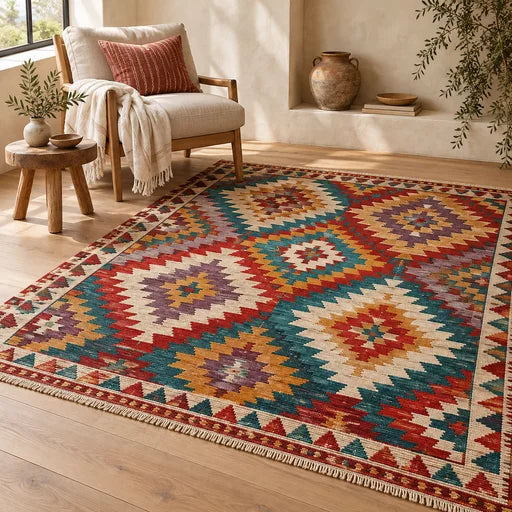
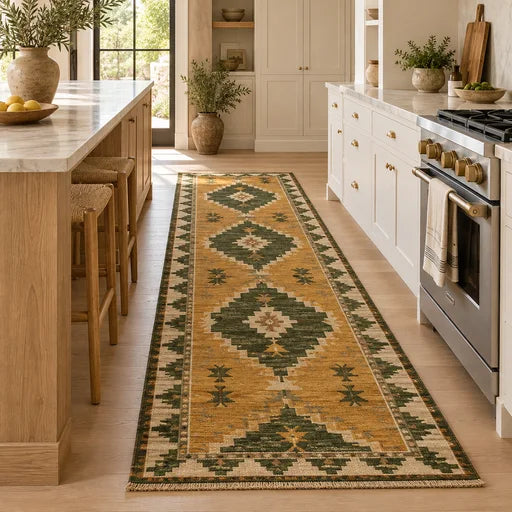
Walk through any village in Turkey and you will see the blue glass evil-eye charm hanging on doors, in cars, around children's necks. The same protective symbol appears in rugs — sometimes as a literal eye shape, more often abstracted into a diamond with a dot in the center, or as nested squares.
The evil-eye motif is a request for protection from envious or malicious gazes. Weavers traditionally placed it in rugs woven for a new family member — a daughter's dowry rug, a son's first home rug — as a kind of woven blessing. You will often see evil-eye diamonds repeated along the borders of a rug, a continuous protective frame around whoever stands on the carpet.
Ram's Horn (Koçboynuzu)
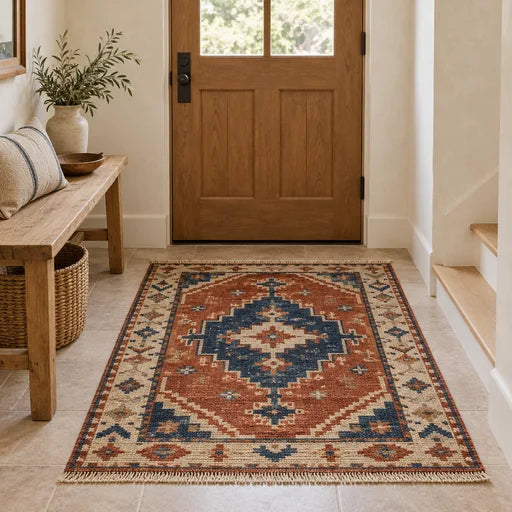
Two curling forms facing outward, looking somewhere between a pair of horns and a stylized letter S. The Ram's Horn is one of the most distinctive and frequently woven motifs in Anatolian carpets, particularly in Konya and Kayseri village pieces.
Its meaning is layered. The ram has been a symbol of strength, virility, and masculine power across Mediterranean and Central Asian cultures for thousands of years. In rugs, the Ram's Horn motif is a wish for strength, leadership, and the ability to provide for one's family. It is also tied to wealth — sheep wealth, specifically, which for nomadic and village communities meant survival.
Hands & Fingers (El, Parmak, Bereket)
A simple five-pronged or comb-like shape. Sometimes it looks like a hand, sometimes like a row of vertical bars. This is one of the most layered symbols in the Anatolian vocabulary, with several overlapping meanings.
The "Hand of Fatima" interpretation — protection against evil, a blessing — comes from Islamic tradition. But the same shape predates Islam in Anatolia. In older Hittite and Lydian contexts, the upward-facing hand represented giving or receiving from the divine. In some village traditions, the same motif is read as a comb, associated with hair and femininity, and is woven into rugs by brides as a wish for fertility (the comb traditionally being a wedding gift to a young woman in rural Anatolia).
Running Water (Su Yolu)
A continuous zig-zag or wave-like line running through the rug, often along the border. In a region as arid as much of central and eastern Anatolia, water was — and remains — the most important resource. Weavers wove the Running Water motif as a wish for abundance: of rain, of springs, of life itself.
You will see Su Yolu motifs prominently in rugs from villages near old waterways and in many flatwoven kilims, where the angular geometry of the kilim weaving technique suits the motif beautifully.
Scorpion (Akrep)
An angular form with two pincers reaching outward and a curled tail. Scorpions are a real danger in rural Anatolia, and the woven Scorpion motif is — like the Evil Eye — a protective request. Specifically, it is asking for protection from the literal animal as well as from anything else that bites, stings, or pierces.
Scorpion motifs are most common in tribal rugs from south and southeastern Anatolia, the regions where actual scorpions are most likely to wander into a tent or village house.
Hairband / Bukağı
A motif that looks like a hourglass or a pair of triangles meeting at their points, sometimes interpreted as a stylized hairband or a "fetter." This is one of the more poignant Anatolian motifs — it represents a young woman's wish that her future husband will not leave her, that the bond between them will be lasting.
Bukağı motifs are most common in dowry rugs — pieces woven by young women preparing for marriage. When you see one in a vintage village rug, you are looking at a personal hope from the weaver, woven into wool decades ago.
Star (Yıldız)
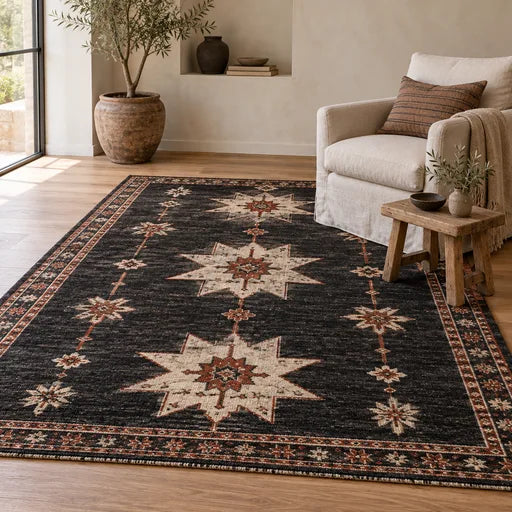
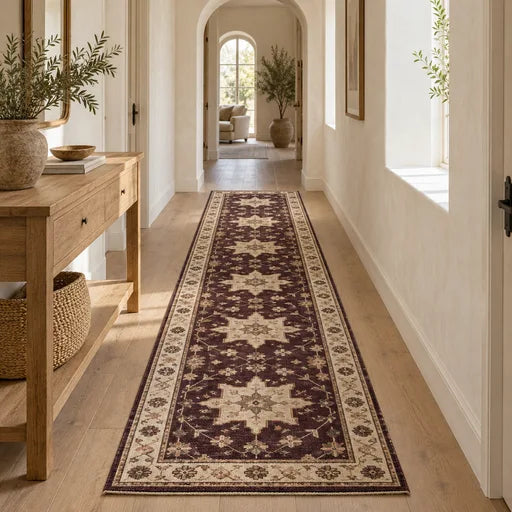
An eight-pointed star is one of the most recognizable Anatolian symbols. It appears on rugs, ceramics, architecture, and tomb decorations across centuries. The star represents happiness, hope, and divine guidance.
In Seljuk and Ottoman art, the eight-pointed star carried specific cosmological meaning — the eight directions, the eight angels, the eight paths to heaven. In folk weaving, it is often simplified into the meaning "may your life be bright."
Burdock (Pıtrak)
A clustered, prickly-looking motif that resembles the burdock plant. The pıtrak is woven into rugs as a wish for abundance — particularly the abundance of children. A house with many pıtrak motifs in its rugs is a household hoping to grow.
The Cross / Crossed Path (Çapraz)
Simple cross motifs in Anatolian rugs almost never have Christian meaning. The cross is one of the oldest geometric symbols in human visual culture and in Anatolian weaving it most often represents the meeting of opposites — earth and sky, masculine and feminine, four directions, four seasons. It is a symbol of balance and completion.
How to read a rug
The fascinating thing about Anatolian rug symbols is that they are not isolated — they appear in combinations, and a careful weaver was telling a small story with the choices she made. A dowry rug might combine Hairband (commitment), Pıtrak (children), and Tree of Life (long lineage) — a complete blessing for a new household.
Antique rugs often carry more clearly-defined symbolism because they were woven before mass-market commercial pressures simplified the patterns. The pieces in our antique rugs collection often include three or four major motifs in a single piece, each meaningful, all chosen by the weaver.
The symbolic afterlife of a rug
One of the things we love about handing over an Anatolian rug to a customer is the realization that the weaver from 1940 had no idea where her work would end up. She wove protection motifs and fertility wishes and prayers for her family. Eighty years later, those same motifs are on the floor of a home in London, New York, Berlin, Sydney — still protecting, still wishing, still meaning what they meant on the loom.
Every piece in our Anatolian rug collection carries this layered language. You do not need to know any of it to enjoy a rug. But once you start reading the symbols, you start to see something else — a conversation, in wool, across generations.