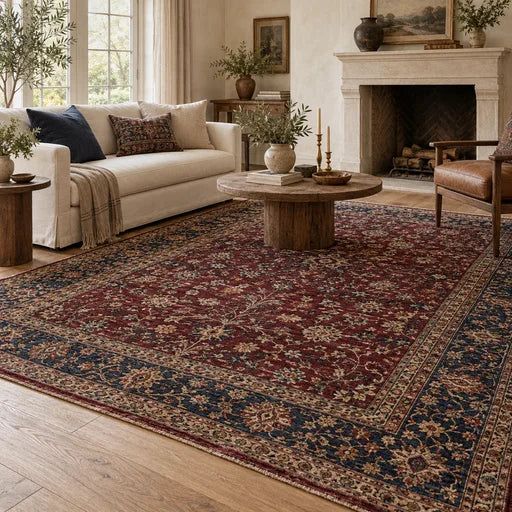
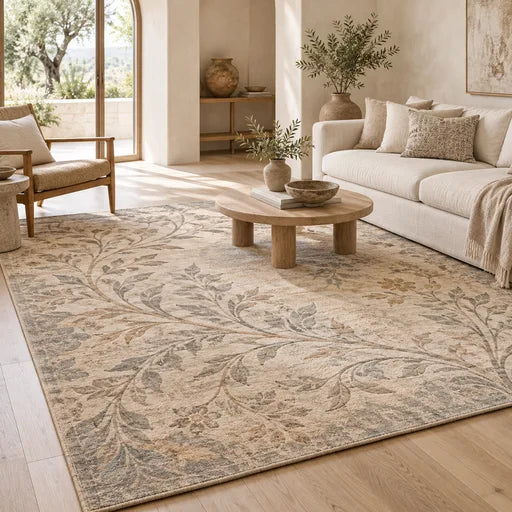
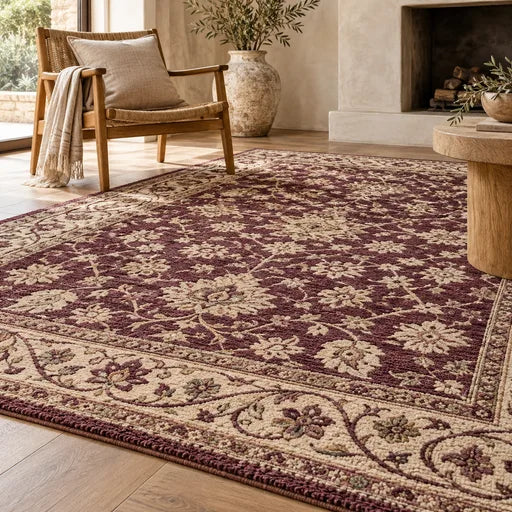
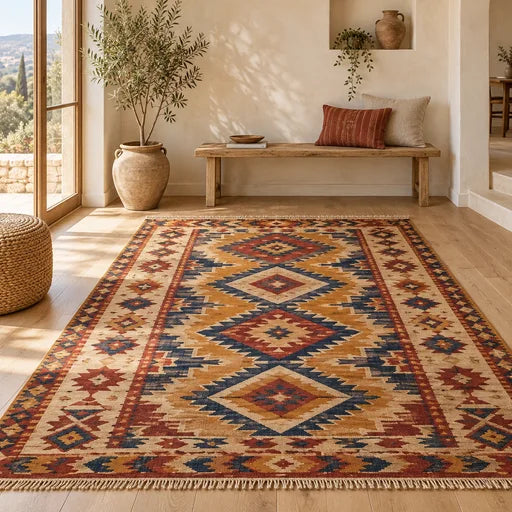
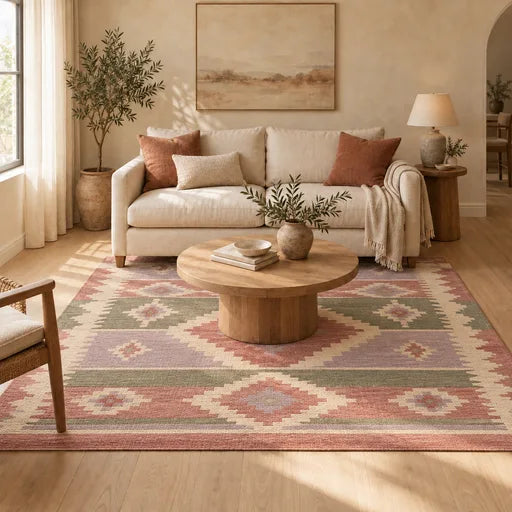
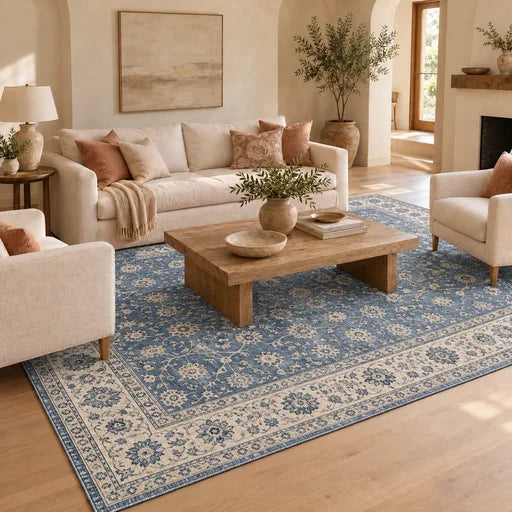
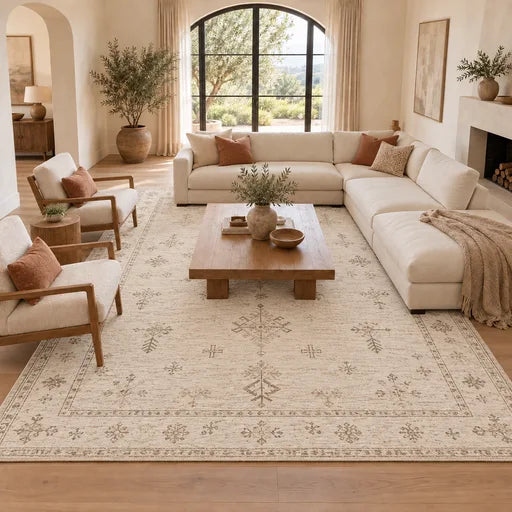
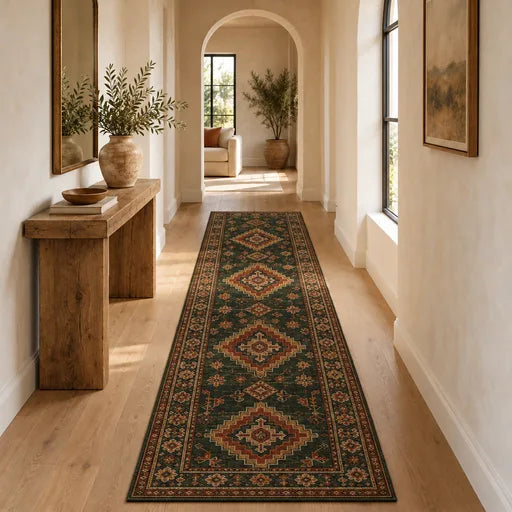
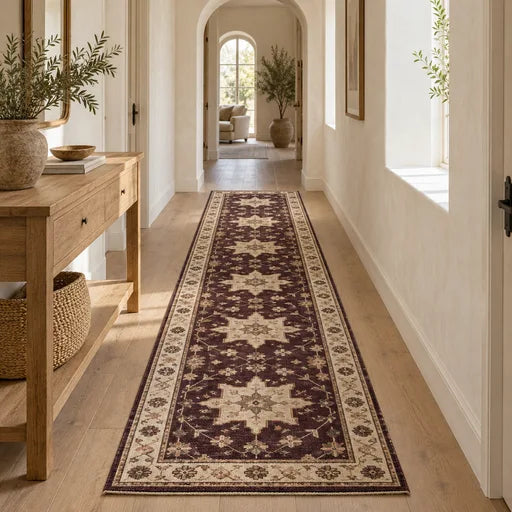
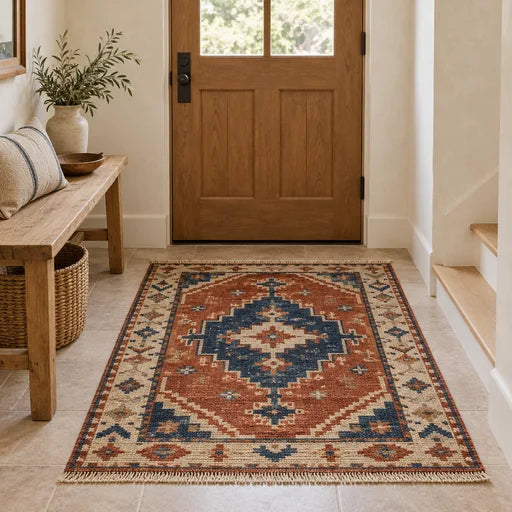
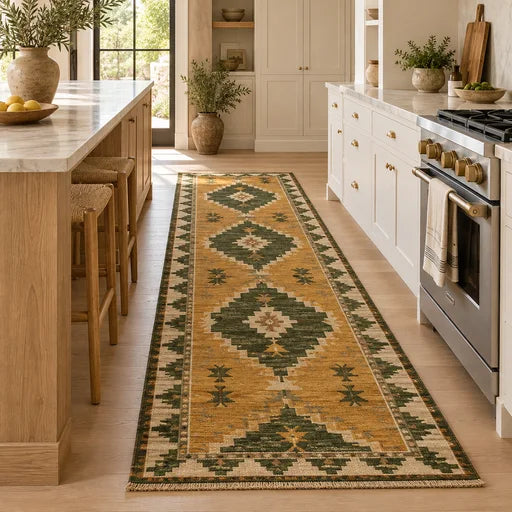
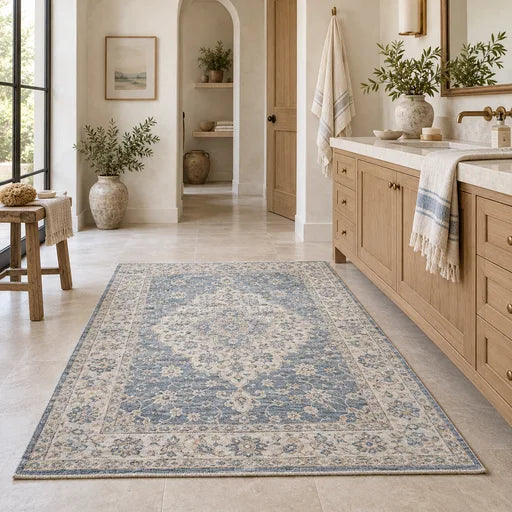
How to Layer Rugs Like an Interior Designer
Layered rugs are one of those interior design choices that look casual and effortless but are actually carefully thought through. Done well, layering adds visual depth, softens the geometry of a room, and lets you combine pieces of different scales and styles. Done poorly, it looks like you ran out of floor space and just kept laying rugs down.
This is the practical guide we give to designers and clients who want to layer rugs in their homes. The rules below are not rigid — they are starting points that almost always produce a good-looking result, and the moments when you can confidently break them.
Why layer at all?
Three good reasons to layer rugs:
- Scale problem solving: You have a beautiful rug that is the wrong size for the room. Layer a larger neutral base underneath, and the smaller rug suddenly works.
- Visual interest: A single rug, no matter how beautiful, is a single statement. Two layered rugs make a conversation — between materials, scales, patterns.
- Practicality: A large neutral base under a smaller vintage piece protects the vintage piece from foot traffic on its edges. The vintage rug ages slower. The base does the work.
The two-rug rule
The most common, most flexible layering format: one larger base rug plus one smaller statement rug on top.
The base layer
The base rug should be:
- Larger than the statement rug by at least one full size category (if the top rug is 5×7, the base should be 8×10 or larger)
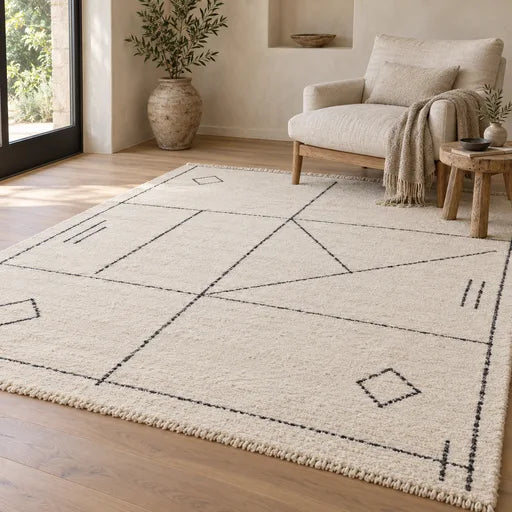
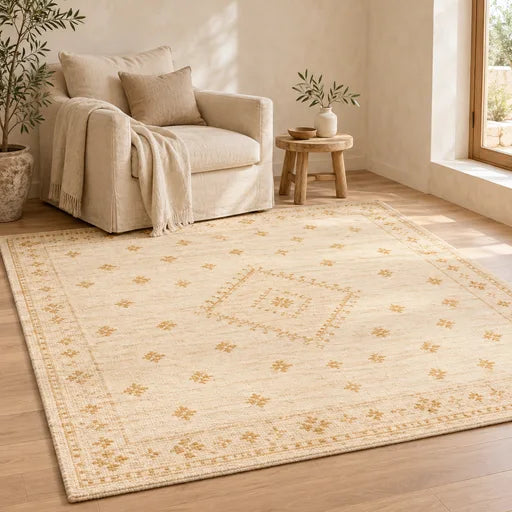
- Neutral in palette — beige, cream, taupe, faded oatmeal, soft gray
- Texturally subtle — jute, sisal, flatweave kilim, or a low-pile neutral vintage rug
- Patternless or barely patterned — no competition with the statement piece
Jute and sisal bases are the classic layering choice for a reason: they ground the statement rug visually without distracting from it, and they cost much less per square foot than a hand-knotted piece, so spending big on a smaller jewel on top makes sense.
The statement layer
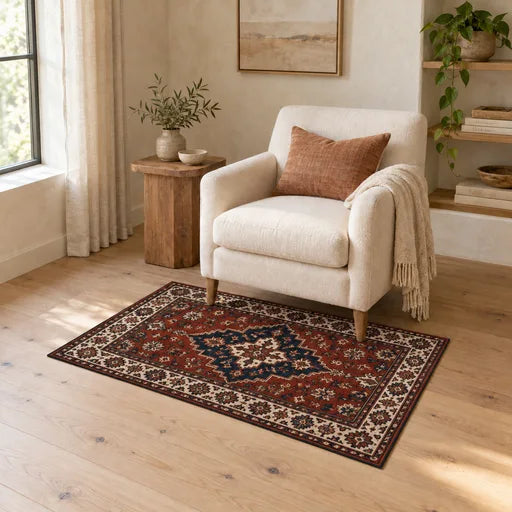
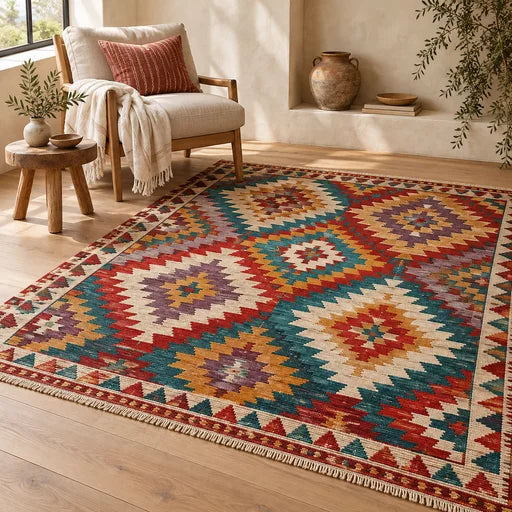
This is where the personality lives. A vintage Anatolian rug, an antique Oushak, a vivid kilim. The statement layer should be:
- Smaller than the base — between half and two-thirds the size
- Bolder in pattern or color — this is what people will notice first
- Centered or deliberately offset on the base (offset is harder to get right but more design-y when it works)
Texture rules
The single fastest way to make a layered look feel intentional is to ensure the two rugs have different textures. The eye reads texture before color or pattern. Two pieces with similar pile heights and weaves blend together and the layering effect disappears.
Good texture pairings
- Jute base + low-pile wool: rugged, casual, fits boho/farmhouse/Japandi
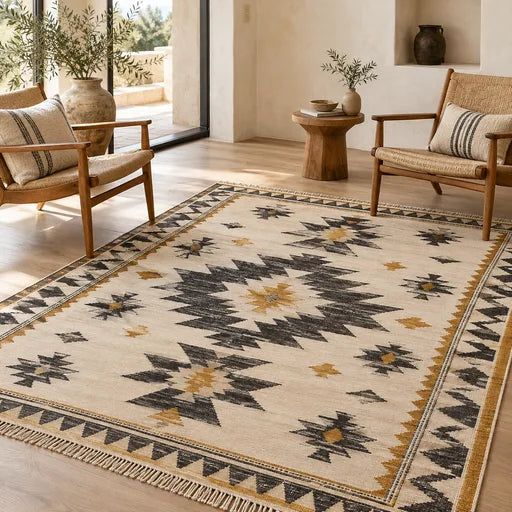
- Flatweave kilim base + plush wool top: kilim's flat geometry contrasts beautifully with the soft pile of an Oushak or Konya rug
- Neutral wool base + silk or bamboo-silk top: subtle shine of the top piece reads against the matte base
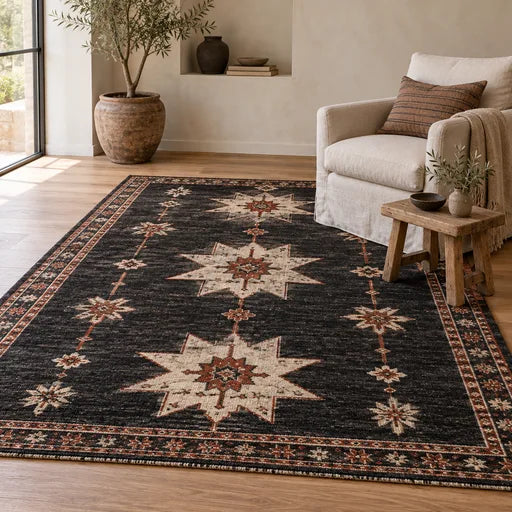
- Distressed vintage base + bright kilim top: faded base, vivid focal point
Bad texture pairings
- Two plush wool rugs at similar pile heights — they read as one confused rug
- Two flatweaves stacked — the top one will slide; visually they merge
- Silk on silk — too precious, the layering reads as accidental
Color rules
Three reliable approaches:
Tonal layering (safe + sophisticated)
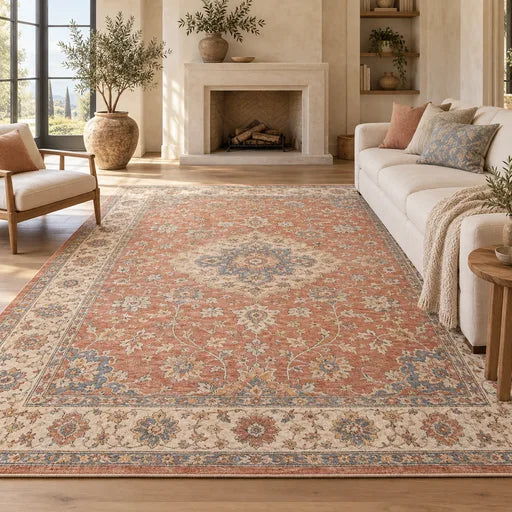
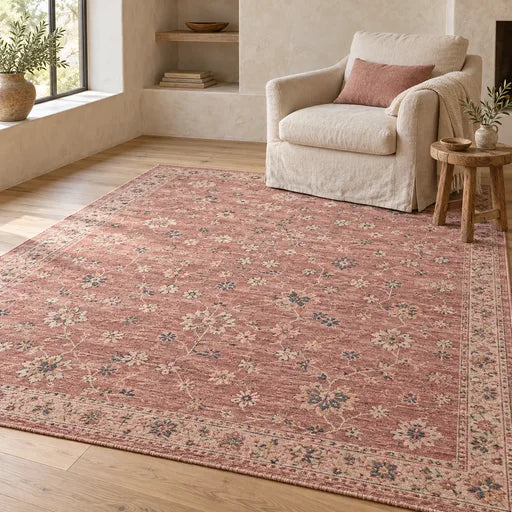
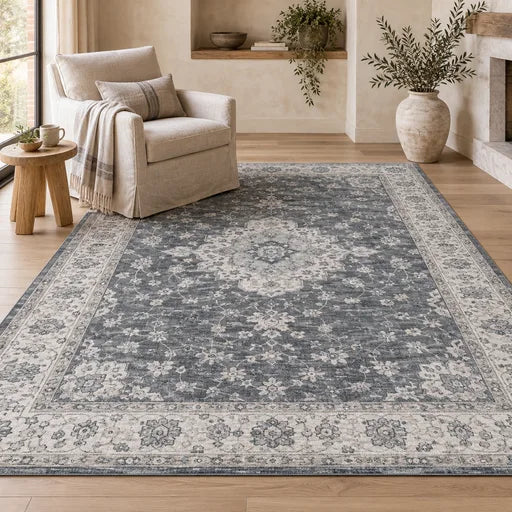
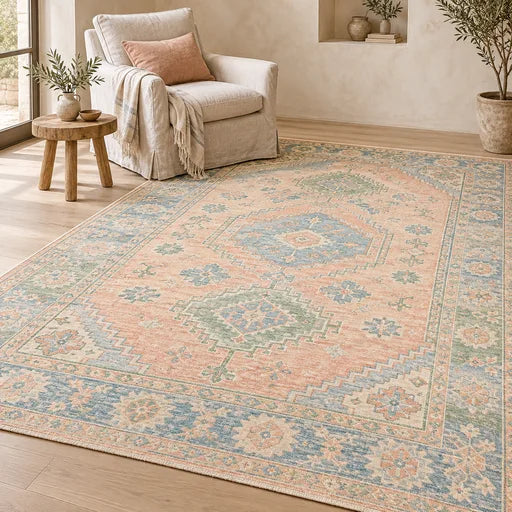
Both rugs in the same color family but different intensities. A cream-and-beige jute base with a soft-blush-and-rust Oushak on top. The eye sees one cohesive palette but reads two distinct rugs because of texture and pattern variation.
One neutral, one color (most popular)
Base is genuinely neutral. Top rug carries all the color. This is the standard interior-designer approach because it isolates the color decision to a single piece — you can swap the top rug seasonally without changing the room's foundation.
Complementary contrast (bold)
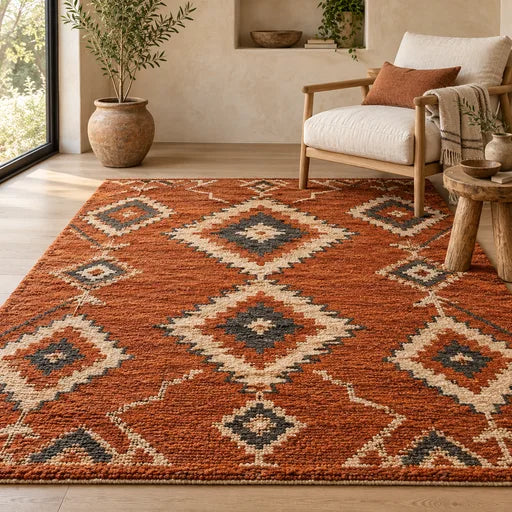
Two distinctly colored rugs in colors that work together — a rusty terracotta vintage base with a sage-and-navy kilim on top. Hard to do well, but stunning when it works. The key is shared tonal value: both rugs should be either both muted or both saturated, not one of each.
Common mistakes
Both rugs the same size
Defeats the purpose of layering. If both rugs are 8×10, you might as well pick one and use it. The whole point is for the base to extend visibly beyond the statement piece.
Center-stacking only
It is fine to center-stack, but offsetting the top rug — say, 12 inches from the base's front edge — often looks more interesting and more intentional. Try the offset before committing.
Same era, same style
Two vintage Oushaks together can look like a department store sale. Mix eras and origins: a modern jute base with an antique Konya on top reads as a curated layering. A vintage Anatolian base with a vibrant kilim on top is similar.
Pile fighting
If you layer a high-pile top rug on a low-pile base, the top rug will slide and bunch unless you use a rug pad between them. Always use a rug pad — both for safety and for keeping the look crisp.
Rug pad placement
Between the floor and the base: standard non-slip pad.
Between the base and the top: a thin felt or rubber pad, slightly smaller than the top rug. This prevents sliding and protects both rugs from friction damage.
Room-by-room layering recipes
Living room
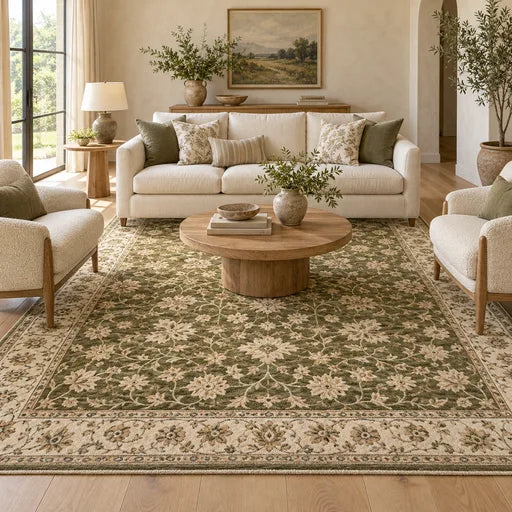
Base: 9×12 neutral jute or low-pile wool. Top: 6×9 vintage Oushak centered under the coffee table. The top rug should sit fully under the coffee table and extend at least 12 inches beyond on every side.
Bedroom
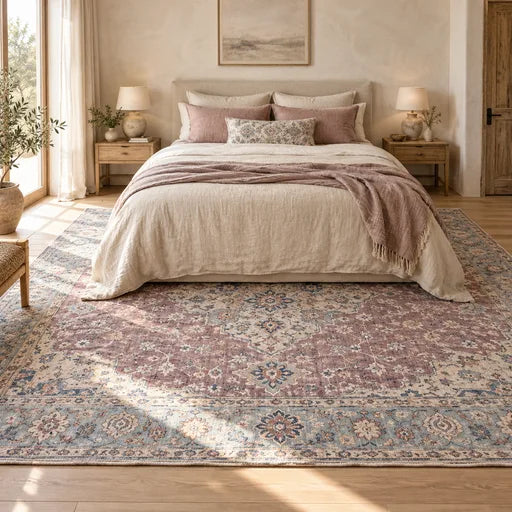
Base: 8×10 jute under the bed. Top: a 4×6 vintage kilim at the foot of the bed, horizontal orientation. The kilim's flat texture contrasts with the woven jute and the bed's softness.
Entryway
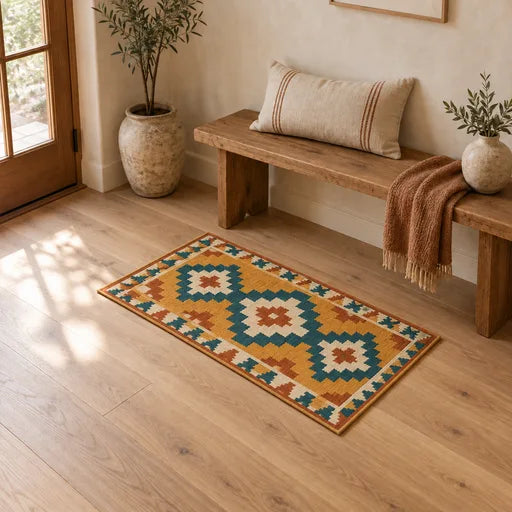
Base: a 3×5 dark jute or coir mat. Top: a 2×3 vintage piece, slightly smaller, set with the long edge toward the door. The dark base hides dirt; the smaller piece is the welcoming detail.
Dining room
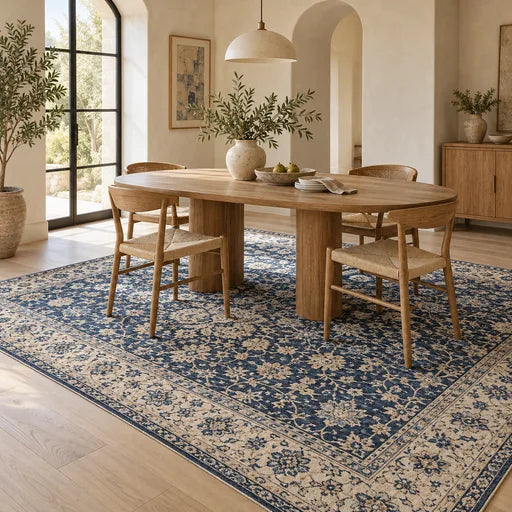
Layering in dining rooms is harder because of chair movement. If you must: a flat, very low-pile base only — no plush layers. The chairs will catch.
How to start
The cheapest way to experiment with layering: pick a neutral jute or sisal rug from a high-street store as your base, then invest the design budget in a smaller vintage statement piece. You can always upgrade the base later. The statement rug is the one that should be the heirloom.
Browse our collection with layering in mind: smaller hand-knotted vintage pieces (4×6, 5×7) make ideal statement pieces; larger flatweaves or kilims work both as bases and as statements depending on the room.
Final word
Layering rugs is not about following a formula — it is about treating the floor as another design surface that can carry as much intention as a wall. Most rooms with truly memorable floors have layered rugs. Once you start noticing, you see them everywhere.
Start small. One base, one top, one weekend of moving things around. You will know in an afternoon whether the room is better for it.