Article: Turkish Rug in a Bathroom: Is It Safe, and How to Do It Right

Turkish Rug in a Bathroom: Is It Safe, and How to Do It Right
Quick answer: Yes, you can put a Turkish rug in a bathroom if it sits in the dry zone, away from the shower and standing water. Choose a small, short-pile wool rug or kilim (about 2 x 3 ft to 3 x 5 ft), use a breathable pad, ventilate the room, and lift the rug weekly so it dries completely.
Can you put a Turkish rug in a bathroom?
Yes, with sensible limits. A hand-knotted wool rug is a natural fibre, and wool copes with humidity better than most people expect. What it does not like is being soaked and left wet. The goal in a bathroom is therefore not to protect the rug from steam, but to keep it out of standing water and let it dry fully every day.
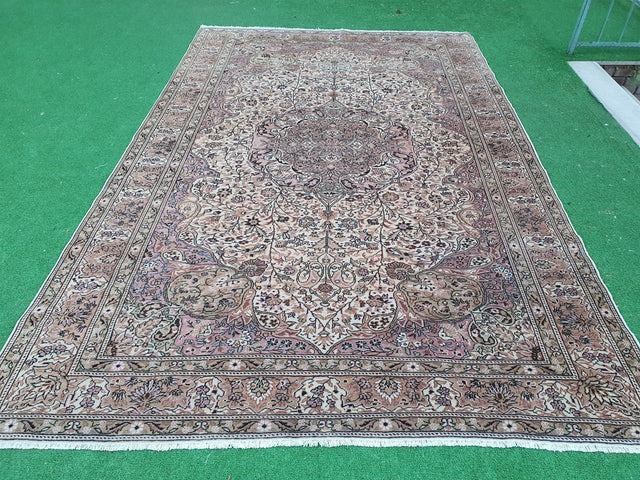
We sell vintage and antique pieces, so we think about this the way a conservator would: the rug should look better in five years, not worse. A small rug on a dry zone of the floor, with air moving around it, will be fine. A rug right in front of the shower with no pad and no ventilation will not.
Which part of the bathroom suits a rug?
Think of a bathroom as three zones. Only two of them are good homes for a Turkish rug.
- The wet zone (directly outside the tub or shower, under the sink where drips collect): avoid. Water pools here, and a rug that stays damp for hours can develop a musty smell and, over time, weaken the foundation.
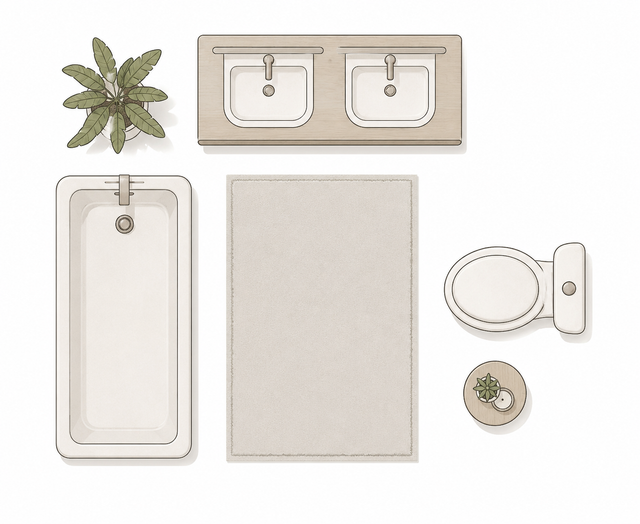
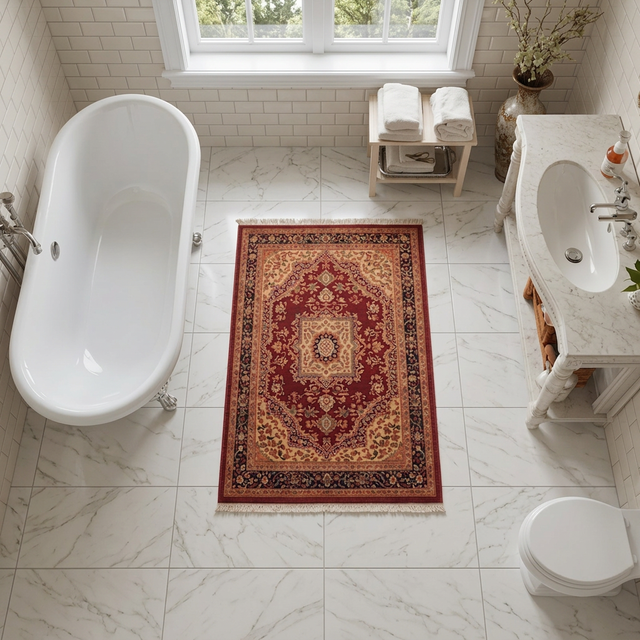
- The dry zone (beside a freestanding bath, in front of the vanity, along the length of a long room): ideal. This is where a rug adds warmth underfoot without taking much water.
- The threshold or dressing area (between bedroom and en-suite, or beside a wardrobe): excellent, and often the best place for a more valuable piece.
If you want a bath mat that gets stepped on with wet feet every morning, use a cotton mat for that spot and let the Turkish rug sit a step or two away. Many of our customers do exactly this.
What size Turkish rug works in a bathroom?
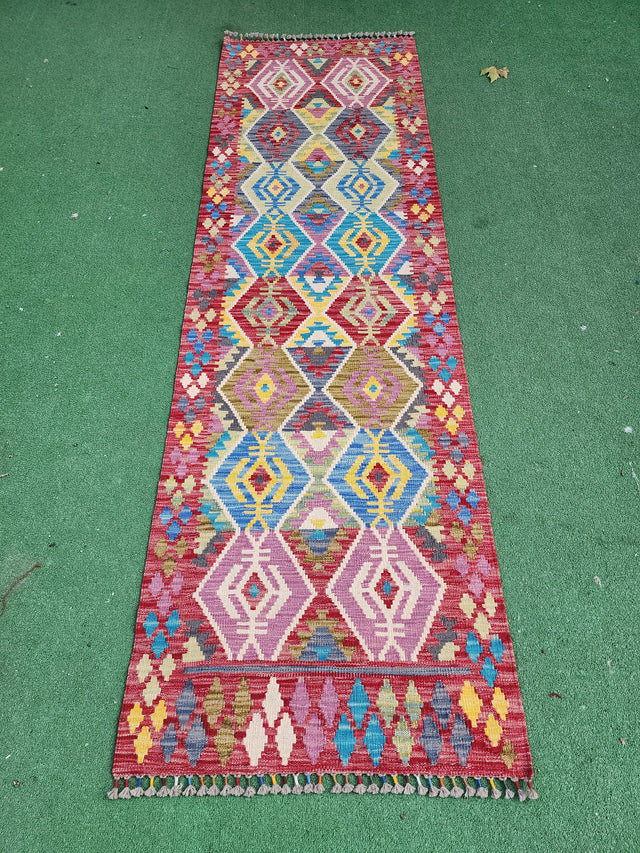
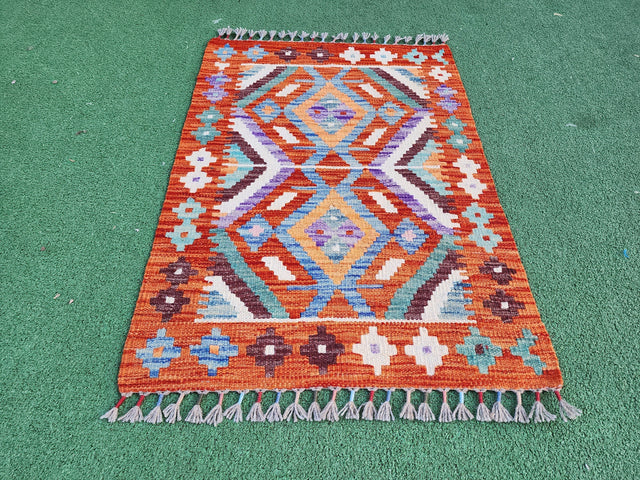
Bathrooms are small, so most bathroom-suitable pieces come from our mini rugs and small rugs sizes. Leave a visible margin of floor around the rug so it reads as deliberate and so air can reach the edges.
| Bathroom layout | Suggested rug | Size |
|---|---|---|
| Small powder room | Round or near-square mat | 2 x 2 ft (about 60 x 60 cm) |
| In front of a single vanity | Small rectangle | 2 x 3 ft (about 60 x 90 cm) |
| Beside a freestanding bath | Mini rug | 2 x 4 ft (about 60 x 120 cm) |
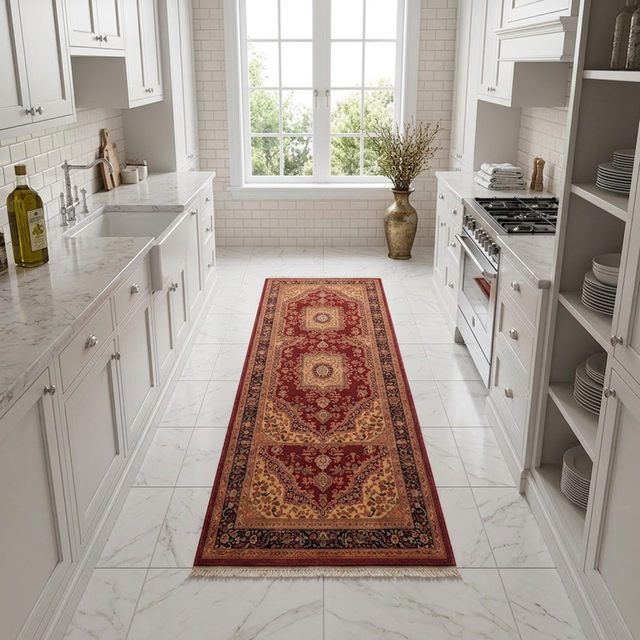
| Double vanity | Short runner | 2.5 x 6 ft (about 75 x 180 cm) |
| Large en-suite with dry floor area | Small rectangle | 3 x 5 ft (about 90 x 150 cm) |
As a rule, keep at least 4 to 6 inches (10 to 15 cm) of bare floor between the rug and the wall, and at least a foot (30 cm) between the rug and the edge of the tub or shower tray.
Which rugs are best for a bathroom?
Look for the traits that make a rug forgiving:
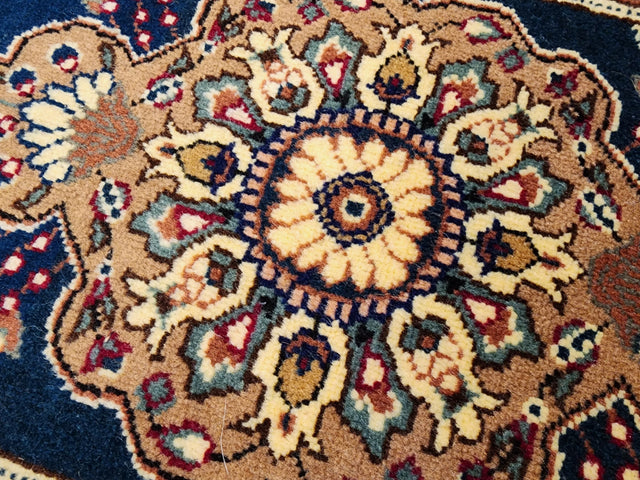
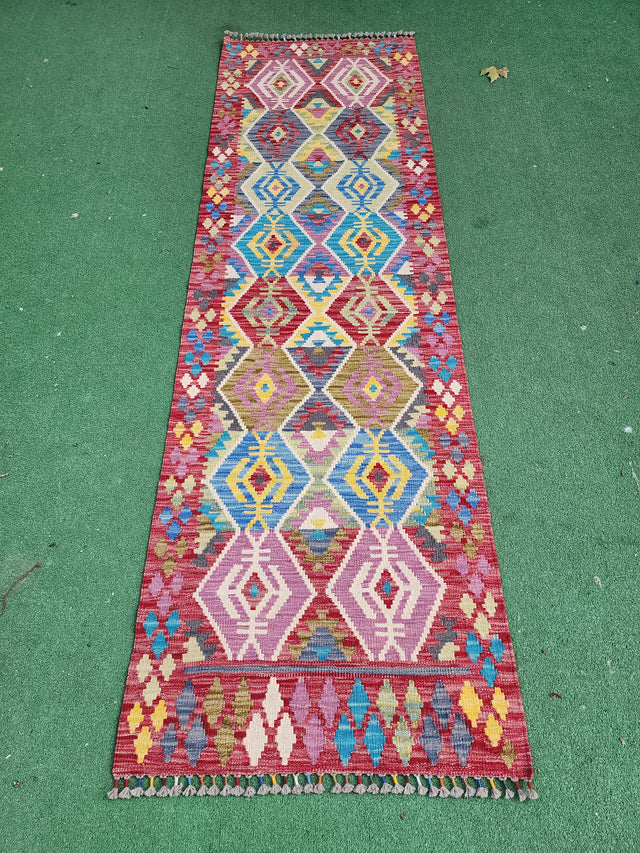
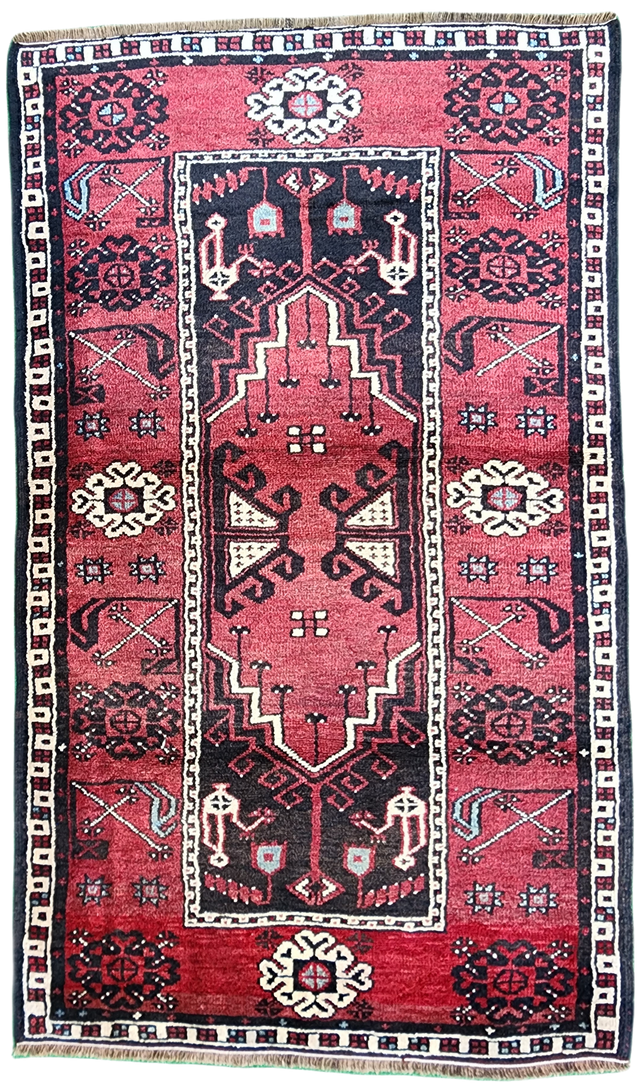
- Short, dense wool pile. It dries faster than a thick shaggy pile. Vintage Anatolian pieces from Kayseri, Konya, Adana and Yahyalı are typically low and tightly knotted.
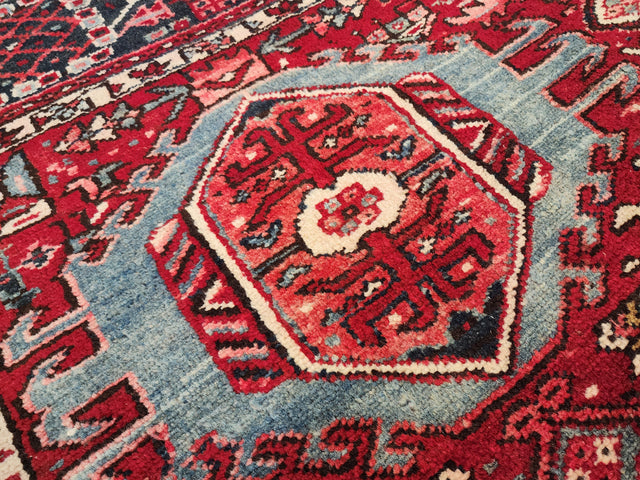
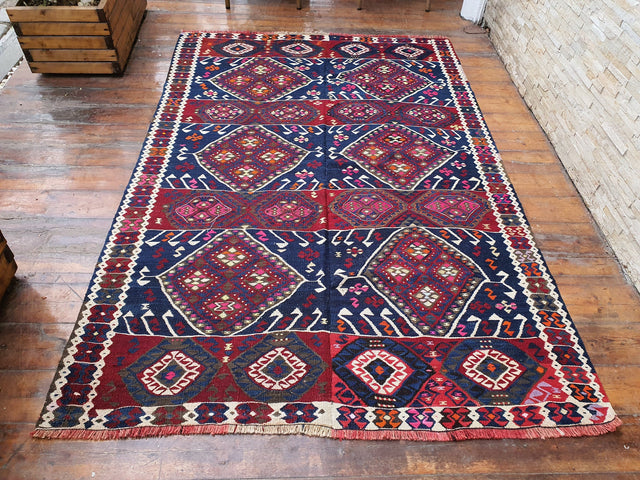
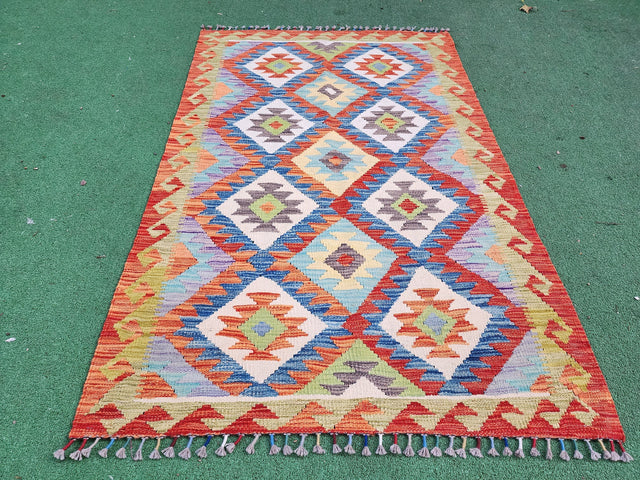
- Busy, multi-colour patterns. Geometric and tribal designs hide the odd splash mark and the water spots that plain grounds show.
- Old, settled dyes. Vintage rugs have been used and cleaned for decades, which is why we suggest them over brand-new pieces for a humid room. Still, test any rug for colour run before it goes anywhere damp (see below).
- Round and small formats. They fit around fixtures and are easy to lift and dry. See our bathroom rugs collection for pieces we have tagged as suitable.
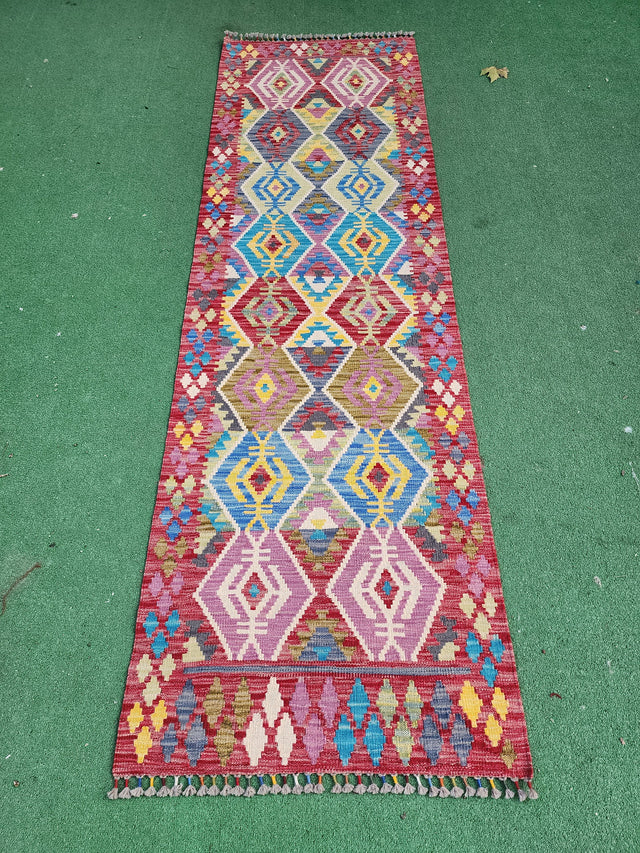
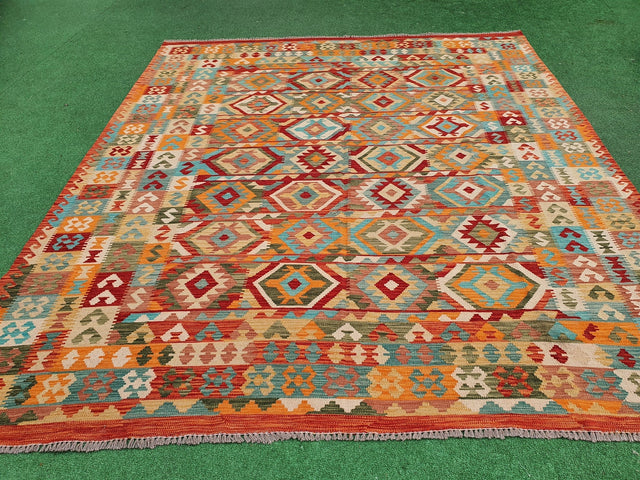
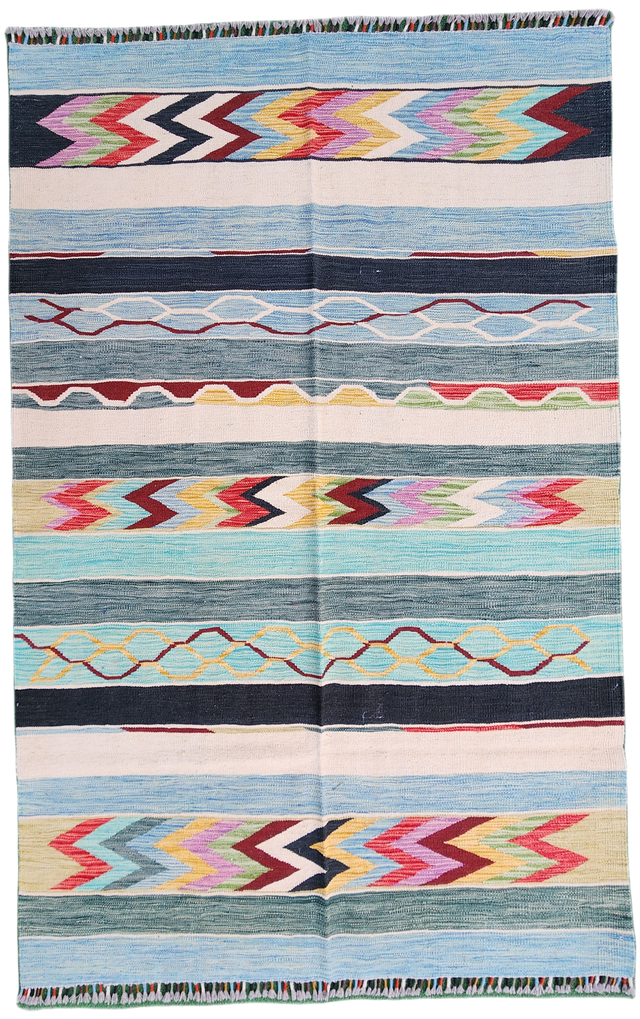
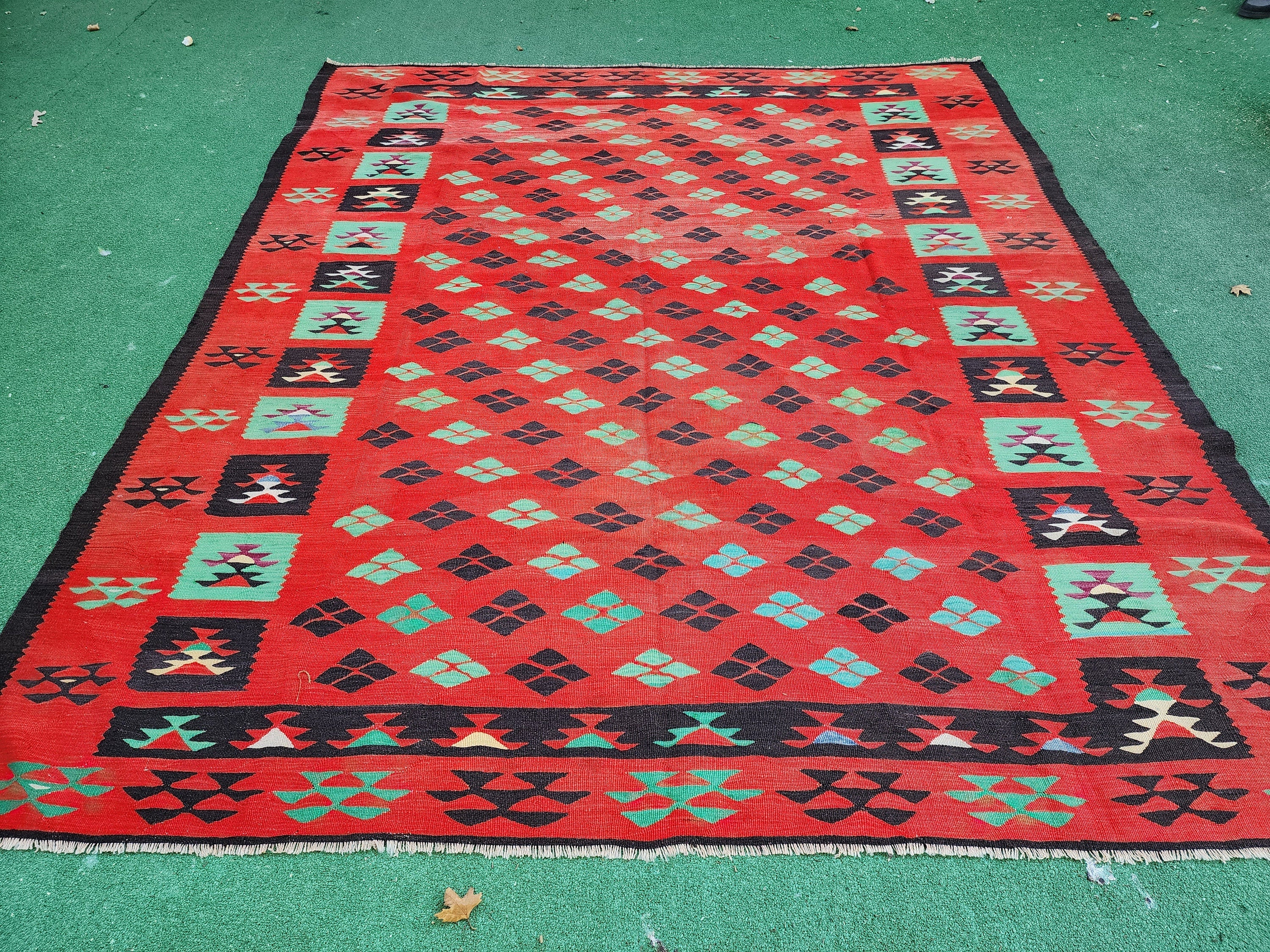
A flat-woven kilim is also an option. It has no pile to hold water, so it dries quickly, though it will not feel as soft underfoot. If you are not sure which suits you, our guide to kilim, pile and flatweave explains the difference.
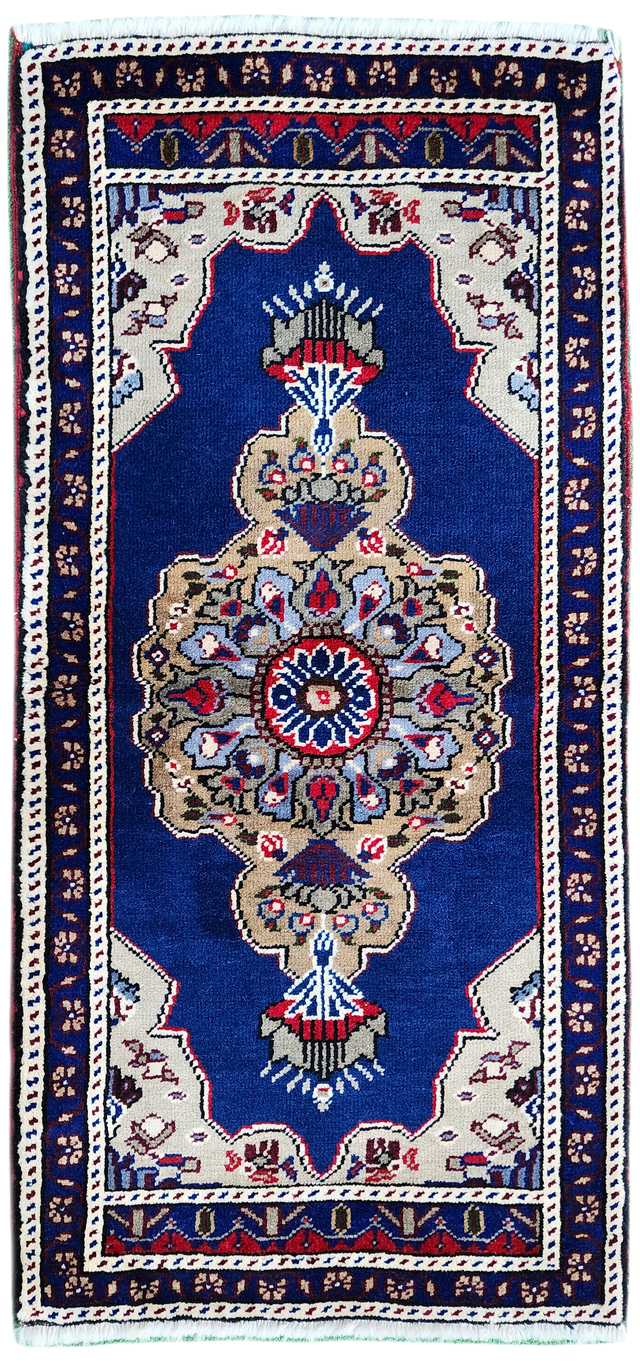
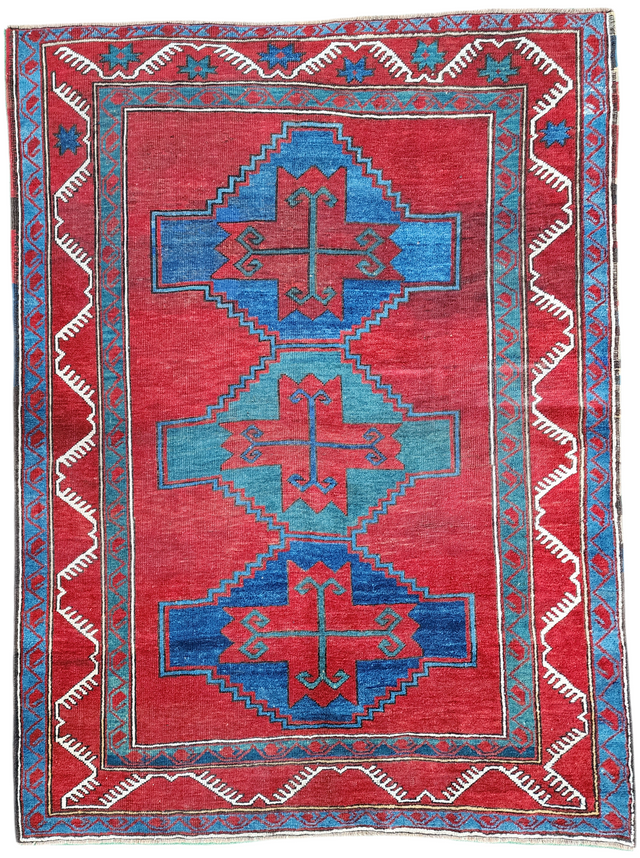
For a first piece, a vintage Konya rug in red, blue and brown (2 x 4 ft) is a good example of the size and pile we mean.
How do you stop a rug from getting damp underneath?
Moisture trapped between rug and floor causes more trouble than moisture on top. Three habits prevent most problems:
- Use a breathable pad. A thin, open-weave natural-fibre or felt-and-rubber pad lets air circulate and stops the rug sliding on tile. Avoid solid plastic sheets that trap water. Our guide to choosing a rug pad covers thickness and size.
- Lift and air it. Once a week, lift the rug and let the floor and the underside dry. In a very humid bathroom, do it more often.
- Ventilate. Run the extractor fan or open a window after showers. This helps your paint and grout as much as your rug.
Underfloor heating is fine under a thin wool rug. Warm floors help the rug dry, though very high temperatures can dry out natural fibres, so keep the setting moderate.
Will the colours run when the rug gets wet?
This is the question we are asked most about bathrooms. Vintage rugs coloured with natural dyes, and many older synthetic-dyed pieces, are generally colourfast, but we cannot promise it for every rug, so test before you commit.
The test takes two minutes. Dampen a white cloth with cool water, press it firmly onto a small hidden area of each colour (especially reds and dark blues), and check the cloth. Any colour transfer means the rug should stay in a dry room. You can read more about dyes in our piece on natural dyes in Anatolian rugs.
How do you care for a Turkish rug in a bathroom?
Routine care is simple, and most of it is about drying.
- Blot spills immediately with a clean cotton towel. Press, do not rub.
- Vacuum weekly without the beater bar, or shake the rug outdoors. Hair and dust settle quickly in bathrooms.
- Rotate the rug every few months so one end does not take all the splashes and sunlight.
- Never leave a wet towel or bath mat folded on top of it.
- Wash with care. For deeper cleaning follow our steps for cleaning a wool rug at home and our broader vintage wool rug care guide.
If a rug does get thoroughly wet, take it outside or to a well-aired room, lay it flat, and prop up the edges so air reaches the underside. Do not fold it, and do not put it on a radiator. A fan pointed at it speeds drying. If it still smells after it is completely dry, ask a professional wool-rug cleaner.
What are the alternatives if your bathroom is very damp?
Some bathrooms, such as a wet room with no separate dry area or a basement bathroom with poor airflow, are simply too damp for any wool rug to be left down permanently. In that case you have two good options. Hang the rug on a wall as textile art, or place it in the adjoining bedroom or dressing area so that the bathroom door opens onto something beautiful. A small Turkish rug just outside the bathroom door gives you the look without the risk. Our kilim and flatwoven rugs are a lighter, quicker-drying choice for such spots.
How do you style a Turkish rug in a bathroom?
Because the rug is the only soft, patterned thing on a floor of tile or stone, it carries the room. A few approaches we like:
- Warm against cool. Red, rust and orange rugs soften white tile and grey stone. Browse red rugs for a strong accent.
- Tone on tone. Blue and cream pieces suit a spa-like space with pale walls.
- Repeat a colour. Pull one shade from the rug into a towel, a pot or the frame of a mirror.
- Keep it uncluttered. One rug, not two. Let it sit where you can see most of its pattern.
Each piece we sell is a one-of-one vintage or antique rug, hand-made in Anatolia, so you will not find a second copy in someone else's bathroom. If you would like help matching a size to your floor plan, measure the dry area and compare it with the sizes on the product page.
A short checklist before you buy
- Measure the dry zone and subtract the margins above.
- Choose a short, dense wool pile or a flatweave.
- Run the white-cloth colour test on a hidden corner.
- Buy a breathable pad in the same size, slightly smaller than the rug.
- Plan to lift and air the rug weekly.
Follow these steps and a small vintage rug can live happily in a bathroom for many years, adding the warmth and character that a plain mat cannot.
Pieces from our collection
Every piece below is one of a kind and in stock today:
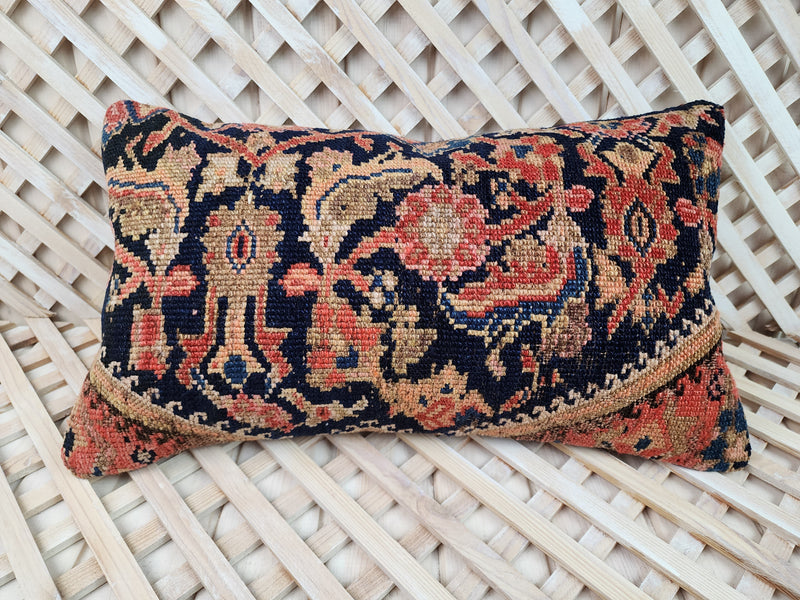
- Selçuka — Vintage Konya Rug, 2x4
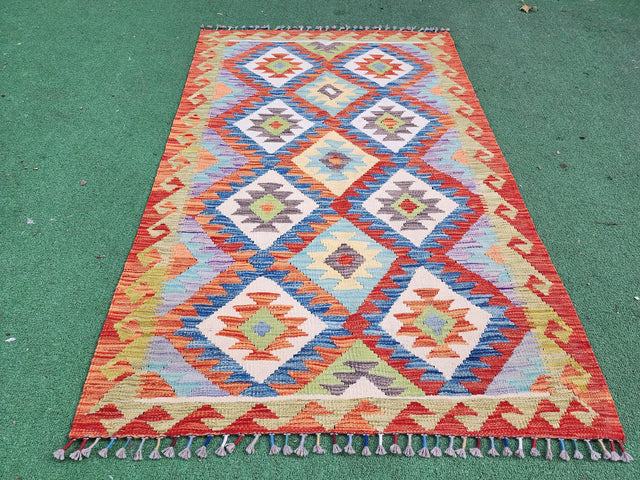
- Eulalia — Vintage Kayseri Rug, 2x3
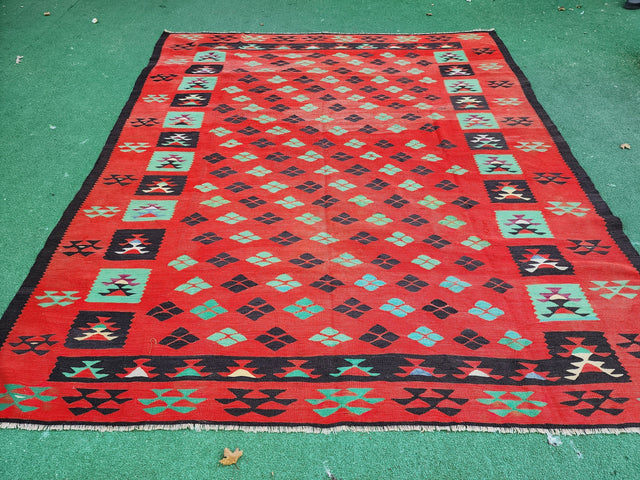
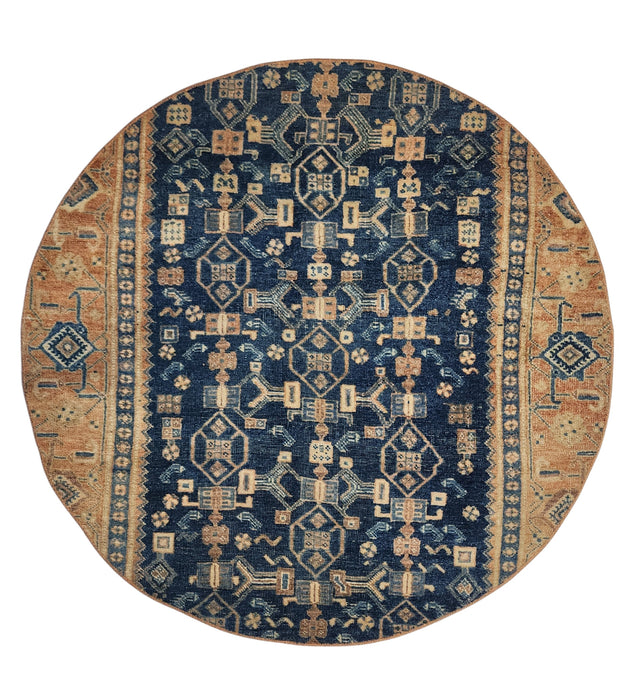
- Hannahanna — Antique Malayer Round Rug, 4x4
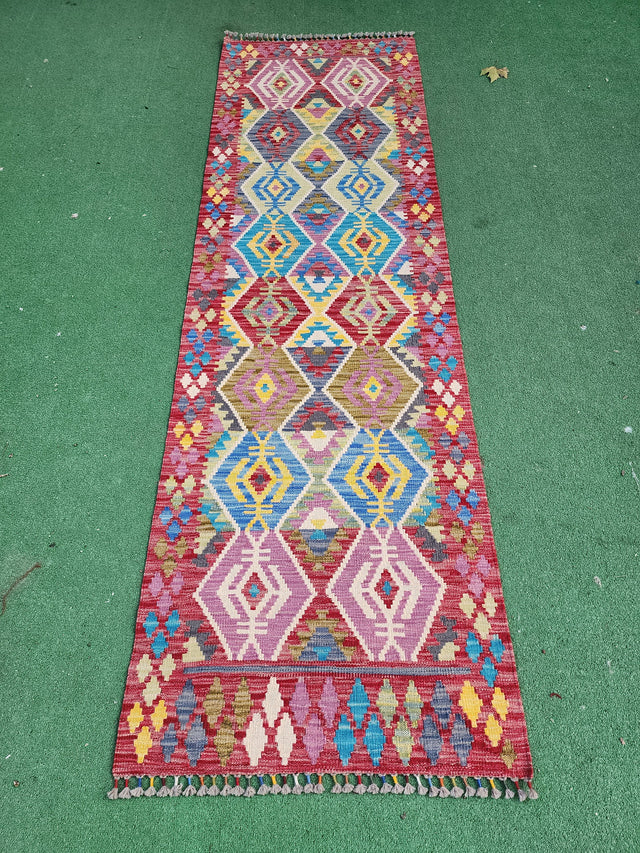
- Theodote — Vintage Adana Rug, 2x3
Frequently asked questions
Is wool a good rug material for a humid bathroom?
Wool handles everyday humidity better than many people expect, because the fibre absorbs and releases moisture slowly. The risk is a rug that stays soaked for hours. Keep it out of the wet zone, let it dry each day, and make sure air can reach the underside through a breathable pad.
Should I put a rug pad under a bathroom rug?
Yes, but choose a thin, breathable pad such as open-weave natural fibre or felt-and-rubber, cut slightly smaller than the rug. It stops slipping on tile and lets air circulate. Avoid solid plastic sheets, which trap water between the rug and the floor.
How do I dry a Turkish rug that got wet in the bathroom?
Blot the surface with a clean towel, then move the rug to a well-aired room or outdoors in shade. Lay it flat with the edges propped up so air reaches the underside, and point a fan at it. Do not fold it or place it on a radiator.
Can I use a kilim in a bathroom instead of a pile rug?
A kilim is a good choice because it has no pile to hold water and dries faster than a pile rug. It feels firmer underfoot, so it suits a dressing area or the space beside a vanity better than a spot where you stand barefoot for long.
How often should I clean a rug in a bathroom?
Vacuum it weekly without the beater bar, blot spills as they happen, and rotate the rug every few months. Give it a deeper clean only when needed, following gentle wool-rug methods, since frequent heavy washing is harder on a vintage piece than occasional care.
Written by the team at Heritage Nomadic Art Gallery in Sultanahmet, Istanbul, the gallery behind TurkishRug.com, where every rug and pillow is chosen, washed and photographed by hand. Last updated November 24, 2026.