How to Read Vintage Rug Dimensions in Centimetres and Feet
A vintage rug can fit your room beautifully even when it does not match a standard modern size. The key is to compare the exact dimensions of the piece with the space you have measured. Category labels such as small, medium and large are useful for browsing, but they do not replace those measurements.
Separate feet from decimal numbers
The notation 4′6″ means four feet and six inches. It does not mean 4.6 feet. There are 12 inches in one foot and exactly 2.54 centimetres in one inch. To convert feet and inches to centimetres, multiply the feet by 12, add the inches, then multiply the total by 2.54.
For example, 4′6″ equals 54 inches, or 137.16 cm. A listing may round that to 137 cm. Small rounding differences are normal in a conversion; a substantial difference between two fields should be clarified before purchase.
Use centimetres as a comparison point
If you measure your room in centimetres, keep your shortlist in centimetres too. This avoids repeatedly converting between units. A rug listed as 133 × 206 cm is approximately 4′4″ × 6′9″. Those rounded feet-and-inches figures are helpful for scale, while the original centimetre measurement remains the more precise comparison.
Mark the actual width and length on your floor with removable tape. Include nearby doors and furniture in the test. A category described as “4 × 6” may contain individual pieces whose proportions vary, so check the product page rather than treating the category as an exact specification.
Ask how the rug was measured
If the available space is tight, ask whether the stated length includes fringe and how an irregular edge was measured. A handmade or older piece may not form a perfect rectangle. Where a few centimetres matter, request clarification rather than relying on a rounded conversion.
Resolve conflicting measurements before ordering
Check the title, size selector, specification table and description together. If they do not agree, send the product link to the seller and ask for one confirmed width and length in centimetres. Avoid choosing whichever number happens to suit your room. The confirmed measurement should be reflected consistently throughout the listing.
Build a practical shortlist
Write down your maximum width and length, the furniture placement you want and any door-clearance limits. Compare each rug against those constraints before comparing colour or pattern. This keeps an appealing photograph from distracting you from a fit problem.
Browse small rugs, medium rugs and large rugs, or use our room-by-room size guide. If any dimensions in a listing are unclear, contact our team with the product link before ordering.
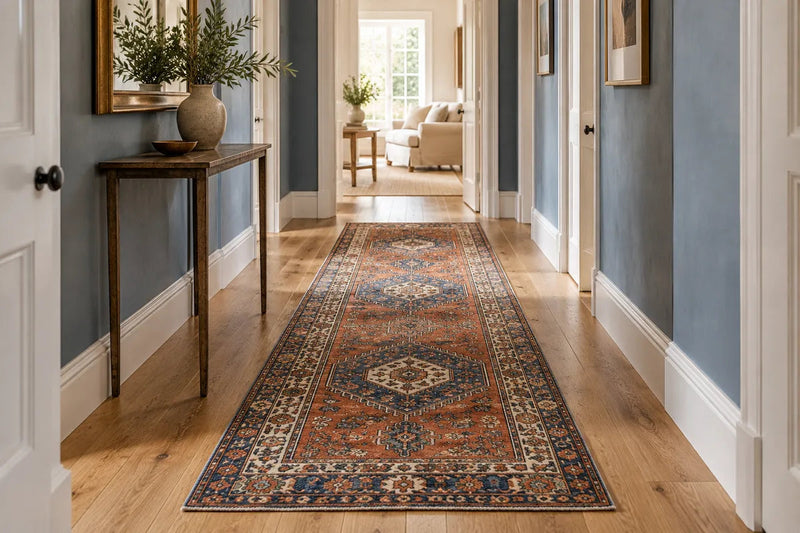
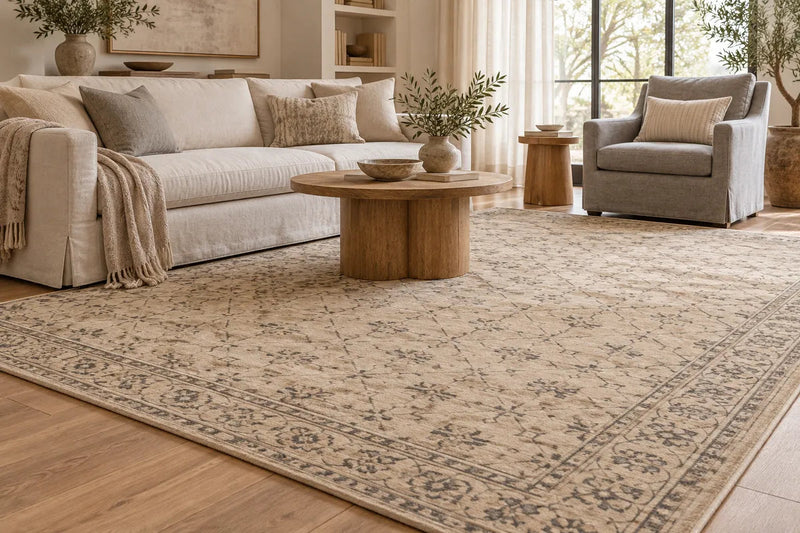
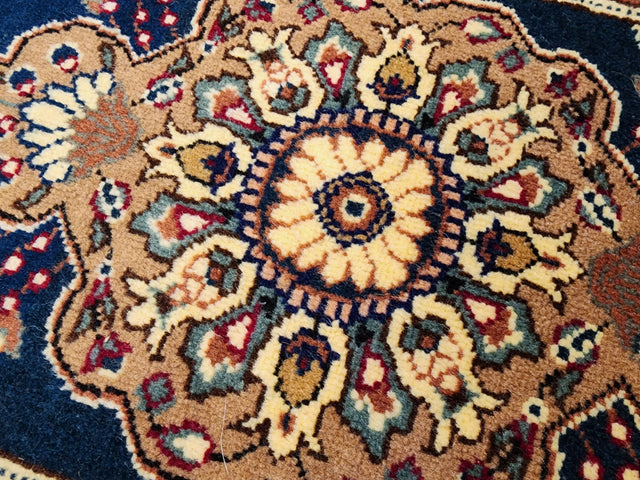
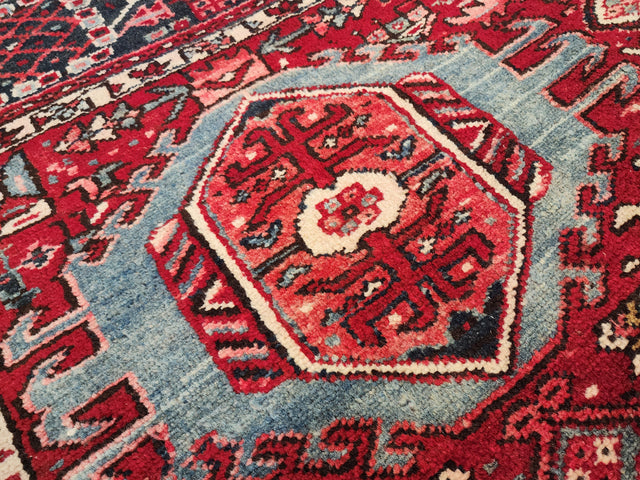
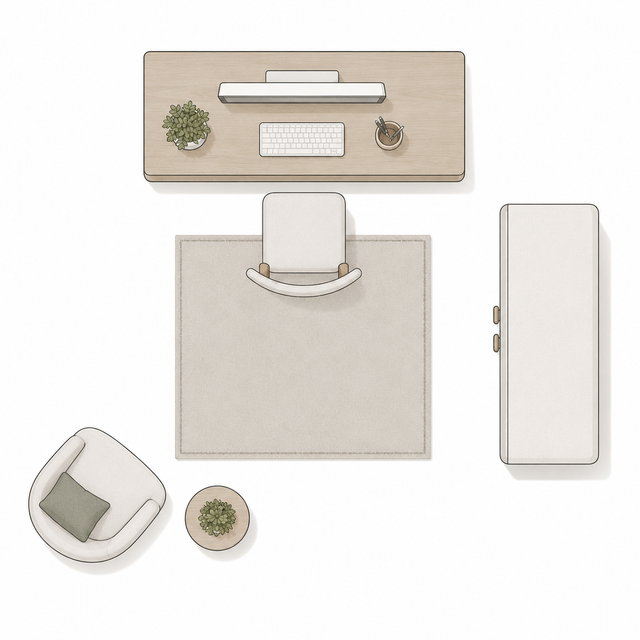
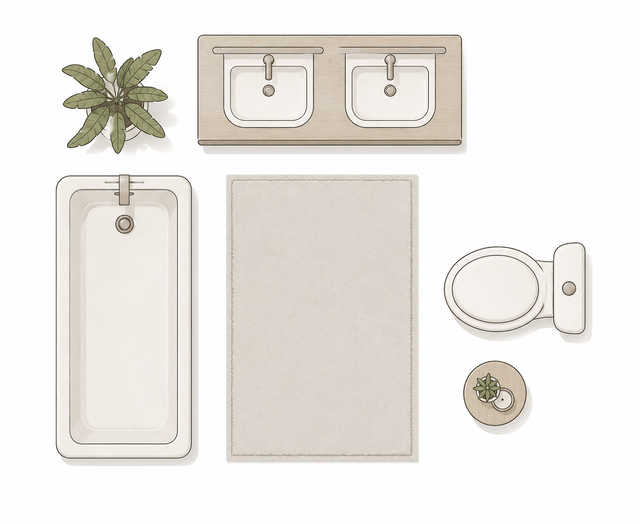
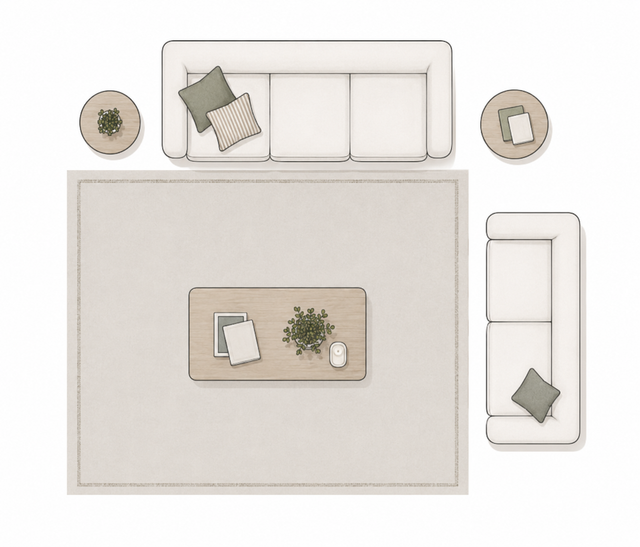
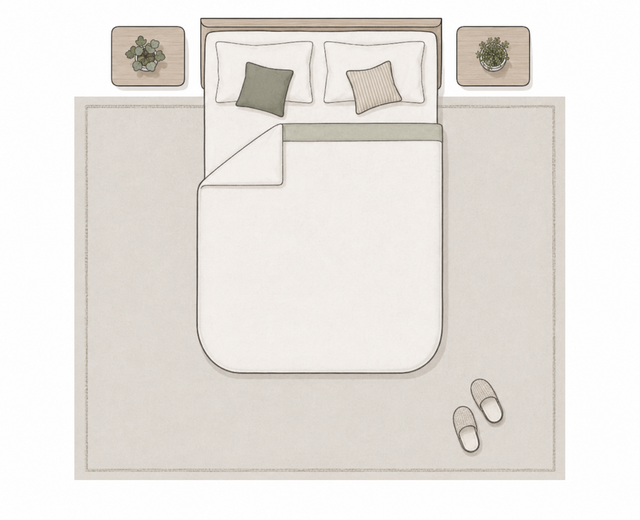
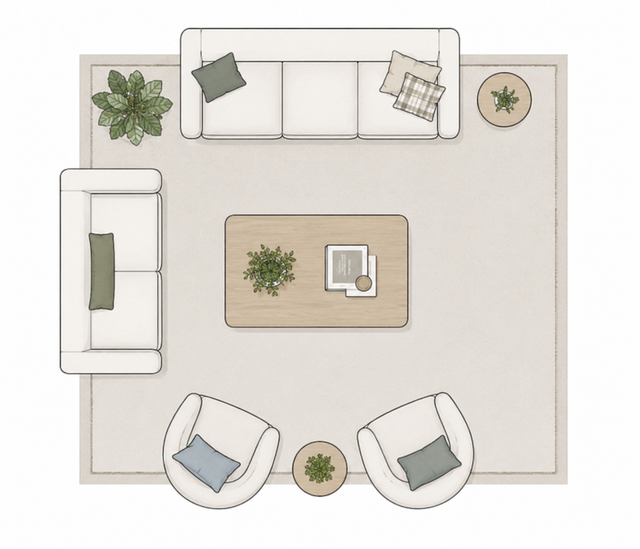
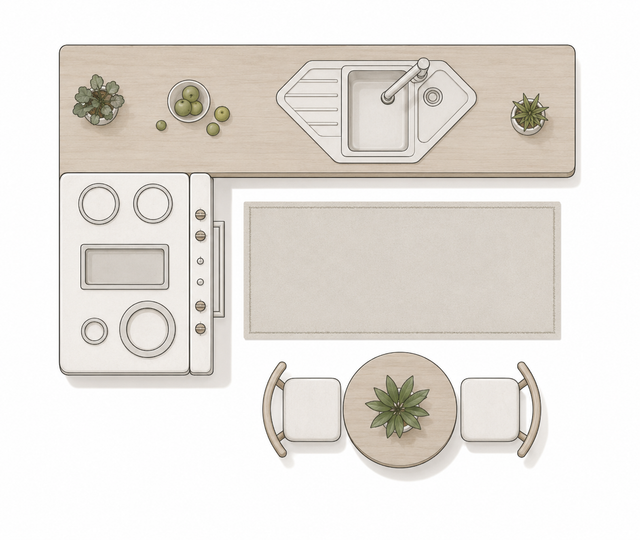
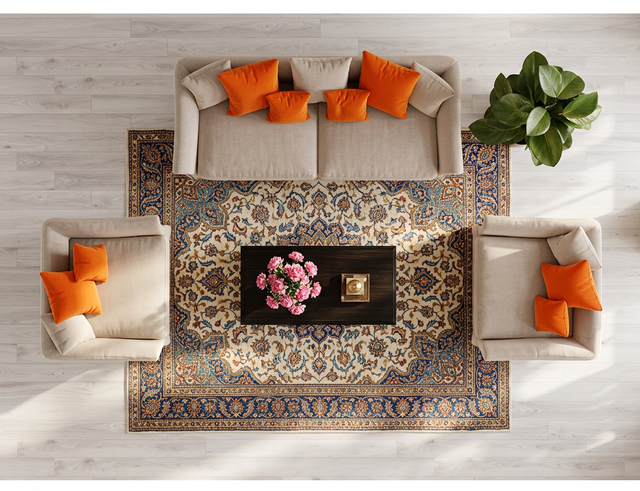
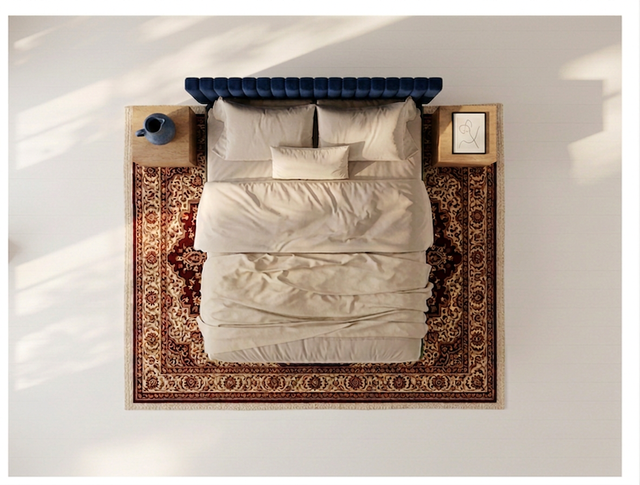
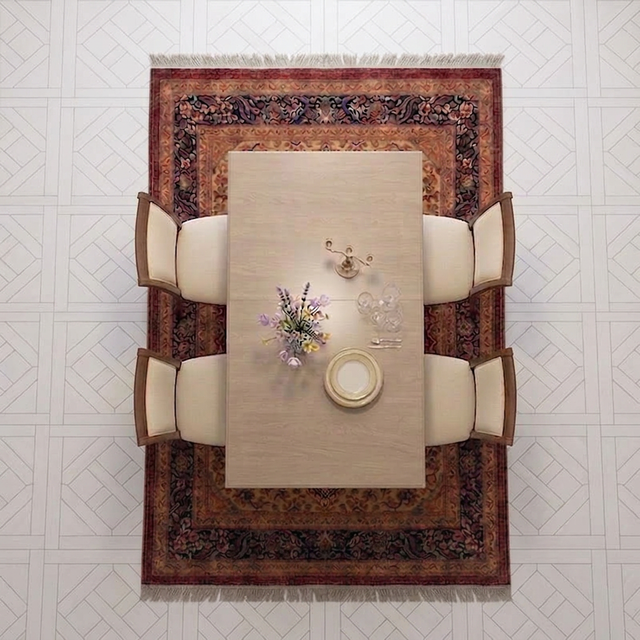
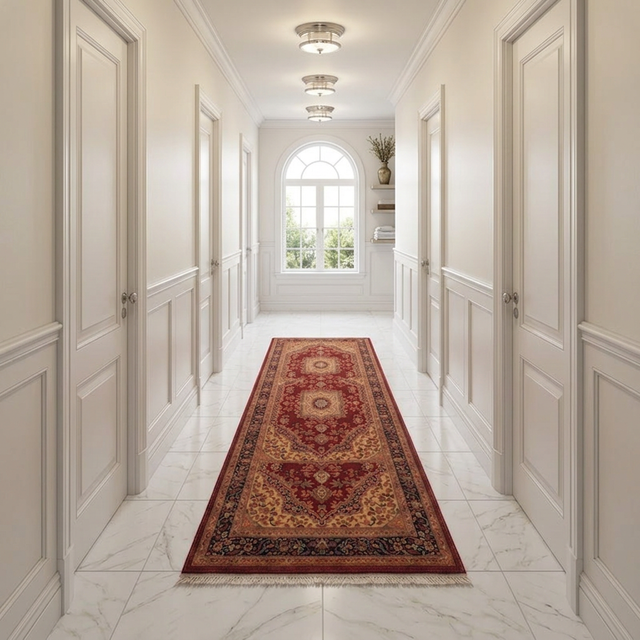
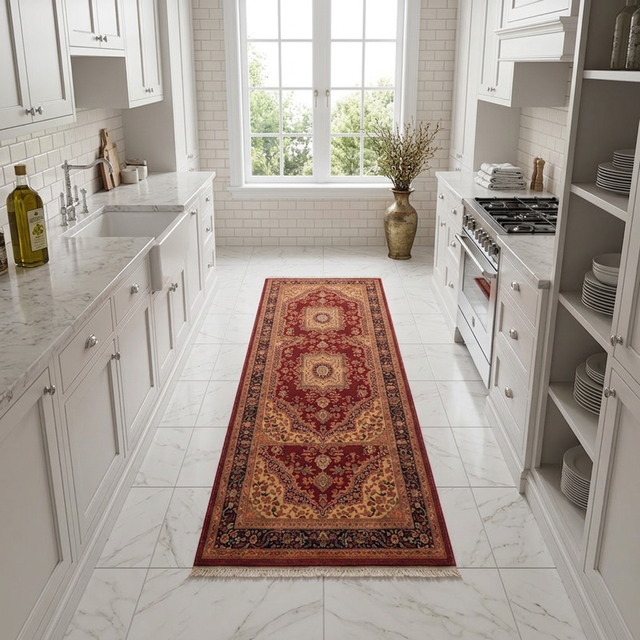
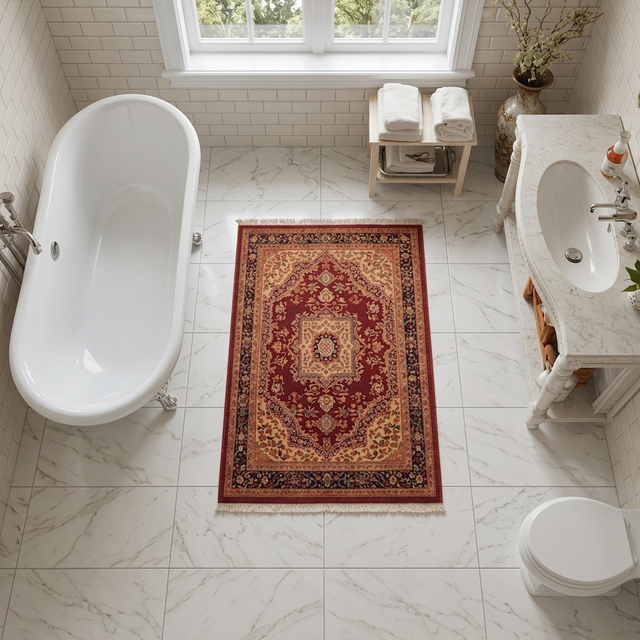
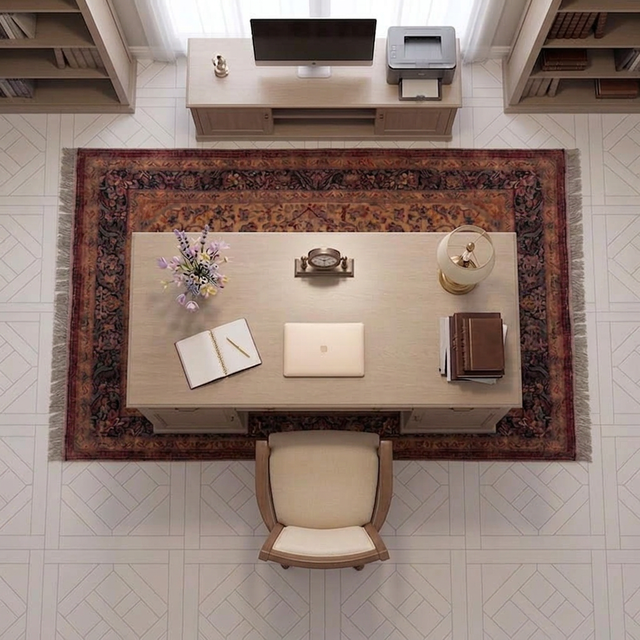
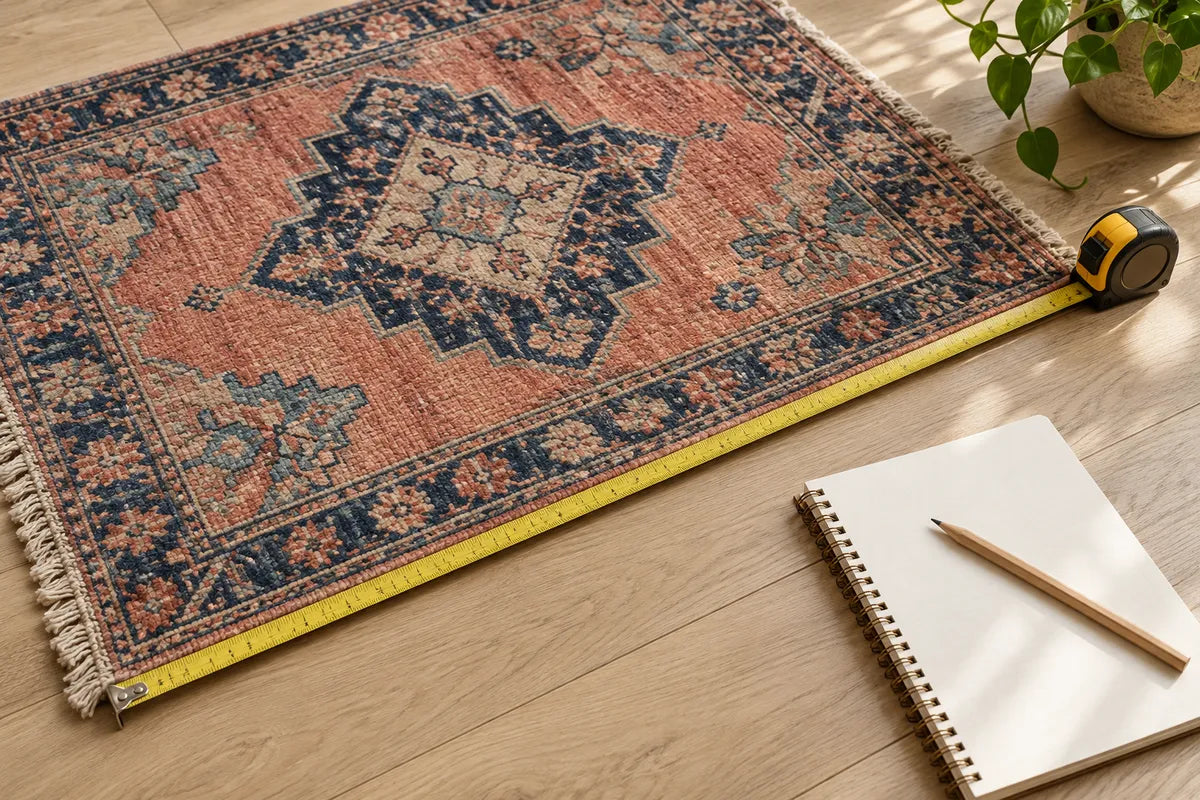
Cover image: AI-generated styling illustration; the pictured rug is not an individual product listing.