Grey Turkish Rug: Shades, Types and Colours That Go With It
Quick answer: A grey Turkish rug is a hand-made Anatolian rug in tones from warm stone to charcoal, made with natural grey wool, dyes or faded colour. It suits most rooms because grey is neutral. Choose by undertone (warm or cool), weave (kilim or pile) and size, and pair it with rust, navy, pink or sage.
What Does a Grey Turkish Rug Actually Look Like?
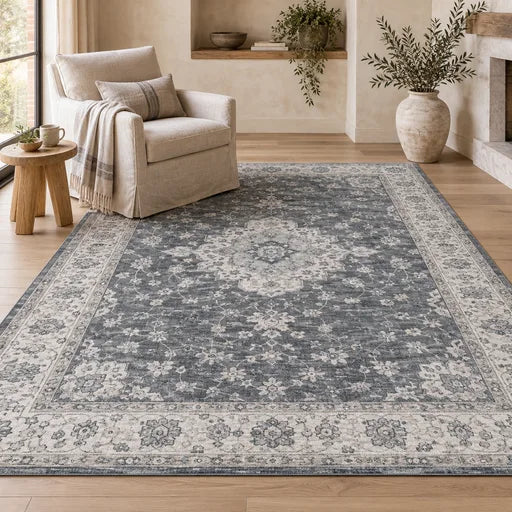
A grey Turkish rug is rarely one flat grey. In vintage Anatolian pieces, grey shows up as a family of tones: warm stone and putty, cool slate, silvery pewter, charcoal that fades toward brown, and the pale ash of undyed wool. Because each rug is hand-made and one of a kind, two "grey" rugs will never match exactly.
There are three common ways grey arrives in a Turkish rug:
- Natural wool. Some sheep produce grey, black or dark brown fleece. Weavers sometimes used it undyed for outlines, stripes and borders, which gives a soft, slightly uneven grey that is hard to copy.
- Dyed grey. Wool dyed in a grey bath, or built up from a mix of dyes, gives a more even tone. Older rugs tend to look more mellow because the colour has settled over decades of light and washing.
- Faded or overdyed. Strong colours can wear down to grey-toned neutrals, and some rugs are deliberately washed or overdyed in muted shades. This is why many "grey" rugs have a hint of rose, green or blue underneath.
The practical lesson: look at the photos in daylight if you can, and read the full colour list in the listing, not just the headline colour. A rug sold as grey may be mostly cream with grey stripes, or mostly charcoal with a pale border.
Which Types of Turkish Rug Come in Grey?
Grey is available across most of the Anatolian weaving traditions, but the character changes by type:
| Type | How grey usually appears | Best for |
|---|---|---|
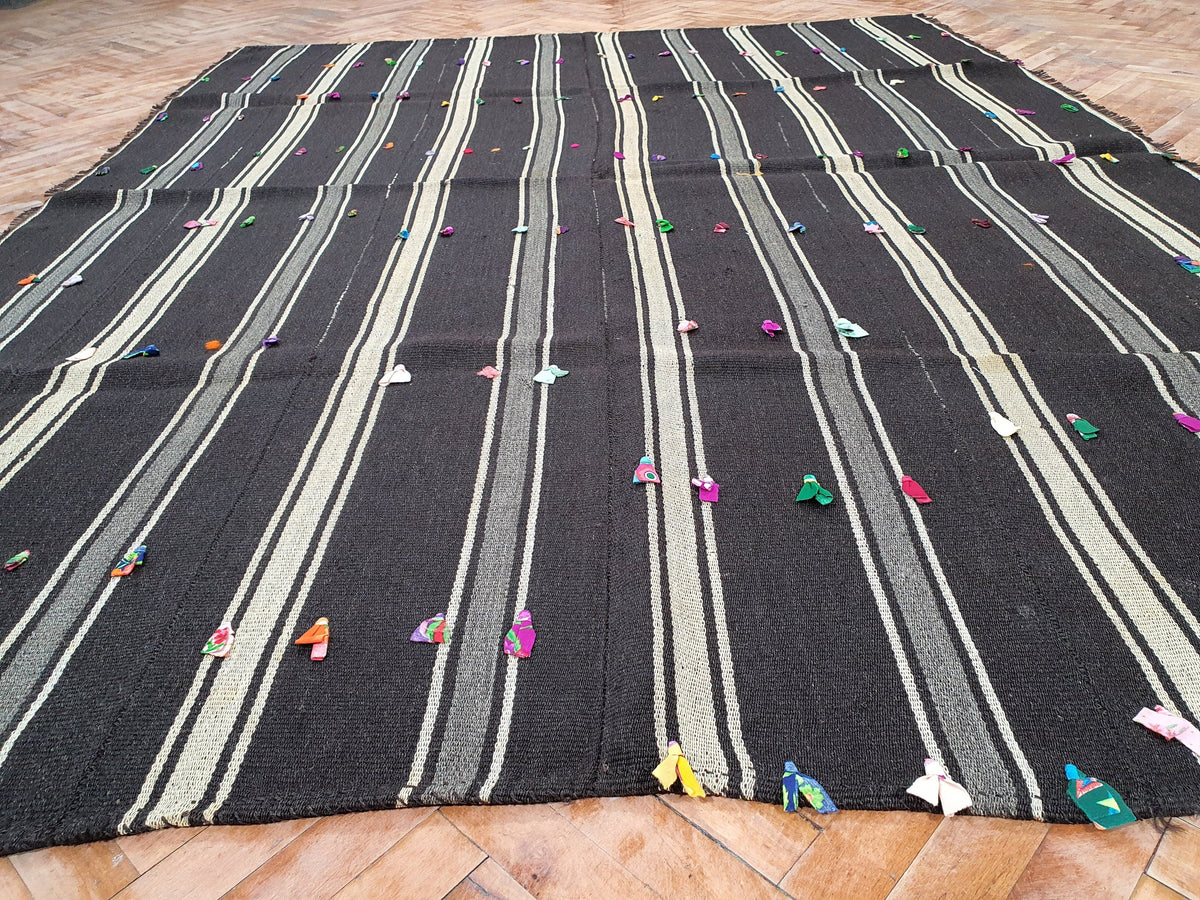
| Flat-woven kilim | Bold stripes and geometric bands in grey, black and white; graphic and light underfoot | Modern, minimalist or Scandinavian rooms; kitchens and hallways |
| Oushak (Uşak) | Soft, washed greys with pink, green or blue; low, even pile | Living rooms and bedrooms that want a calm, antique look |
| Kayseri | Floral or medallion designs in greys, blues and creams | Traditional or transitional living and dining rooms |
| Konya | Charcoal and grey in geometric tribal motifs, often with cicim embroidery | Rustic, farmhouse and bohemian spaces |
If you are new to the vocabulary, our guides to what an Oushak rug is and to the difference between kilim and pile rugs explain why two grey rugs can feel so different underfoot.
Does a Grey Turkish Rug Make a Room Feel Cold?
It can, but it does not have to. Grey is a neutral, so the temperature of the grey and the colours around it decide the mood.
Warm greys
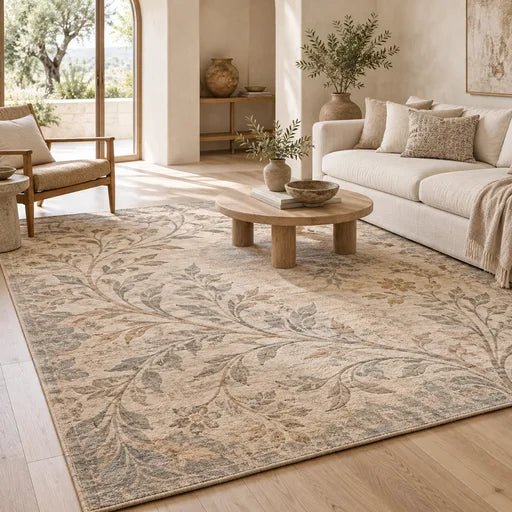
Greys with a beige, taupe or rose undertone sit comfortably next to wood floors, linen sofas and brass. If your room has a lot of cool white and cool light, a warm grey rug balances it.
Cool greys
Slate, steel and blue-grey look crisp with white walls, black metal and glass. They work well in north-facing rooms only if you add warmth elsewhere: wood, wool throws, and a few rust or ochre accents.
The vintage advantage
A hand-made vintage rug is never a single flat colour. Tiny shifts in tone from one dye lot to the next, known as abrash, add depth that stops grey from reading as dull or industrial. That variation is a big part of why a grey Turkish rug feels more alive than a plain grey machine-made one.
What Colours Go With a Grey Turkish Rug?
Because grey is quiet, it lets other colours speak. These pairings work reliably:
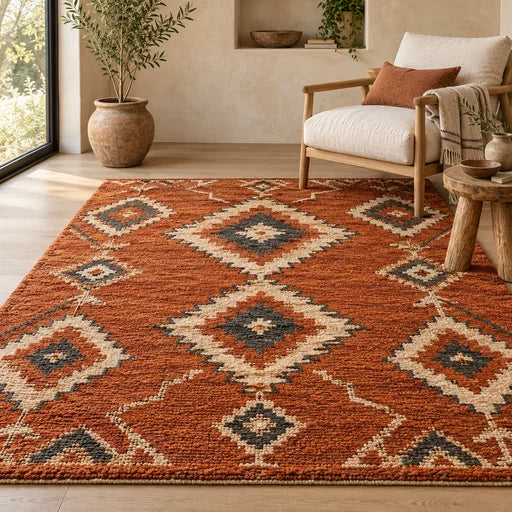
- Terracotta, rust and burnt orange. The classic partner; the warmth lifts the grey. Think leather chairs or a rust velvet cushion.
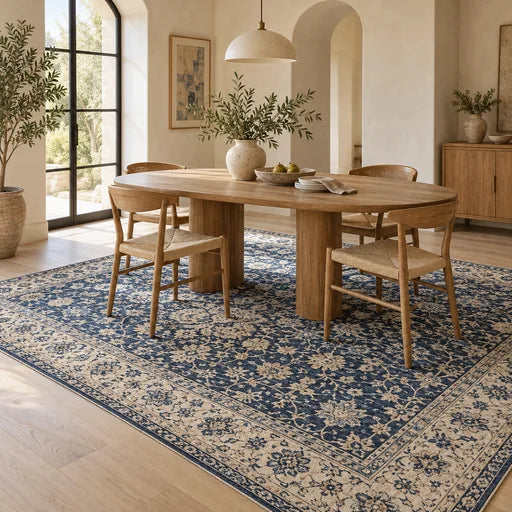
- Navy and deep blue. A calm, tailored look. Choose a rug with some blue already in the weave.
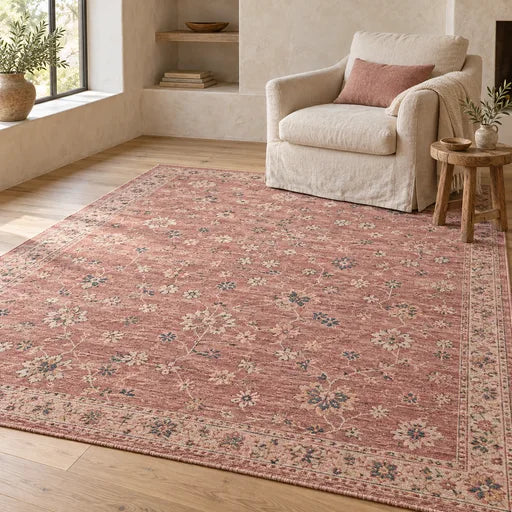
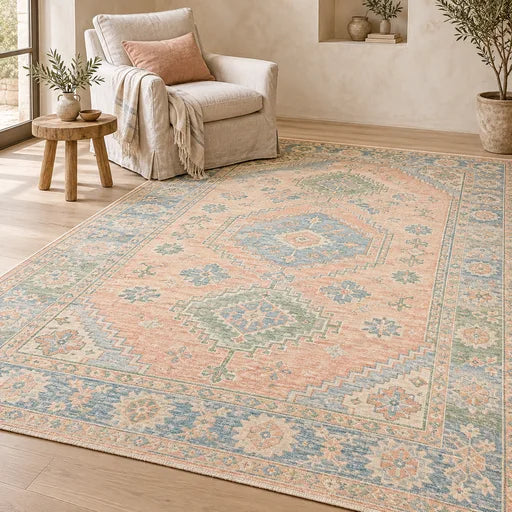
- Soft pink and blush. Pink-and-grey is very common in washed Oushak rugs and feels gentle and slightly nostalgic.
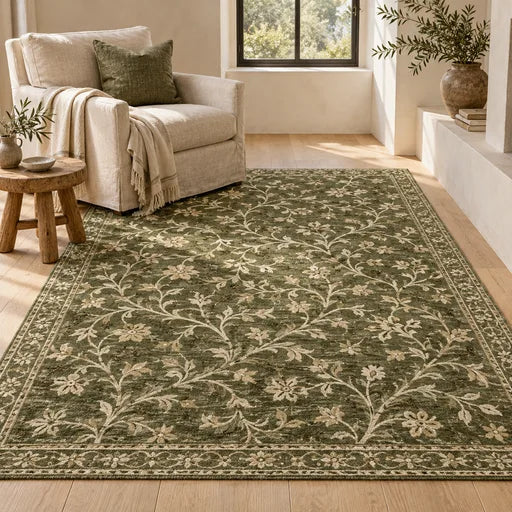
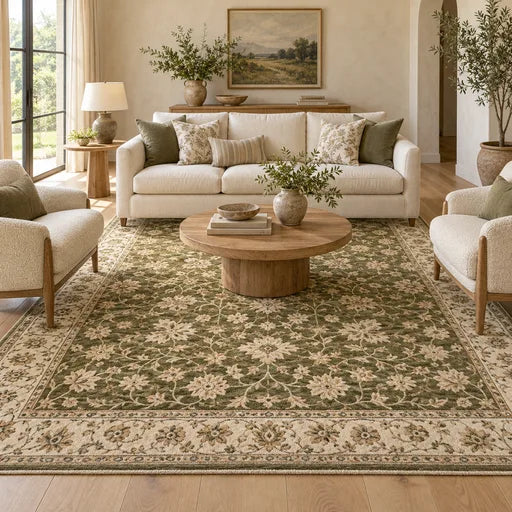
- Sage and olive green. Earthy and restful, especially with natural wood. See our guide to a green Turkish rug for how those shades behave.
- Mustard and ochre. A small hit of yellow wakes up charcoal and slate.
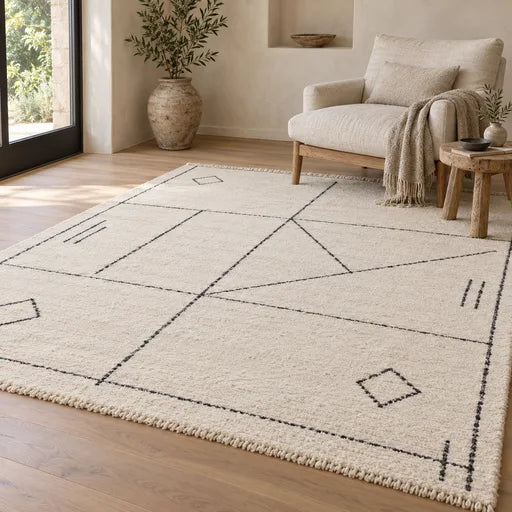
- Black and white. Pair a striped grey kilim with black frames and white walls for a graphic, gallery-like room.
If you want the room to stay very quiet, stay within the neutral range. Our article on choosing a neutral rug in beige, cream or grey walks through that approach, and you can browse the neutral rugs collection to see real examples.
What Size of Grey Rug Should You Choose?
Grey does not change the sizing rules. The rug should be large enough that the front legs of your main furniture sit on it. These are the usual starting points:
| Space | Typical rug size | Metric |
|---|---|---|
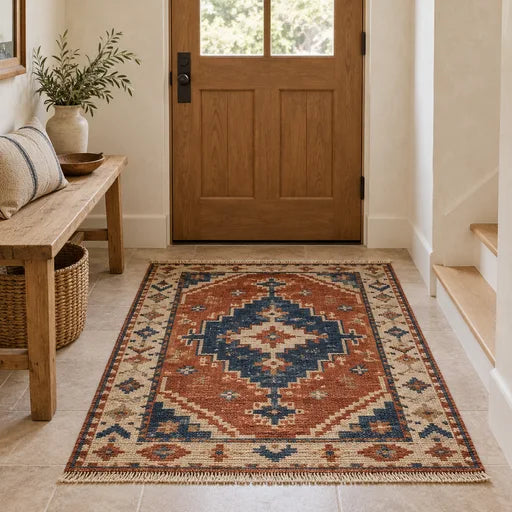
| Bedside or entry | 2 x 3 ft | about 60 x 90 cm |
| Under a small sofa or in a nook | 4 x 6 ft | about 120 x 180 cm |
| Standard living room | 6 x 9 ft | about 180 x 275 cm |
| Large living or dining room | 8 x 10 ft | about 245 x 305 cm |
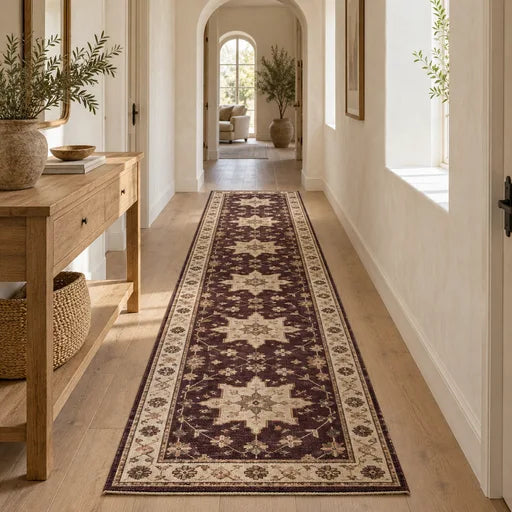
| Hallway runner | 2.5 x 10 ft | about 75 x 305 cm |
Vintage rugs come in the sizes the weaver made, not in standard sizes, so measure your space and allow a little flexibility. Our guide to choosing rug size for every room covers the details, and the full rug collection can be filtered by size.
Is Grey a Practical Colour for a Rug?
Grey is one of the more forgiving rug colours. Mid-tone, mottled greys hide dust, pet hair and light crumbs better than cream or black. A rug with several tones in the pattern hides even more. A dense, low-pile weave such as a kilim or an Oushak is also easier to vacuum than a deep shag.
A few care points apply to any vintage wool rug:
- Vacuum without a rotating beater bar, going with the direction of the pile, at least weekly in busy rooms.
- Blot spills straight away with a clean white cloth. Do not rub.
- Rotate the rug a half-turn every six months so light and wear are even.
- Use a breathable rug pad to stop slipping and reduce wear on the back.
- Have it professionally washed by a specialist in hand-made rugs when it needs more than spot cleaning.
Our vintage wool rug care guide goes through each step in more detail.
How Do You Pick the Right Grey Turkish Rug Online?
Choosing colour on a screen is the hardest part, so use a short checklist:
- Read every colour listed. The title may say grey, but the tags tell you about pink, green, blue or black accents.
- Check the warmth. Compare the rug photo against a white sheet of paper on your screen to judge whether it leans warm or cool.
- Look at the pattern scale. Bold stripes are a statement; small allover patterns are calmer.
- Match the weave to the room. Flat-woven kilims suit kitchens and high-traffic halls; pile rugs feel softer in bedrooms.
- Confirm the exact size. We list sizes in feet and centimetres because each piece is unique.
Every piece we sell is vintage or antique and hand-made in Turkey, with free worldwide shipping, import duties pre-paid for the US, UK, EU and Canada, and 14-day returns, so you can see how the colour reads in your own light. For a wider look at the range, start with the Turkish rugs collection or the Oushak rugs, where the softest greys tend to live. Our checklist for buying a vintage rug online is worth a read before you order. You can also see a striped example such as Hermos, an antique Anatolian kilim in black, grey and white.
Grey Turkish Rug Ideas by Room
Living room
Anchor the sofa with a large grey Kayseri or Oushak and add rust or mustard cushions. Keep the walls warm white to stop the room from feeling flat.
Bedroom
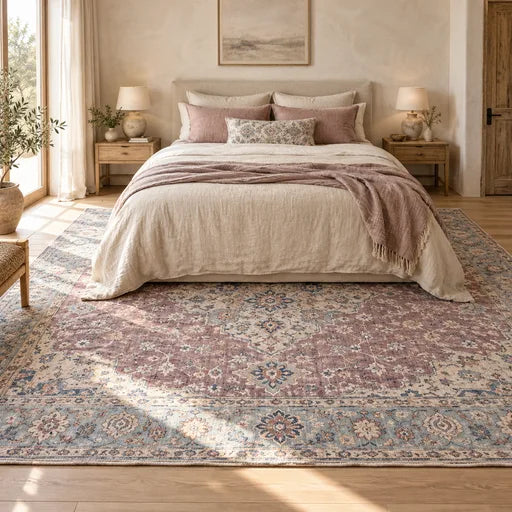
Choose a soft, pale grey with rose or cream tones and place at least the bottom third of the bed on the rug, with a margin of about 60 cm (2 ft) on each side.
Kitchen and hallway
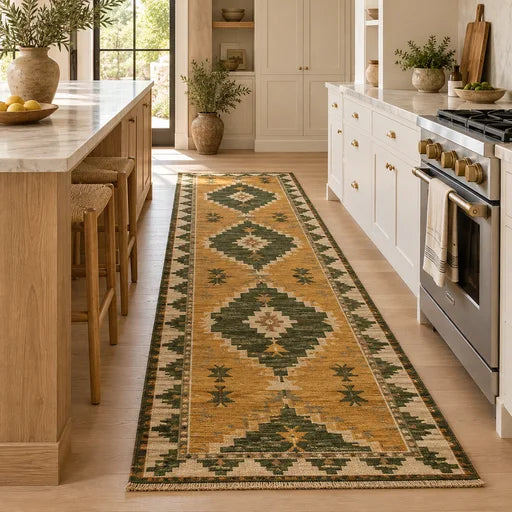
A striped grey kilim runner is light, flat and easy to shake out. In a narrow space, the pattern also draws the eye along the length of the room.
Home office
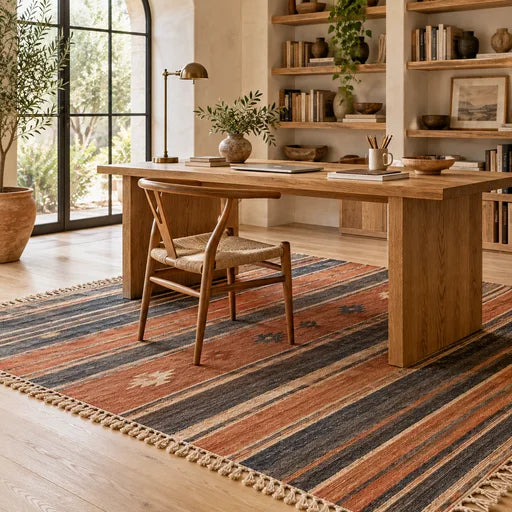
A charcoal or slate kilim keeps the space calm and focused, and the flat weave lets a chair roll more easily than deep pile does.
The Bottom Line
A grey Turkish rug is a versatile base that suits both modern and traditional homes, as long as you check the undertone, the weave and the exact size. Choose a hand-made piece with some tonal variation and it will keep a room interesting for years.
Pieces from our collection
Every piece below is one of a kind and in stock today:
- Hermos — Antique Anatolian Wool Area Rug
- Sophronia — Vintage Oushak Wool Small Rug
- Lyubova — Vintage Kayseri Wool Large Area Rug
- Phaethusa — Vintage Anatolian Wool Large Area Rug
- Tamara — Vintage Anatolian Wool Runner Rug
Frequently asked questions
Are grey Turkish rugs still in style?
Yes. Grey is a long-running neutral, and in vintage Turkish rugs it looks softer and more varied than in plain modern rugs. Tonal variation, muted pinks and blues, and bold kilim stripes keep it current, because the rug reads as a textured, hand-made piece rather than a flat colour block.
What colour furniture goes with a grey Turkish rug?
Most things do. Warm wood, tan leather and cream or linen upholstery suit warm greys, while navy, white and black pieces suit cooler slate tones. If the room feels flat, add one warm accent such as rust, mustard or terracotta in cushions, a throw or ceramics.
Is a grey kilim or a grey pile rug better?
It depends on the room. A flat-woven kilim is lighter, easier to shake out and good for kitchens, hallways and offices. A pile rug such as an Oushak or Kayseri is softer underfoot, which suits bedrooms and living rooms where you sit or walk barefoot.
Will a grey Turkish rug show dirt?
Mid-tone, mottled greys hide dust, hair and small crumbs better than cream or black rugs do. Patterns with several tones hide even more. Regular vacuuming without a beater bar, prompt blotting of spills and occasional professional washing keep a wool rug in good condition.
How do I know if the grey in the photo is accurate?
Check the full colour list in the listing, view the photos on a bright screen, and compare against something white nearby to judge warmth. Because every piece is unique and screens differ, you can also return it within 14 days if the colour does not suit your room.
Written by the team at Heritage Nomadic Art Gallery in Sultanahmet, Istanbul, the gallery behind TurkishRug.com, where every rug and pillow is chosen, washed and photographed by hand. Last updated November 8, 2026.