Are Turkish Rugs Good Quality? 6 Things That Decide It
Quick answer: Yes, Turkish rugs are good quality when they are genuinely hand-knotted from Anatolian wool with stable dyes and sound condition; a well-made one can last decades. Quality depends on six things: the wool, the knotting, the dyes, the foundation, the condition and the finishing. Check the back of the rug first.
So, are Turkish rugs good quality?
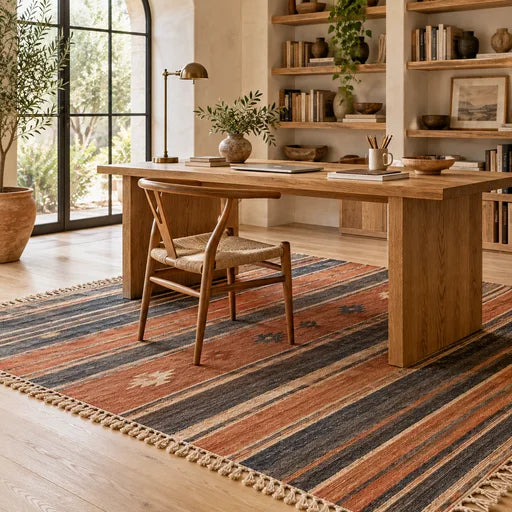
Yes, a well-made Turkish rug is among the most durable floor coverings you can buy, but "Turkish" on a label is not a guarantee. Quality depends on the wool, the dyes, the knotting and the condition of the individual piece. A hand-knotted wool rug from Anatolia can stay in daily use for several decades; a machine-made rug sold under the same name often cannot.
Because every piece we sell is vintage or antique and one of a kind, we judge quality rug by rug. The six factors below are the ones we check, and you can check them yourself on any rug, ours or anyone else's.
What makes a Turkish rug good quality?
1. The wool
Anatolian sheep produce a strong, springy, lanolin-rich wool. Hand-spun wool has slight thick and thin variations along the yarn, which is why good rugs show a gentle texture rather than a perfectly uniform surface. Lanolin helps the fibre resist soil and stay supple. Our guide to wool, cotton and silk in rugs explains how each fibre behaves.
2. The knotting
Turkish rugs use the symmetrical (Ghiordes) knot, which grips the warp on both sides and gives a firm, hard-wearing pile. Turn the rug over: on a hand-knotted piece the pattern is nearly as clear on the back as on the front, and the knots are slightly irregular. Perfectly even rows and a mesh-like back point to a machine.
3. The dyes
Natural and good-quality vegetable or mineral dyes age gracefully, softening into tones that look richer over time. Poor synthetic dyes can bleed when wet or fade unevenly in sun. Subtle colour variation within one field, known as abrash, is usually a sign of small dye lots in hand-dyed wool, not a flaw. See natural dyes in Anatolian rugs for more.
4. The foundation
The warps and wefts carry the whole rug. Wool or cotton foundations are both traditional. Look for straight edges, even fringes that are part of the warp (not sewn on), and a rug that lies flat without ripples.
5. The condition
Age alone does not make a rug good. A vintage rug with even pile, sound edges and no dry rot is better than a newer rug with moth damage. Minor repairs by a skilled weaver are normal and do not reduce durability.
6. The design and finishing
Balanced borders, a confident field pattern and consistent colour placement show an experienced weaver. Hurried work tends to show crooked borders and drifting motifs.
Hand-knotted, flatwoven or machine-made: how quality differs
| Type | How it is made | Typical lifespan in a home | Repairable? |
|---|---|---|---|
| Hand-knotted wool pile rug | Individual knots tied by hand on a loom | Decades, often generations with care | Yes, by re-knotting and re-weaving |
| Kilim (flatwoven wool) | Weft threads interlaced, no pile | Decades; very resistant to crushing | Yes, but edges and slits need attention |
| Hand-tufted rug | Yarn punched into backing, glued | Often a few years before shedding or wear through | Rarely |
| Machine-made rug | Power loom, often synthetic | Varies widely; flattens and frays | No |
For a deeper comparison read hand-knotted vs hand-tufted vs machine-made rugs, and if you are unsure whether a rug on your own floor is hand-made, our guide to identifying an authentic hand-knotted Turkish rug walks through it step by step.
Are vintage Turkish rugs better than new ones?
Often, for one practical reason: a rug that has survived decades of use has already proved itself. Weak dyes have faded out, poor wool has worn through, and what remains is the sturdy stock. Vintage rugs also tend to be softer underfoot because the wool has been walked in and, in many cases, washed several times.
That said, new hand-knotted rugs from good workshops are also excellent. The point is to judge the construction, not the age. We explain the labels in antique vs vintage Turkish rugs.
Does the region affect quality?
Regions are known for different strengths, though quality varies by workshop and by piece.
- Oushak (Uşak): soft wool, often with muted or overdyed colours and a decorative, relaxed look. Browse Oushak rugs.
- Konya: sturdy village rugs with bold geometric designs and strong colour. See Konya rugs.
- Kayseri: finely knotted rugs, including some in silk or with silk highlights. Browse Kayseri rugs.
- Hereke: famed for very fine knotting, usually in silk or fine wool.
Our guide to Anatolian rug regions covers the differences in detail.
How can you check quality before you buy?
Whether you are in a shop or looking at photos online, this checklist works:
- Look at the back. You should see the knot pattern, not a mesh or glued backing.
- Bend a corner. A hand-knotted rug folds easily; stiff, latex-like backing means tufting or machine work.
- Part the pile. Wool pile has a springy feel and the base of the knots is visible. Check that colour is the same at the base as at the tip.
- Check the edges. Selvedges should be wrapped or corded by hand, with no loose fraying.
- Smell and touch. Natural wool has a faint earthy smell, not a chemical one, and feels warm and slightly dry.
- Rub a damp white cloth on the pile. Colour transferring onto it suggests unstable dyes.
- Ask for exact dimensions and clear photos of the back. Reputable sellers will provide them.
When buying online, our checklist for buying a vintage rug online adds questions to ask about condition and returns.
How long does a good Turkish rug last?
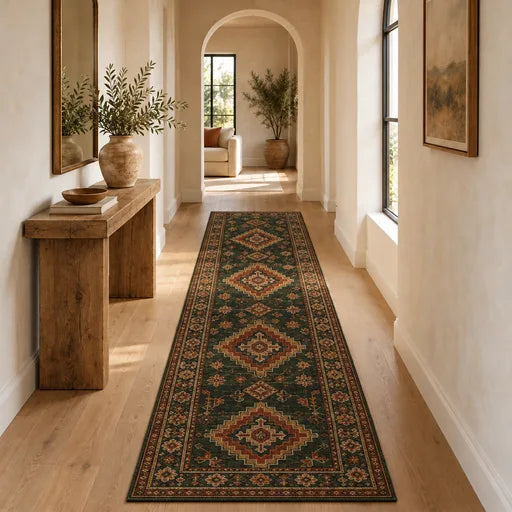
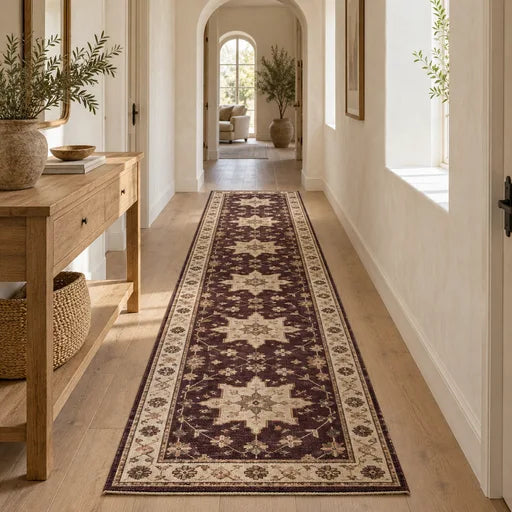
There is no fixed number, because use and care vary. In a living room, a hand-knotted wool rug can reasonably serve for decades. High-traffic areas such as hallways wear faster, so a dense, low-pile rug or a kilim is a sensible choice there; see our runner rugs.
To extend life:
- Use a breathable rug pad so the rug does not slide or grind against the floor.
- Rotate the rug every 6 to 12 months so wear and sun fade are even.
- Vacuum without the beater bar, and take care around the fringe.
- Deal with spills immediately by blotting, never rubbing.
Full instructions are in how to care for a vintage wool rug.
Common sizes and what suits them
| Size (feet) | Size (cm) | Good for |
|---|---|---|
| 2 x 3 ft | about 60 x 90 cm | Doormat, bedside, bathroom |
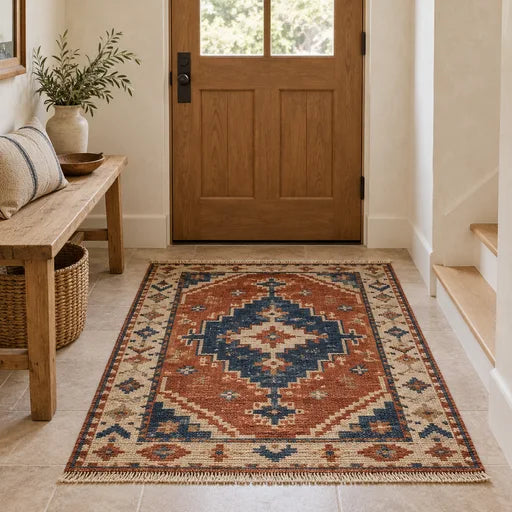
| 3 x 5 ft | about 90 x 150 cm | Entryway, kitchen, desk |
| 5 x 7 ft | about 150 x 210 cm | Bedroom, small living room |
| 6 x 10 ft | about 180 x 300 cm | Living room, dining area |
You can shop by size in small rugs or medium rugs. For more on measuring, see how to read vintage rug dimensions.
What are the signs of a poor-quality rug?
Knowing the warning signs is as useful as knowing the strengths. Be cautious if you see any of the following:
- A glued, fabric or latex backing that hides the knots.
- Fringe that has been stitched on to the ends rather than growing out of the warp threads.
- A chemical smell that does not fade after airing, or colour that rubs off on a damp cloth.
- Large bald patches, brittle wool that crumbles when pinched, or dark staining along the edges that suggests old damp.
- A rug that will not lie flat, or one with a pattern so exact that no two motifs differ at all.
Any one of these does not automatically rule a rug out, since many can be repaired or cleaned, but together they tell you to ask more questions or walk away.
What about price and quality?
Price reflects hours of labour, fibre quality and rarity, but a high price on its own proves nothing. A large, finely knotted rug takes a weaver months; that is why genuine pieces cost more than mass-produced ones. We explain this in why Turkish rugs are expensive. If a "hand-knotted" rug is priced near a machine-made one, be sceptical.
How we judge quality at our gallery
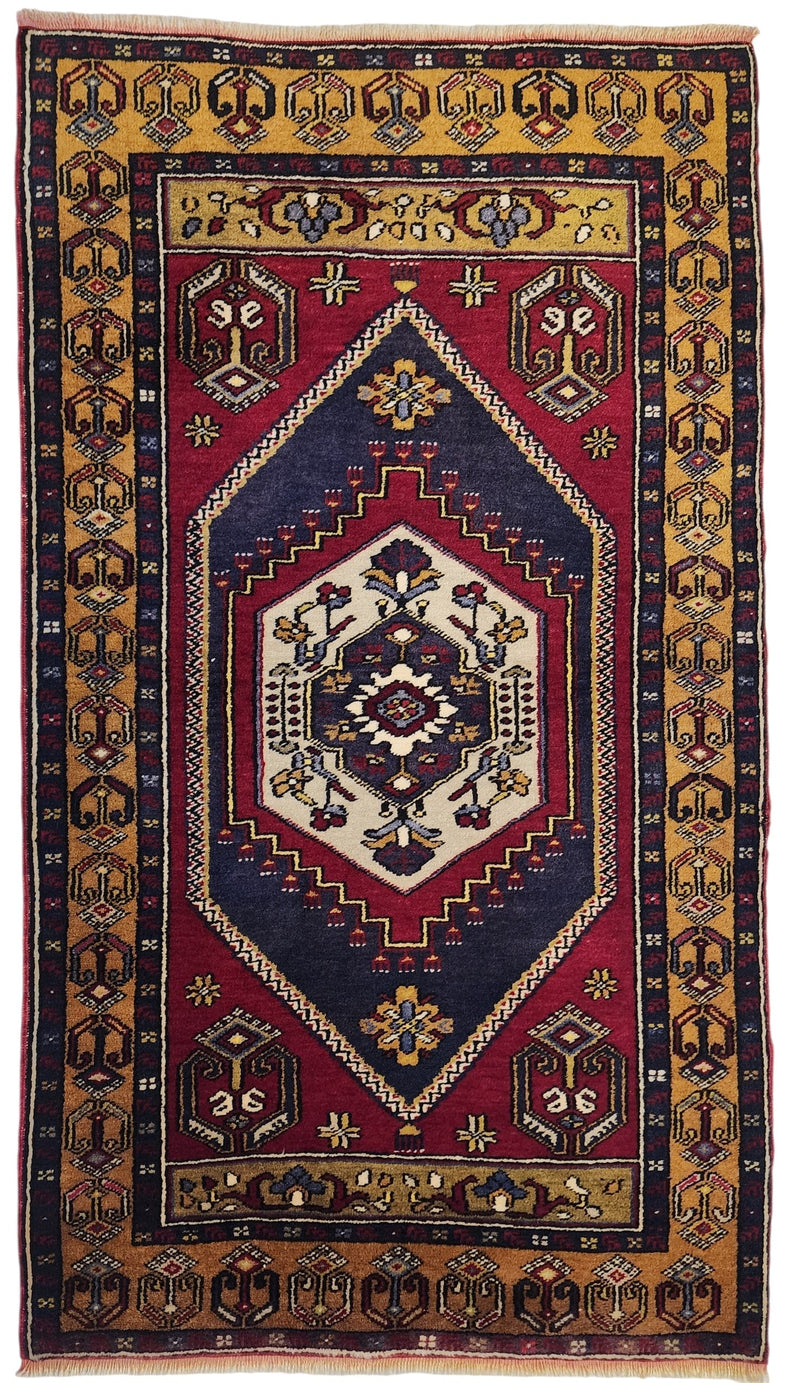
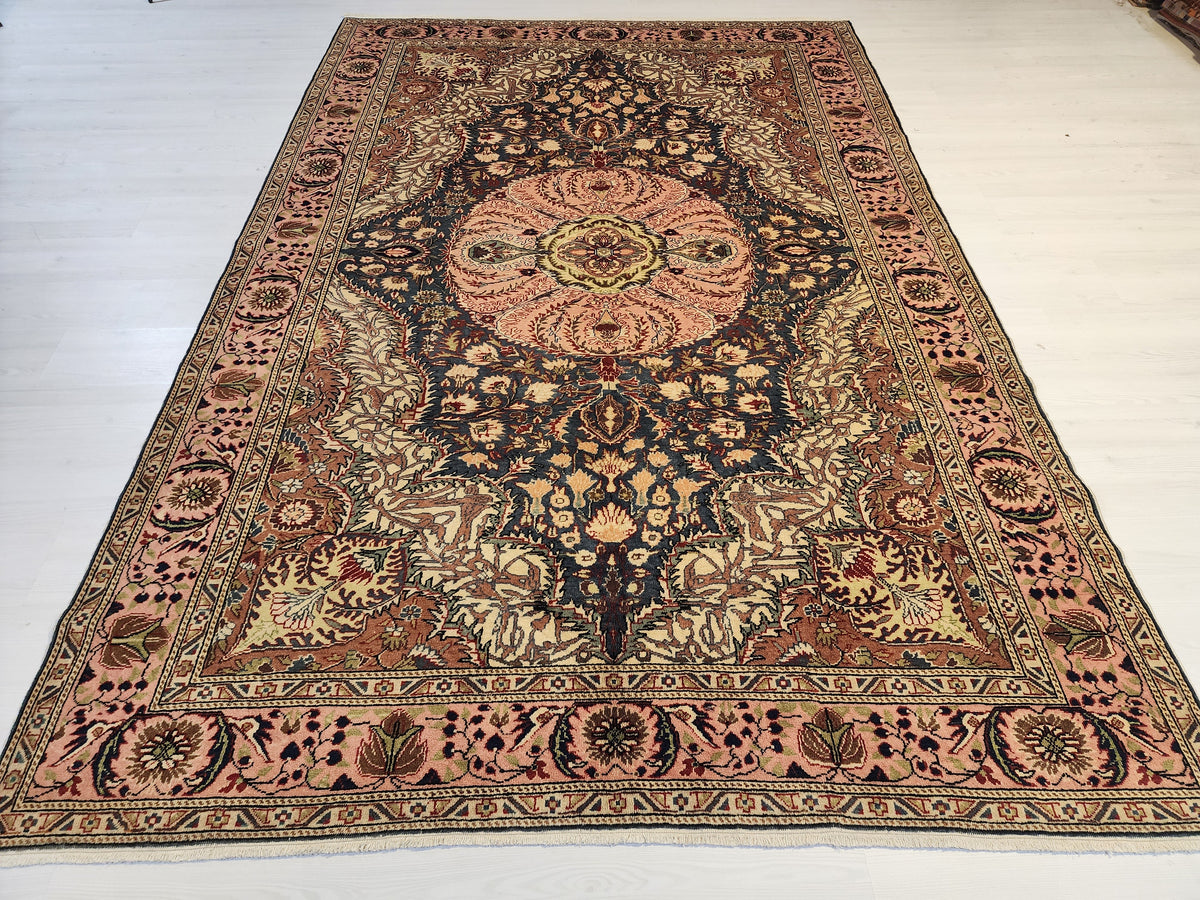
Every piece at Heritage Nomadic Art Gallery in Sultanahmet, Istanbul, is vintage or antique and hand-made in Turkey. Before listing, we look at the wool, the back, the edges, the dyes and the overall condition, and we describe visible wear honestly. Examples in stock include a vintage Kayseri medallion rug in 6x10 and a vintage Oushak wool large area rug. Shipping is free worldwide, import duties are pre-paid for the US, UK, EU and Canada, and you have 14 days to return a piece.
Pieces from our collection
Every piece below is one of a kind and in stock today:
- Theophano — Vintage Kayseri Medallion Rug, 6x10
- Alkmene — Vintage Oushak Wool Large Area Rug
- Selçuka — Vintage Konya Rug, 2x4
- Atalanta — Antique Oushak Wool Small Rug
Frequently asked questions
Are Turkish rugs worth the money?
A hand-knotted wool Turkish rug is worth it if you value durability, repairability and character. It can last for decades and be restored, unlike most machine-made rugs. Worth depends on construction and condition, so check the back, the wool and the dyes rather than relying on the label alone.
How can I tell a hand-knotted Turkish rug from a machine-made one?
Turn it over. A hand-knotted rug shows the pattern clearly on the back, with slightly uneven knots and fringe that is part of the rug. Machine-made rugs usually have a perfectly regular mesh, a glued or fabric backing and fringe stitched on the ends.
Do Turkish rugs shed?
New wool rugs shed loose fibres for the first weeks or months, which is normal and fades with vacuuming. Vintage rugs have usually finished shedding. Heavy, ongoing shedding of whole tufts may indicate weak wool, poor knotting or a tufted construction.
Are kilims good quality too?
Yes. A wool kilim is flatwoven with no pile, so it is lightweight, reversible and resistant to crushing. Check that the weave is tight, the edges are intact and the slits between colour areas are firmly stitched. Kilims suit hallways, dining areas and walls.
Which Turkish rug region has the best quality?
No region is best across the board. Oushak is prized for soft wool and gentle colours, Konya for sturdy bold village rugs, Kayseri for fine knotting and some silk work, and Hereke for very fine weaving. Judge the individual rug, not just where it is from.
Written by the team at Heritage Nomadic Art Gallery in Sultanahmet, Istanbul, the gallery behind TurkishRug.com, where every rug and pillow is chosen, washed and photographed by hand. Last updated October 27, 2026.