



Kilim Lumbar Pillow Covers: Sizes, Uses and How to Choose
Quick answer: Kilim lumbar pillow covers are long, narrow cushion cases cut from vintage flat-woven kilim. The standard size is 12 x 20 in (30 x 50 cm). Use them on sofas, beds and armchairs, and buy an insert about 1 in (2.5 cm) larger than the cover so it fills out. Inserts are sold separately.
What is a kilim lumbar pillow cover?
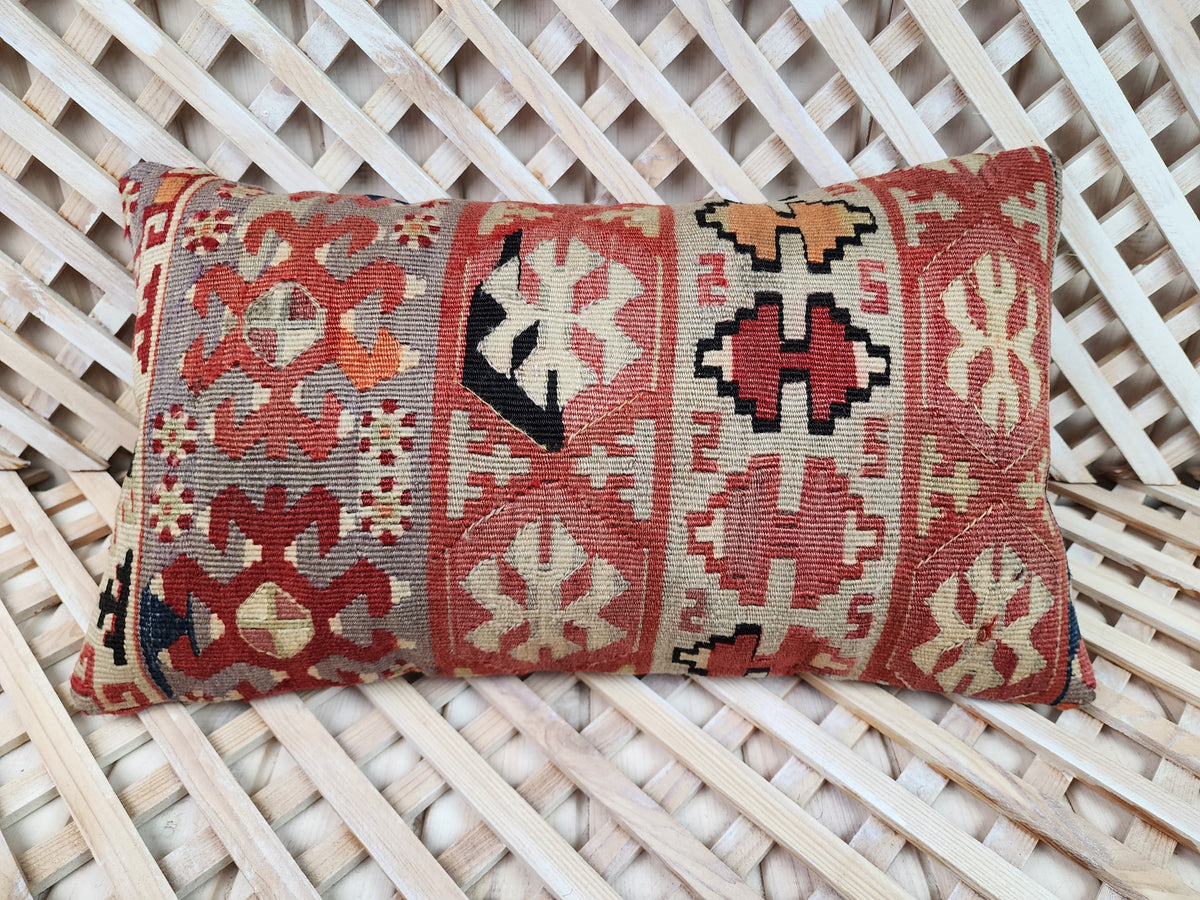
A lumbar pillow is a long, narrow cushion, usually about 12 x 20 in (30 x 50 cm), made to sit against the curve of your lower back or to run along the middle of a bed or sofa. A kilim lumbar pillow cover is the outer case for that shape, cut from a vintage kilim: a flat-woven textile with no pile, so the pattern looks the same on every part of the surface and the feel is firm, smooth and slightly textured.
Ours are cut from real vintage kilims woven in Anatolia, then finished with a cotton back and a concealed zipper. Because each cover is cut from a different weaving, no two have the same motifs or colours. The inserts are not included, so you buy the cover and choose the filling yourself.
The long, narrow format suits kilim well. Many old kilims are woven in bands of repeating geometric motifs, and a rectangle lets those bands run along the full width of the cushion rather than being cropped into a square.
What size is a lumbar kilim pillow?
There is no single standard, but a few sizes cover nearly every bed and sofa. The one we stock is 12 x 20 in (30 x 50 cm), which is the most common lumbar size sold. Other sizes you will see elsewhere are listed below.
| Name | Inches | Centimetres | Best for |
|---|---|---|---|
| Small lumbar | 12 x 16 in | 30 x 40 cm | Armchairs, nursing chairs |
| Standard lumbar | 12 x 20 in | 30 x 50 cm | Sofas, accent chairs, beds |
| Large lumbar | 14 x 22 in | 35 x 55 cm | Deep sofas, day beds |
| Extra-long lumbar | 14 x 36 in | 35 x 90 cm | Bed bolsters, headboards |
Before you buy, check the measurement in the listing against the insert you plan to use. The usual rule is to choose an insert about 1 in (2.5 cm) larger than the cover in each direction. A 12 x 20 in cover looks plumper with a 13 x 21 in insert, and the corners fill out properly. An insert the same size as the cover will look flat and sag in the middle.
How do you use a kilim lumbar pillow?
People tend to use a lumbar cushion in one of four ways. Here is how we would approach each.
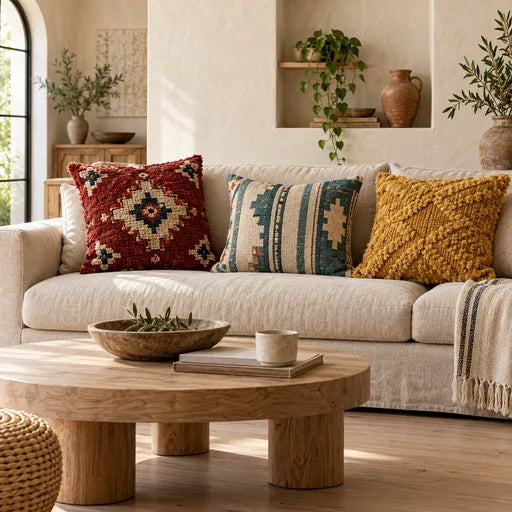
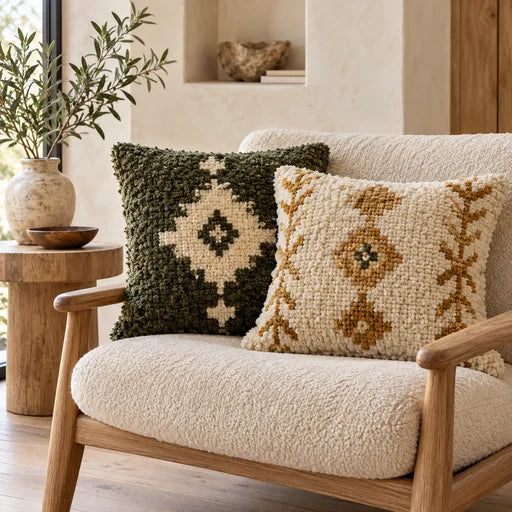
- On a sofa: place one at each end, or one in the centre of a pair of square cushions. Lumbar shapes break up a row of squares and add a different outline.
- In an armchair: a single lumbar sits across the back at roughly waist height and gives your lower back something to rest against.
- On a bed: lay it lengthwise in front of the sleeping pillows, or across the foot of the bed as an accent.
- On a bench or window seat: a lumbar sits neatly in the corner without taking up seat room.
Kilim is a firm, flat weave, so a lumbar cover will not feel as soft against bare skin as velvet does. If you plan to lean on it for hours, pair it with a generous insert. A feather-and-down blend gives a soft, moulded feel, while a firm polyester or foam insert holds the rectangular shape for longer.
Are lumbar pillows good for you?
This is among the most-searched questions about the shape, and we want to answer it carefully. We are rug and textile specialists, not medical professionals, so we make no health claims for our covers. What we can say is that a lumbar cushion fills the gap between the curve of your lower back and a chair or sofa, which many people find more comfortable when sitting for a while.
If you have back pain, speak to a doctor or physiotherapist. A kilim cover is a decorative textile first. What you put inside it decides how supportive it feels, so choose an insert that matches how you sit.
How do you choose the right kilim lumbar cover?
Match the colours to the room, not to every item
Pick two or three colours from the kilim that already appear in your room, such as the rust in a curtain or the indigo in a rug. The rest can differ. Old kilim colours tend to be soft and earthy rather than neon, which makes them easy to mix.
Look at the motifs
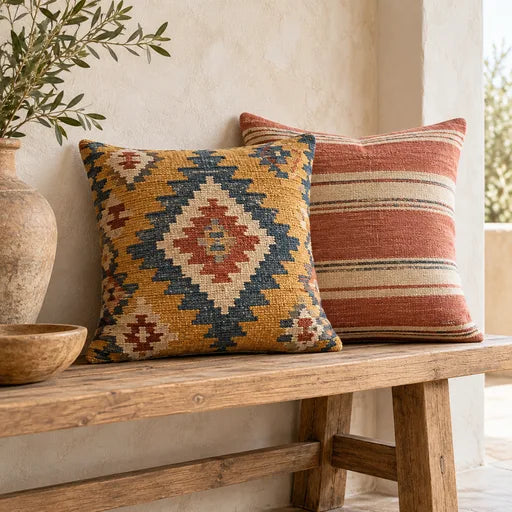
Many kilims use stepped diamonds, hooked borders, stripes and bands. Our guide to kilim and rug symbols explains what many of them traditionally represent. Bold central motifs work well as a single accent, while repeating bands read as quieter texture.
Check the wear
Vintage means used. Mild softening, tiny colour variations and small irregularities in the weave are normal and part of the character. Look at the photos of each cover, because every one is unique.
Think about pairs
We sell covers singly or as a pair. Two covers cut from the same kilim look related but not identical, which is usually better than a perfect match. Browse the kilim pillow covers collection to see what is available now, or start with this 12 x 20 in vintage kilim lumbar cover.
How do you care for a kilim lumbar pillow cover?
Kilim is wool, so treat it as you would any wool textile. Our full advice is in the guide to caring for kilim and rug pillow covers. In short:
- Unzip the cover and remove the insert before you do anything else.
- Vacuum gently with a brush attachment, or shake the cover outside, every few weeks.
- Blot spills straight away with a clean cloth. Do not rub, because rubbing pushes the stain deeper.
- For marks, use a mild wool-safe detergent on a damp cloth, and test a hidden corner first.
- Do not machine-wash or tumble-dry. Heat and agitation can shrink wool and make colours bleed.
- Dry flat and out of direct sun, which fades dyes over time.
Rotate the cushion now and then so that one side does not get all of the wear and sunlight.
How do you pair a lumbar pillow with a rug?
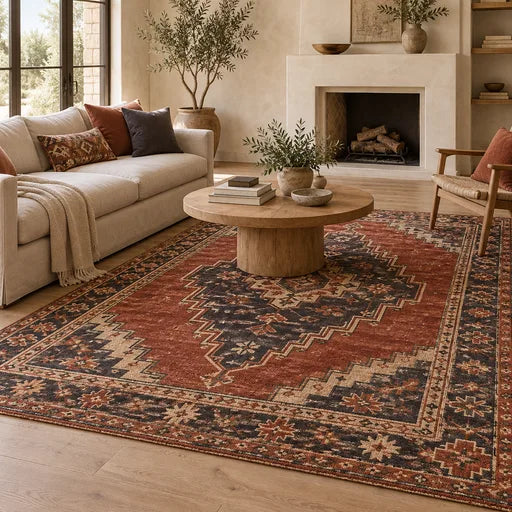
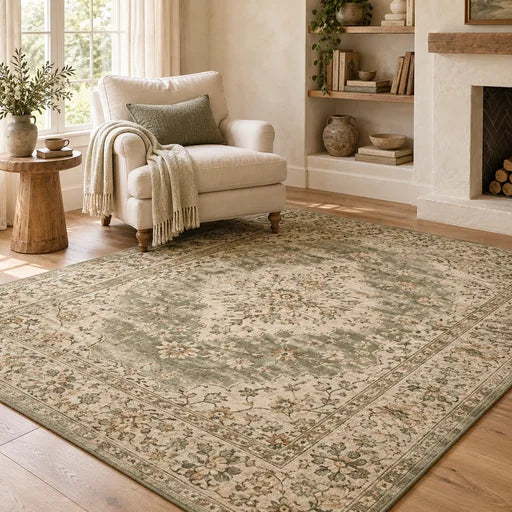
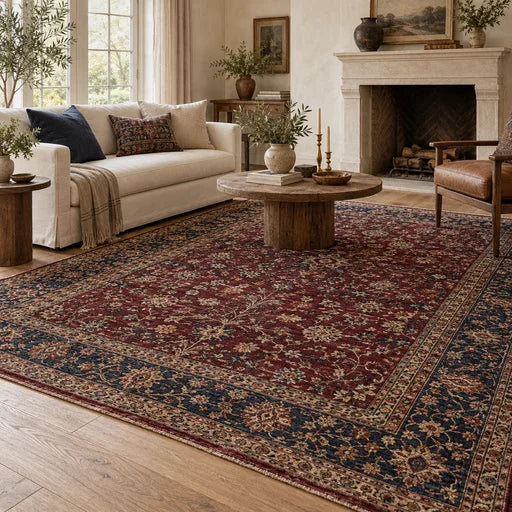
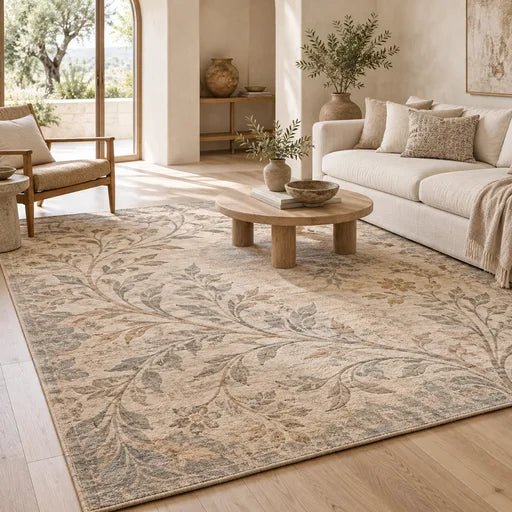
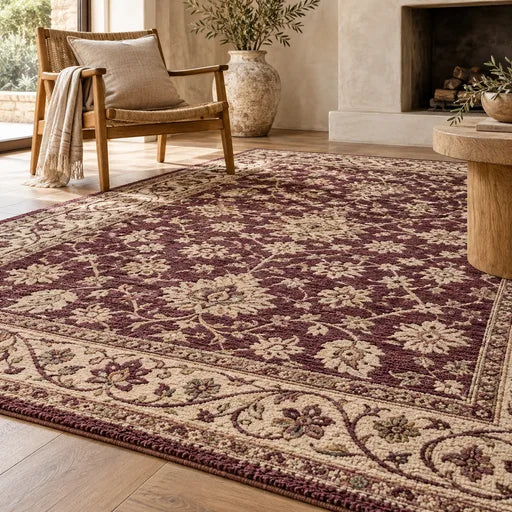
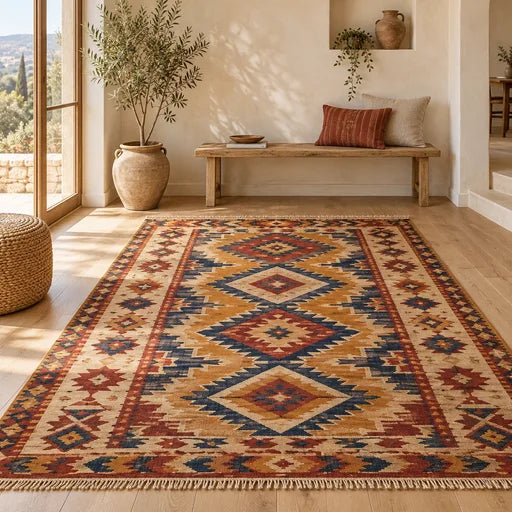
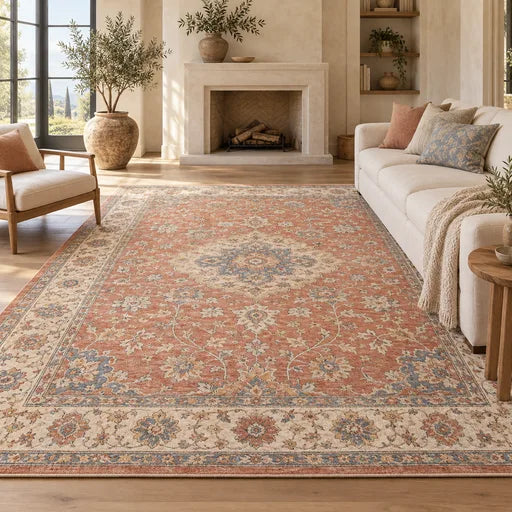
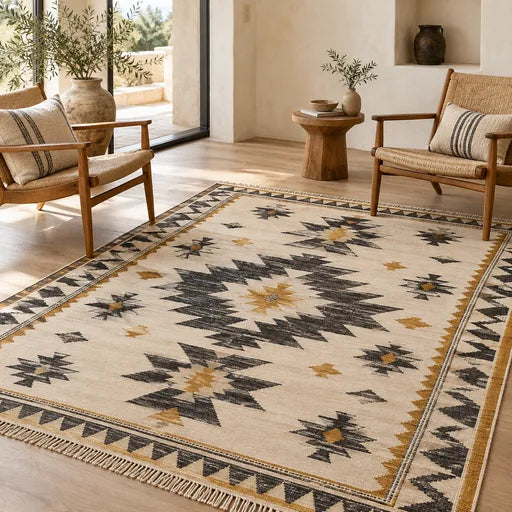
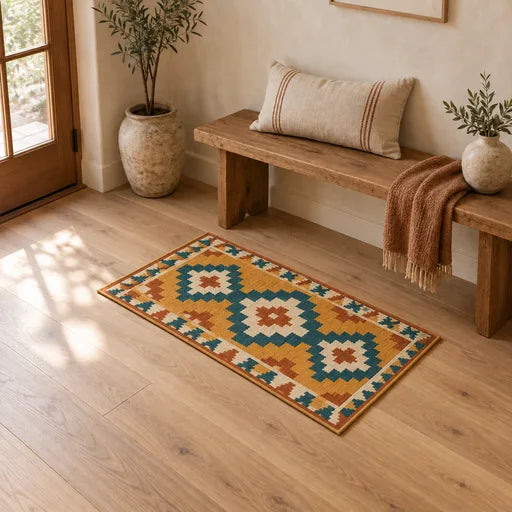
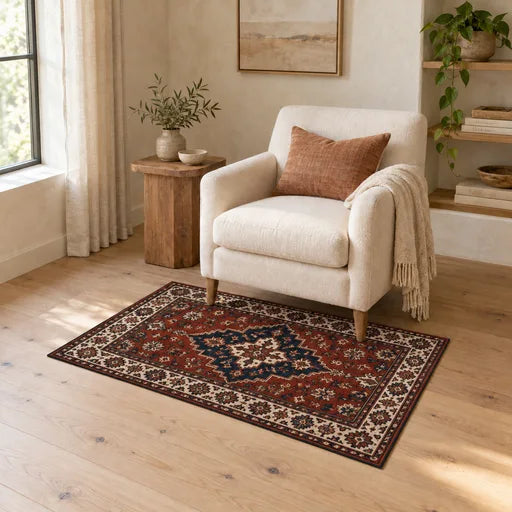
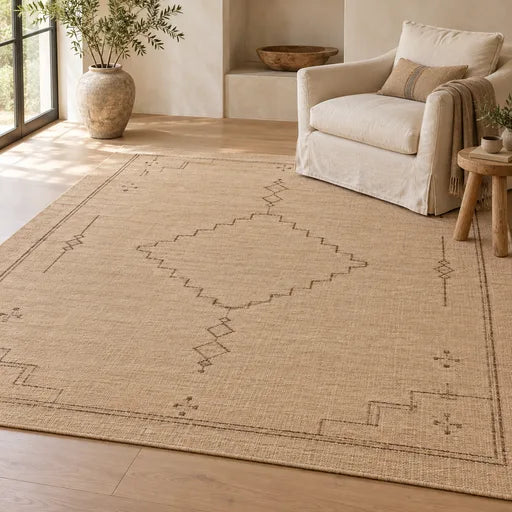
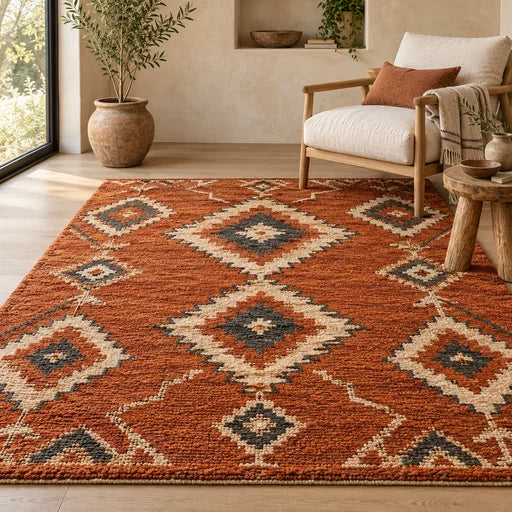
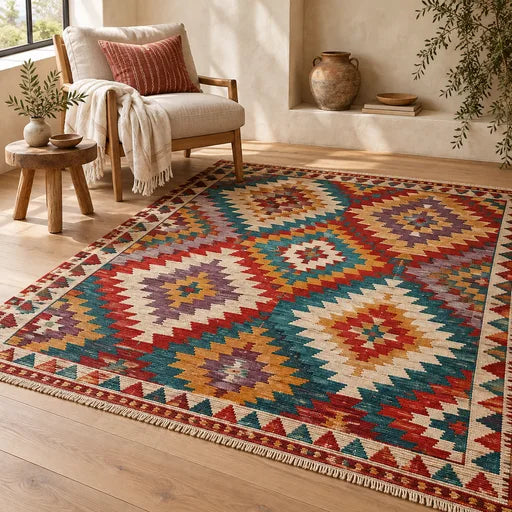
A kilim cover picks up well from a rug on the floor. If you have a flat-woven rug, a lumbar cover in a similar palette ties the seating area together. Our kilim flatwoven rugs are a good starting point if you want to build the whole look, and the guide to styling Turkish rug pillow covers goes through combinations in more detail.
You do not need to match the pillow to the rug exactly. A better approach is to echo one colour and let the patterns differ in scale. If the rug has a large medallion, pick a lumbar with small repeating bands. If the rug is plain, a bolder kilim pattern can carry the room.
What should you know before you order?
Each cover is one of a kind, so what you see in the photos is what you receive. Shipping is free worldwide, import duties are pre-paid for the US, UK, EU and Canada, and you have 14 days to return an item. The covers come from Heritage Nomadic Art Gallery in Sultanahmet, Istanbul.
Remember that the insert is a separate purchase. Measure the cover, add about 1 in (2.5 cm) to each dimension, and buy an insert of that size. For an overview of the three kinds of covers we make, from kilim to pile rug to tulu, read our comparison of kilim, rug and tulu pillow covers.
Quick buying checklist
- Confirm the size: 12 x 20 in (30 x 50 cm) for a standard lumbar.
- Choose two or three colours that already appear in your room.
- Decide on a soft or firm insert, sized about 1 in (2.5 cm) larger.
- Look at the photos closely, since each weaving is different.
- Decide whether you want one cover or a pair.
Pieces from our collection
Every piece below is one of a kind and in stock today:
- Hipsia — Vintage Kilim Pillow Cover
- Argaia — Vintage Kilim Pillow Cover
- Pontia — Vintage Kilim Pillow Cover
- Cariye — Vintage Kilim Pillow Cover
Frequently asked questions
What size insert do I need for a 12 x 20 in lumbar cover?
We suggest an insert about 1 in (2.5 cm) larger in each direction, so 13 x 21 in (33 x 53 cm) for a 12 x 20 in (30 x 50 cm) cover. This fills the corners and stops the cushion from sagging. Inserts are not included with our covers, so you buy one separately in the filling you prefer, such as down-feather or foam.
Can I wash a kilim pillow cover in the washing machine?
We do not recommend it. Kilim is wool, and heat and spinning can shrink it or make the dyes bleed. Remove the insert, vacuum gently, blot spills at once and spot-clean with a mild wool-safe detergent on a damp cloth. Test a hidden corner first, then dry the cover flat away from direct sun.
Are your kilim lumbar covers new or vintage?
They are cut from real vintage kilims woven by hand in Anatolia, Turkey. Because each cover comes from a different weaving, every one is unique, with its own colours and motifs. Small signs of age, such as slight softening, are normal for vintage textiles. Check the photos, because what you see is the piece you receive.
Can I buy a lumbar kilim cover as a pair?
Yes. Our pillow covers are sold singly or as a pair. Two covers cut from the same kilim look related without being identical, which many people prefer to a perfect match. A pair works well at either end of a sofa or on each side of a bed.
Do you ship kilim pillow covers internationally?
Yes. Shipping is free worldwide from Istanbul, and import duties are pre-paid for the US, UK, EU and Canada, so you should not meet extra charges on arrival. You also have 14 days to return an item if it is not right for you.
Written by the team at Heritage Nomadic Art Gallery in Sultanahmet, Istanbul, the gallery behind TurkishRug.com, where every rug and pillow is chosen, washed and photographed by hand. Last updated October 29, 2026.