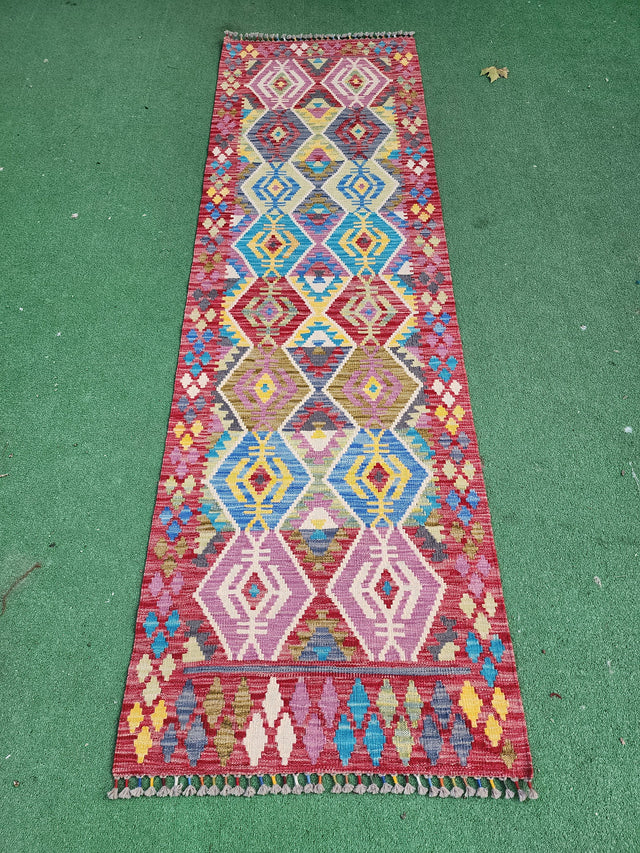
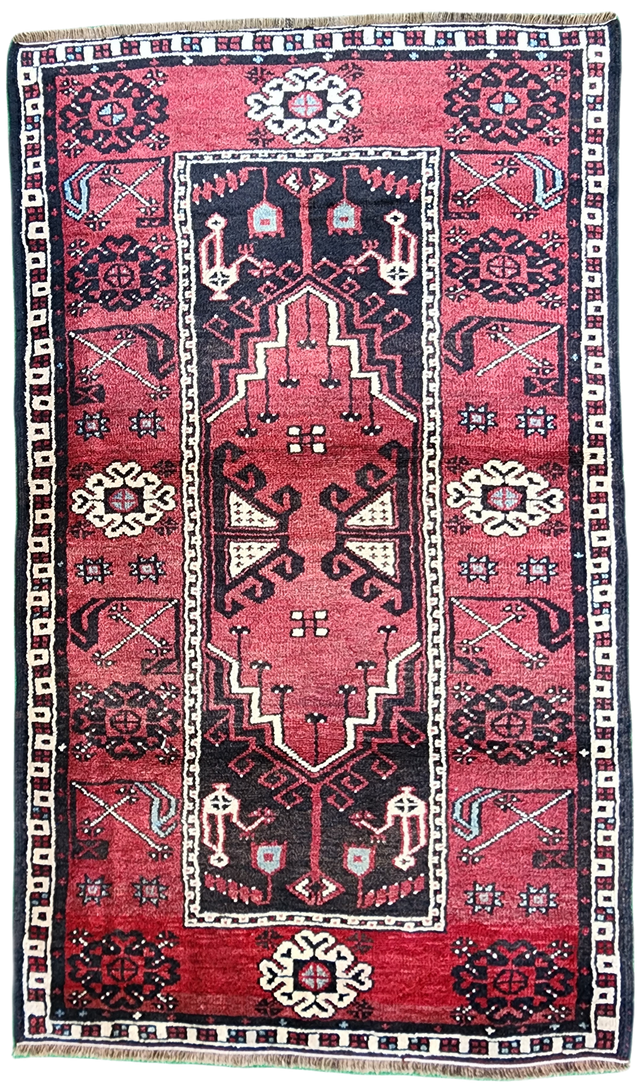
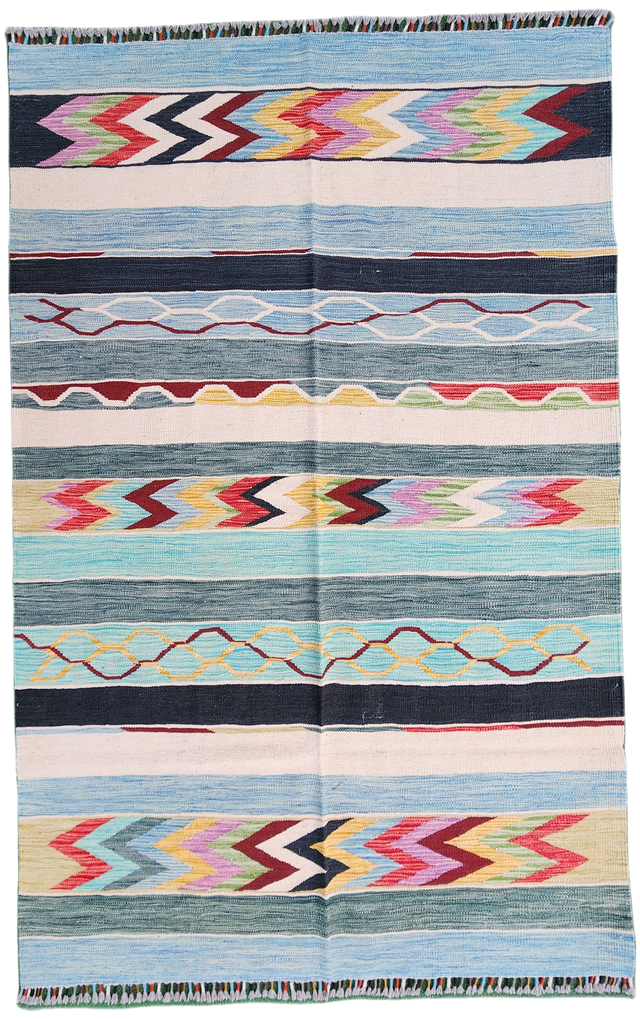
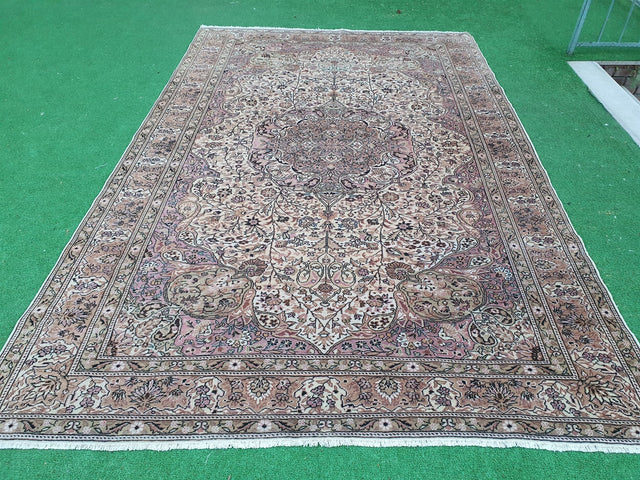
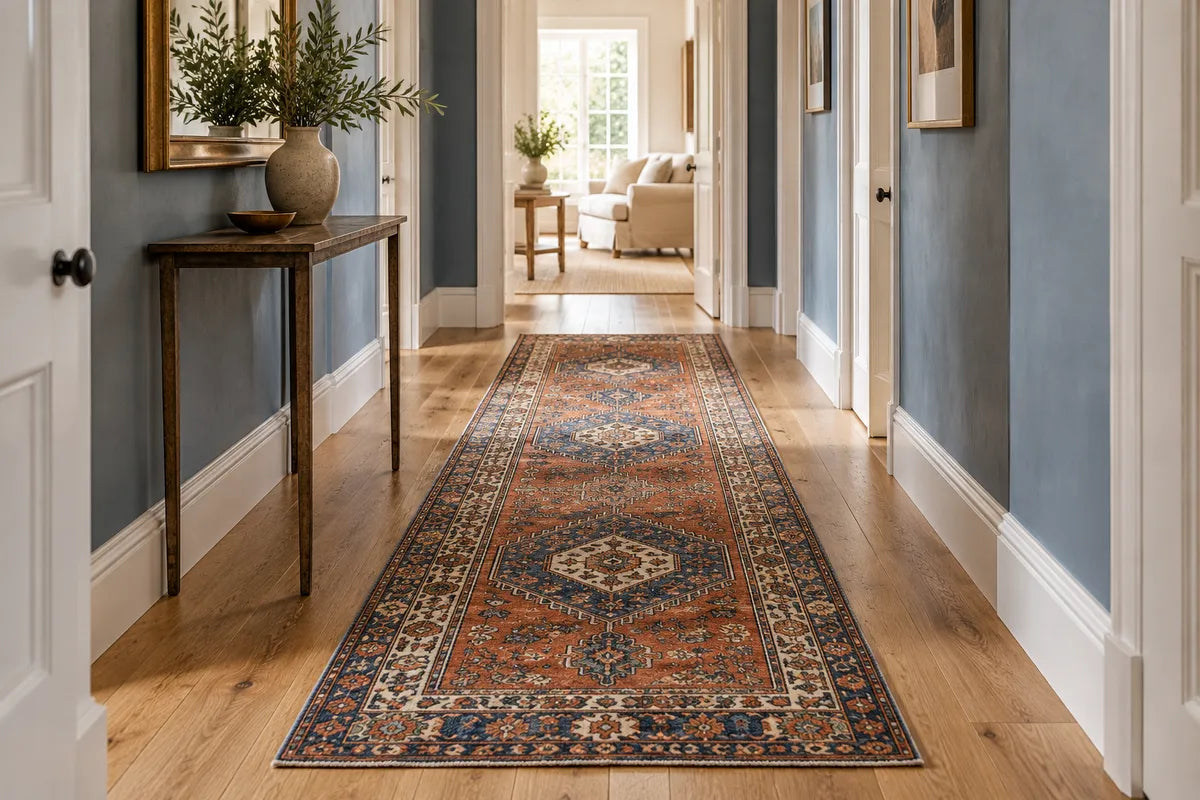
How to Choose a Runner Rug for a Narrow Hallway
A hallway runner needs to work with the route through your home as well as its colours. Before choosing a pattern, measure the part of the floor that people actually walk on. Door swings, radiators and furniture can make that space different from the full wall-to-wall width.
Measure the clear walking space
Measure the width at several points along the hallway. A skirting board, console table or projecting cupboard can reduce the available space. Then measure the length you would like the rug to cover. Decide where the runner should begin and end, keeping doorways and changes in floor level in mind.
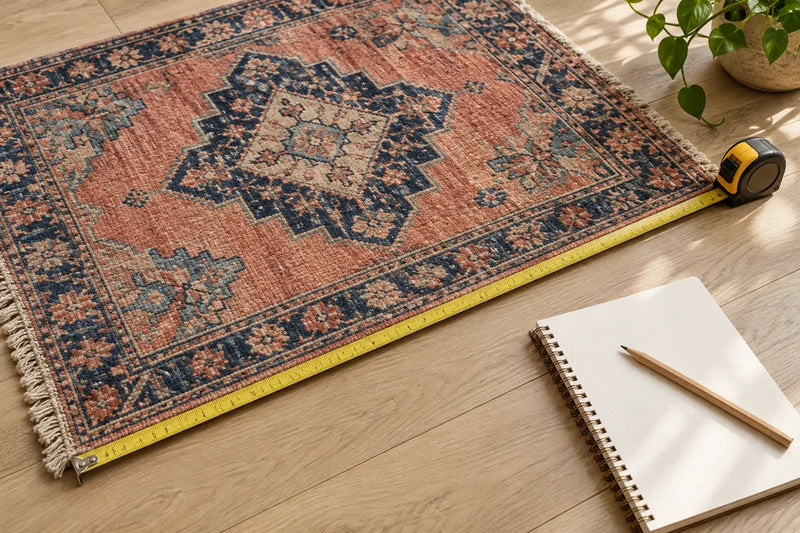
Use removable tape to mark out a rectangle on the floor. Walk the route with the tape in place, open nearby doors and check that the layout feels comfortable. This gives a more useful starting point than choosing a runner from a photograph alone.
Leave a visible floor border
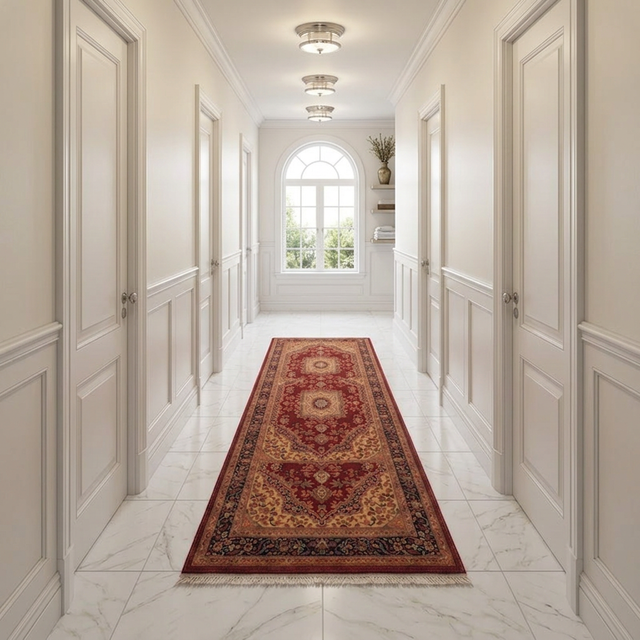
A border of floor on each side helps the runner look intentional. There is no single border width that suits every hallway: compare the rug width with the narrowest usable part of your space. A 75 cm runner in a 100 cm clear hallway, for example, leaves approximately 12.5 cm on each side when centred. This is a calculation, not a rule for every home.
Check doors, pile and underlay together
Width and length are only part of the fit. Consider the combined height of the rug and any suitable rug pad, particularly near low doors. Look at the product’s construction and condition notes. Ask about thickness if it is not listed, and choose an underlay compatible with your flooring and the rug.
A hallway used by children, pets or outdoor shoes may have different requirements from a quiet upstairs landing. Think about how the piece will be used rather than assuming every vintage runner suits the same location.
Use colour to connect adjacent rooms
A runner can pick up a colour from a nearby room without matching every element. Compare the rug with your wall colour, floor and any artwork along the hallway. If those surfaces are already busy, a quieter field or a smaller palette can be easier to combine. If the hallway is simple, the runner can provide the main pattern.
Read the exact product measurements
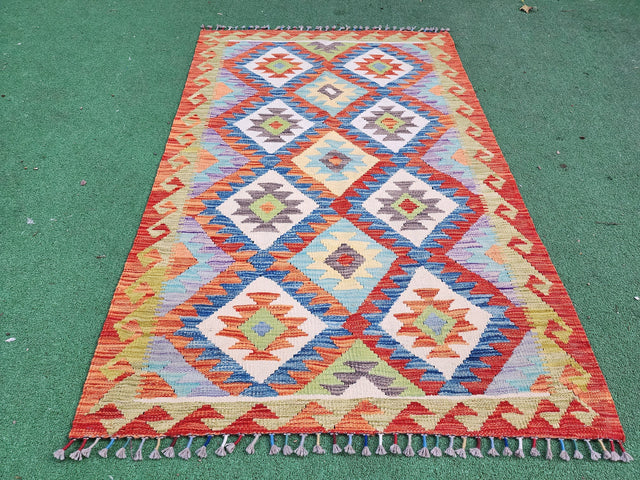
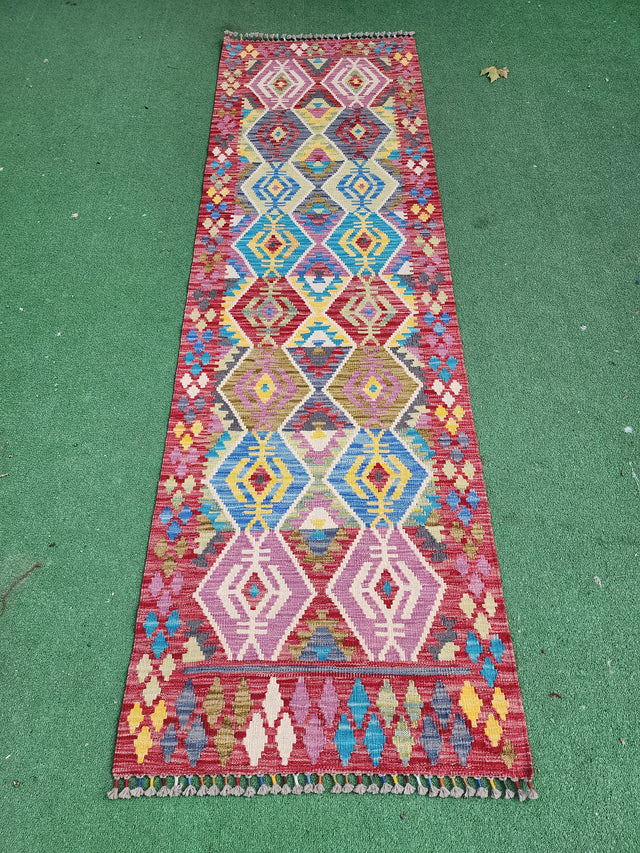
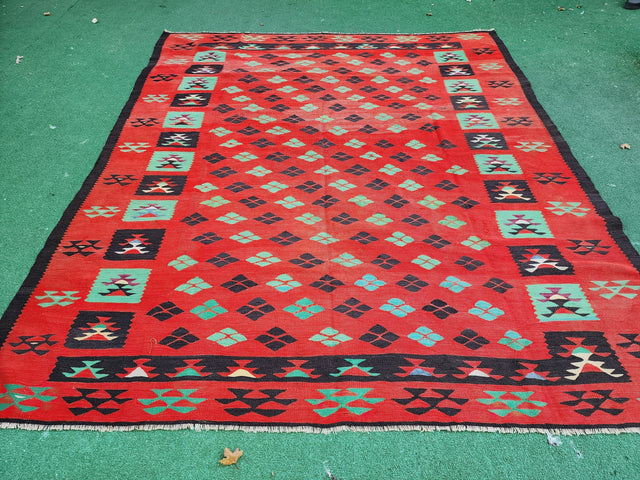
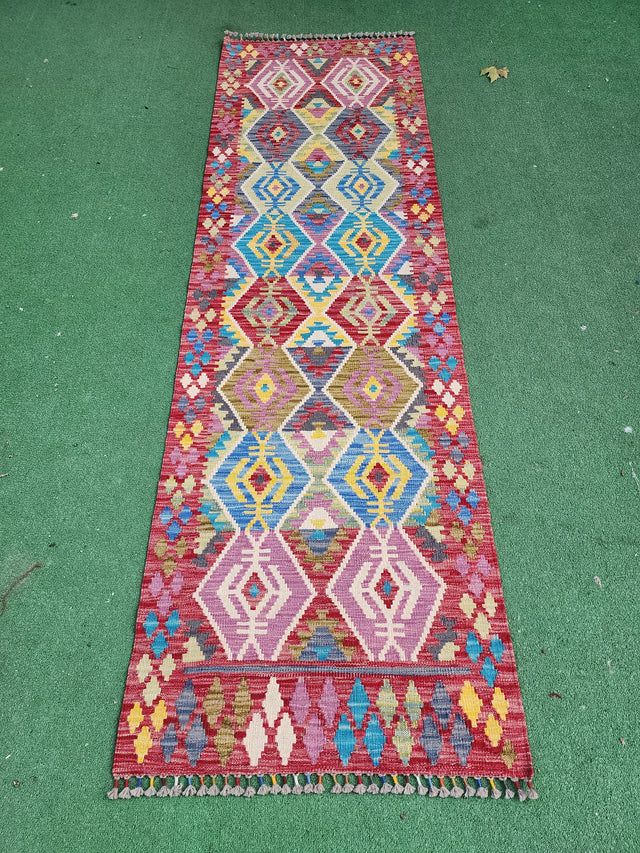
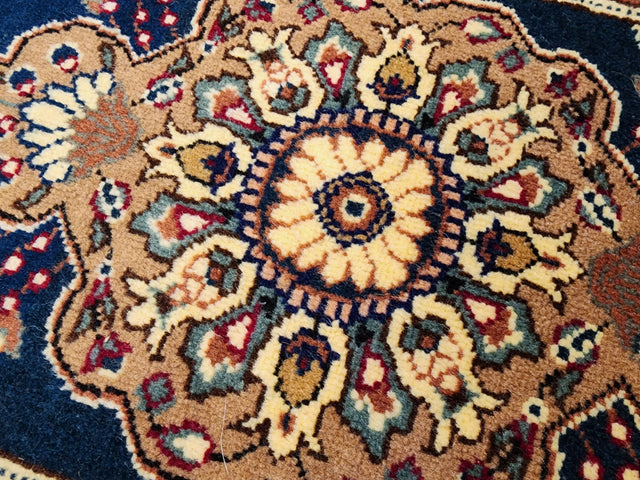
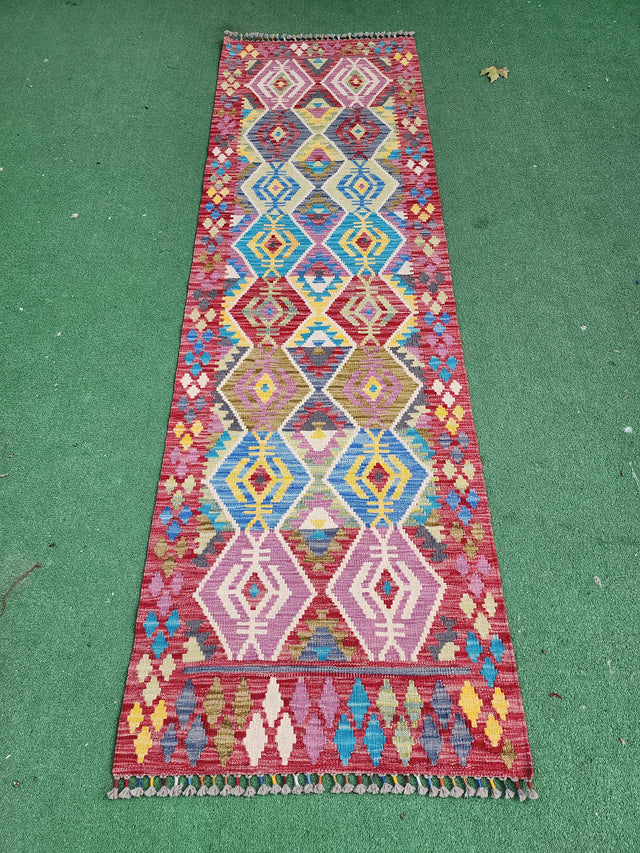
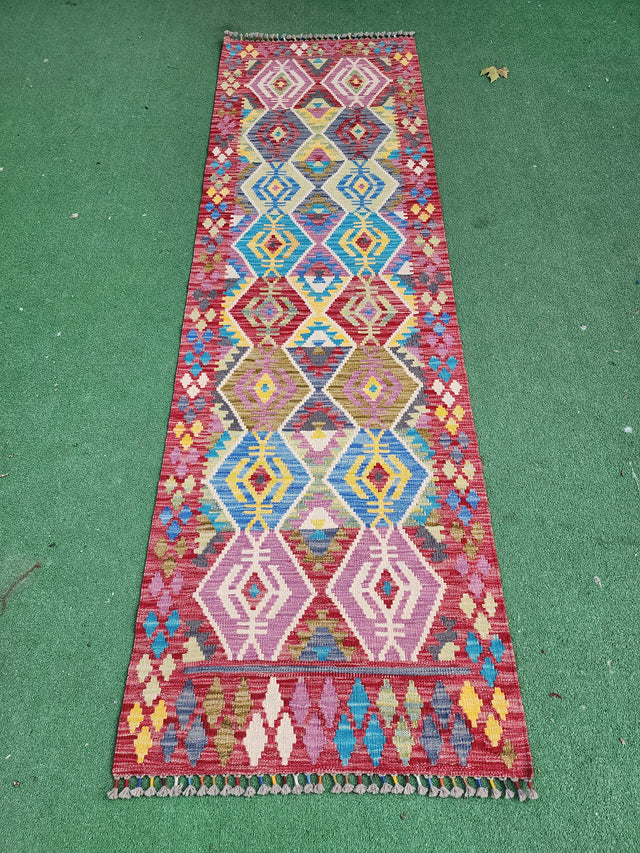
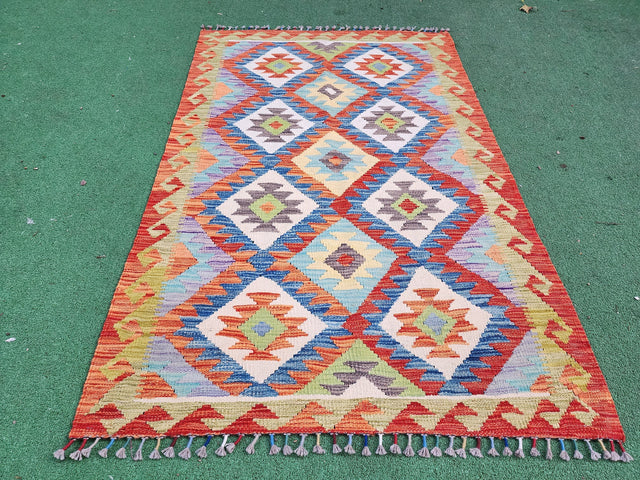
Vintage runners do not always follow standard modern sizes. Use the centimetre measurements for the individual piece and ask whether fringe is included if that affects your layout. Review the full-length image and close-ups of the ends and edges. Ask for clarification on wear, repairs or uneven sides before ordering.
Explore runner rugs and hallway rugs. For a wider room plan, see our room-by-room rug size guide. If you have two runners in mind, send us the links and your measurements so our team can help you compare them.
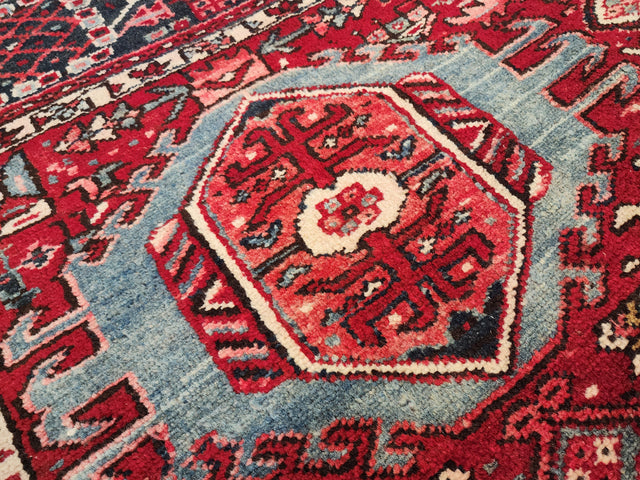
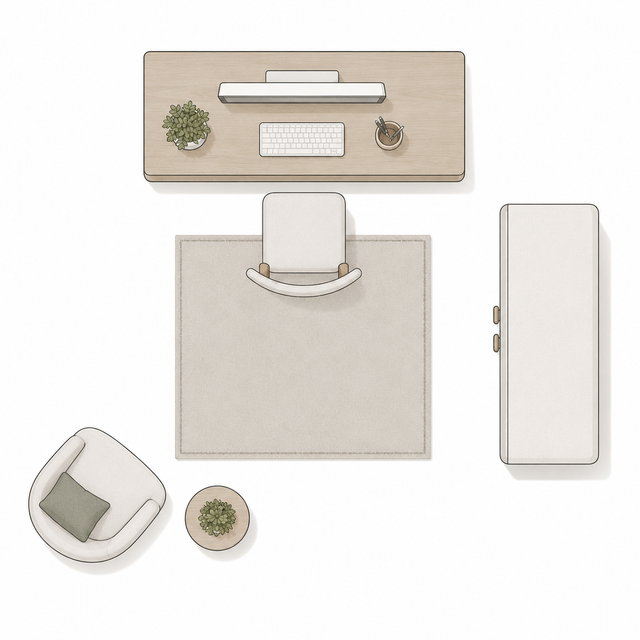
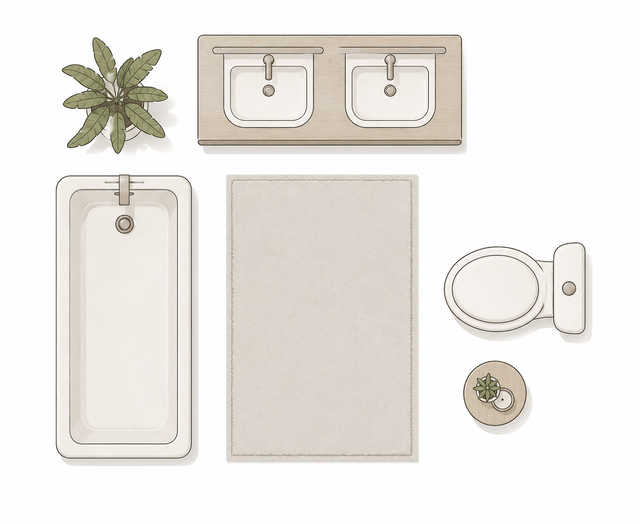
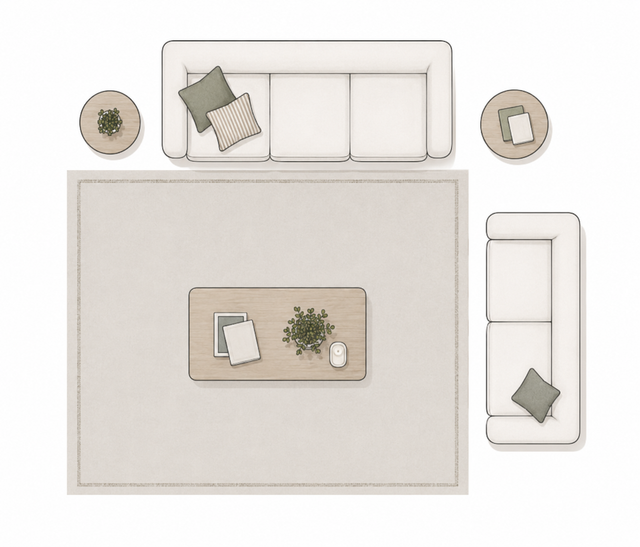
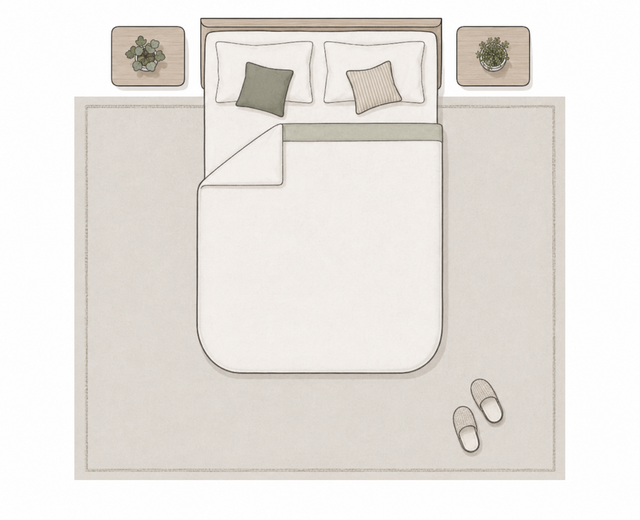
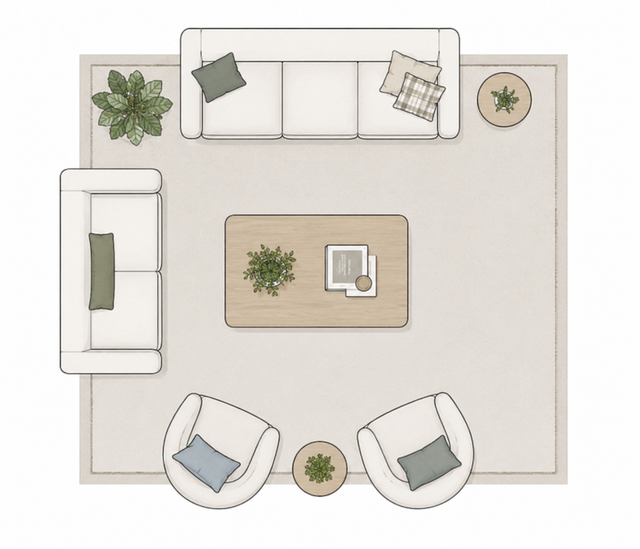
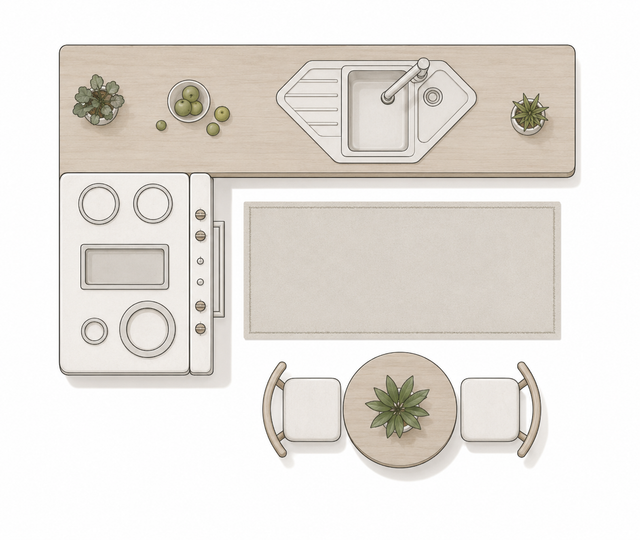
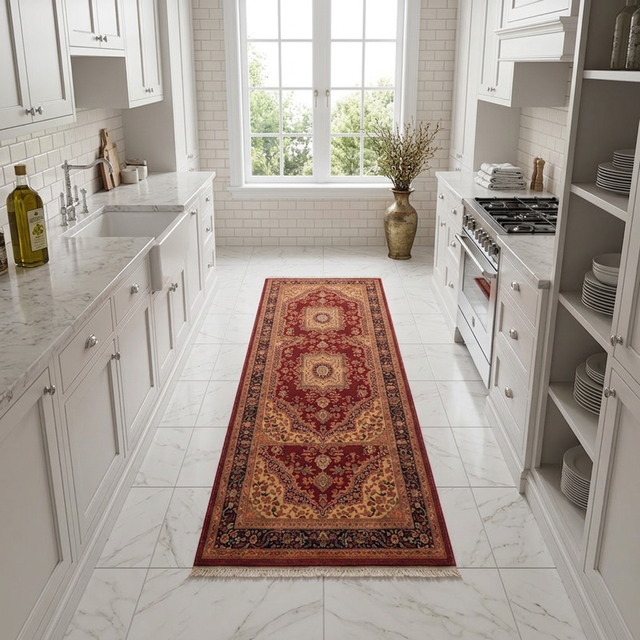
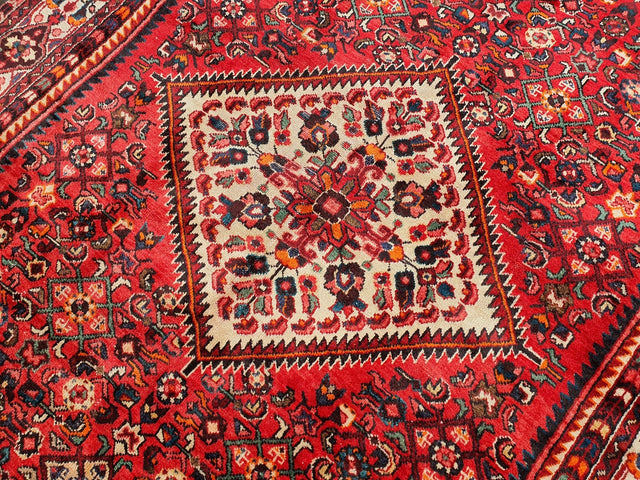
Cover image: AI-generated styling illustration; the pictured rug is not an individual product listing.