
Article: How to Tell If a Rug Is Vintage: 8 Checks Anyone Can Do
How to Tell If a Rug Is Vintage: 8 Checks Anyone Can Do
Quick answer: To tell if a rug is vintage, turn it over and check the back for irregular hand-tied knots, confirm the fringe is part of the warp, look for hand-wrapped edges, natural colour variation and wear that follows foot traffic. Vintage means roughly 20 to 100 years old. No single sign proves age, so look for several that agree.
What does vintage mean for a rug?
In the rug trade, vintage usually means a rug that is at least about 20 years old but not yet 100, while antique means 100 years or more. Those lines are conventions, not laws, so a seller's word alone proves little. What matters is whether the rug shows the physical signs of a hand-made, aged piece. If you want the full definitions, our guide to antique vs vintage Turkish rugs covers where the labels come from.
The checks below are ones anyone can do at home or in a shop, with nothing more than your hands, a bright window and a phone camera. No single check is proof. Look for several signs that agree with each other, and be wary when one or two contradict the rest.
The 8 checks, in the order we do them
- Flip it over. The back is the most honest side of any rug.
- Look at the fringe. Is it part of the rug or sewn on?
- Check the edges. Are the side cords wrapped by hand?
- Read the colours. Is there natural variation within a single colour?
- Study the wear. Does it match how a rug is actually walked on?
- Feel the pile. Wool ages very differently from synthetic fibre.
- Find the asymmetry. Hand weaving is never perfectly even.
- Check for labels and glue. Machine-made rugs leave commercial traces.
The sections below take each in turn, so you can follow along with a rug in front of you.
How does the back of the rug show its age?
Turn a corner over and look at the weave structure. On a hand-knotted rug you will see the pattern repeated on the back in slightly irregular little knots, each one a bit different in size and tension. The lines of the design may wobble a little. On a machine-made rug the back looks uniform and mechanical, often with a stiff latex or fabric backing, and the pattern lines are perfectly straight.
Age shows up as softness. After decades of use the back of a wool rug becomes smoother and the knot tops flatten slightly. The foundation threads, meaning the cotton, wool or sometimes goat-hair warps that the knots sit on, can be seen between rows of knots, and they may look darker where dust and foot traffic have worked in over the years. A back that looks bright and crisp, like a brand-new rug, is a reason to ask more questions.
For a flatweave such as a kilim, there are no knots at all. Instead, look at the back for loose weft ends and small hand-made joins where the weaver changed colour. Both sides of a true kilim show the same pattern. Our article on pile vs flatweave rugs explains the difference in detail.
A quick test with your phone
Take a close-up photo of the back and zoom in. If you can count individual knots in a row and no two neighbouring knots are exactly alike, the rug was tied by hand. If the pattern on the back looks like a printed grid, walk away.
Is the fringe part of the rug?
On a genuine hand-knotted rug, the fringe is the ends of the warp threads, which run the full length of the rug. Gently part the fringe near the end and you can see it continues into the body of the rug. If the fringe is a separate band stitched on with a visible seam line, the rug has either been restored or is a machine-made piece with decorative fringe.
Restored fringe is not a flaw. Many fine old rugs have had their ends re-secured, and good restoration extends the life of a rug. The point is to know what you are looking at, and to ask the seller about it.
Fringe also tells you about wear. Vintage fringe is often slightly uneven, a little shorter at one end, and sometimes lightly knotted or braided by hand. Perfectly even, bright white fringe on a rug that is supposed to be decades old may have been replaced.
What do the edges and selvedge tell you?
The long sides of a hand-made rug are finished with a selvedge, a cord of wrapped warp threads. Run a fingertip along it. On a hand-made rug it is wrapped by hand, often in a slightly different colour from the field, and the wrapping may vary in tightness. A machine-made rug typically has a serged (overlocked) edge, a neat, repetitive stitch that is easy to spot once you have seen it.
The selvedge is also where wear shows first. Look for areas where the wrapping has worn thin and the warps show through. Those spots are normal on an older rug and, if they are small, can be repaired by a skilled restorer. Our page on handmade rug repair describes what is involved.
Can the colours tell you if a rug is old?
Yes, with caution. Traditional Anatolian dyes came from plants and insects, such as madder root for reds, and they tend to mellow rather than fade evenly. You often see abrash, a gentle band of colour variation across the field where one batch of wool ran out and the weaver started another. Abrash is a sign of hand dyeing and hand weaving. See our story on natural dyes used by Anatolian weavers for how this works.
Two things to watch:
- Even, flat colour with no variation anywhere usually points to modern industrial dyeing or a printed pattern.
- Colour that is richer at the base of the pile than at the tips is a good sign. Part the pile with your fingers: the colour deep down shows how the rug looked before light and washing softened the surface.
Note that vintage rugs may also be made with synthetic (aniline) dyes, which were widely used in Anatolia from the late 19th century on. Synthetic dyes do not rule out an old rug. They do mean you cannot date a rug by colour alone.
How should wear look on a vintage rug?
Real wear follows real life. Look for these patterns:
- Lower pile in the centre and along the walking path, with the ends and corners less worn.
- Softening of the pile and gentle bleaching on the side that faced a window.
- Small marks, repairs or slight edge wear that look natural and uneven.
Be suspicious of wear that looks the same everywhere. Artificially distressed rugs are sanded, bleached or chemically washed to look old, and the effect is often too even, with wear in places no foot has ever touched, such as the very edge of a border. Another sign is a chemical smell or a dull, chalky look to the wool.
A rug that has been worn and loved is not a lesser rug. Our guide to caring for a vintage wool rug explains how to keep it healthy for decades.
How does the pile feel?
Handle the rug. Hand-spun wool has a springy, slightly oily feel with small variations in thickness. After years of use, the pile develops a soft sheen from foot traffic and gentle cleaning. Synthetic fibres feel smooth and slippery, sometimes plasticky, and do not have the warmth of wool in your hand.
Weight is also a clue. A hand-knotted wool rug is heavy and folds thickly, while many machine-made rugs of the same size are lighter and stiffer. Our comparison of hand-knotted, hand-tufted and machine-made rugs goes further.
Where do you see asymmetry?
No hand-made rug is perfectly symmetrical. Borders narrow or widen slightly, a motif on the left may differ in size from its twin on the right, and the rug may be a few centimetres wider at one end. In Anatolian weaving, such irregularities are part of the charm. Our note on reading vintage rug dimensions in cm and feet shows why a 6x9 is rarely exactly 6 by 9 feet.
A rug that is perfectly square, with every motif a clone of its neighbour, was almost certainly produced by machine or by a very standardised workshop process.
Common sizes of vintage Turkish rugs
Size can help you narrow things down. Traditional Anatolian looms were narrow, so many older rugs are small or runner-shaped.
| Type | Typical size (ft) | Typical size (cm) |
|---|---|---|
| Door or prayer-size rug | 2.5 x 4 to 3 x 5 | 75 x 120 to 90 x 150 |
| Small area rug | 3 x 5 to 4 x 6 | 90 x 150 to 120 x 180 |
| Medium room rug | 5 x 7 to 6 x 9 | 150 x 210 to 180 x 275 |
| Runner | 2.5 x 10 and longer | 75 x 300 and longer |
These are guides, not rules, and any single rug may vary by a few inches either way.
Check for labels, stamps and glue
Finally, look for what should not be there. A woven or printed label, a barcode, a rubber or latex backing, or glue lines along the underside are all signs of a machine-made rug. Genuine hand-made rugs rarely carry commercial labels. A small dealer tag or stitched inventory number is normal and does not mean the rug is new.
When should you ask for more proof?
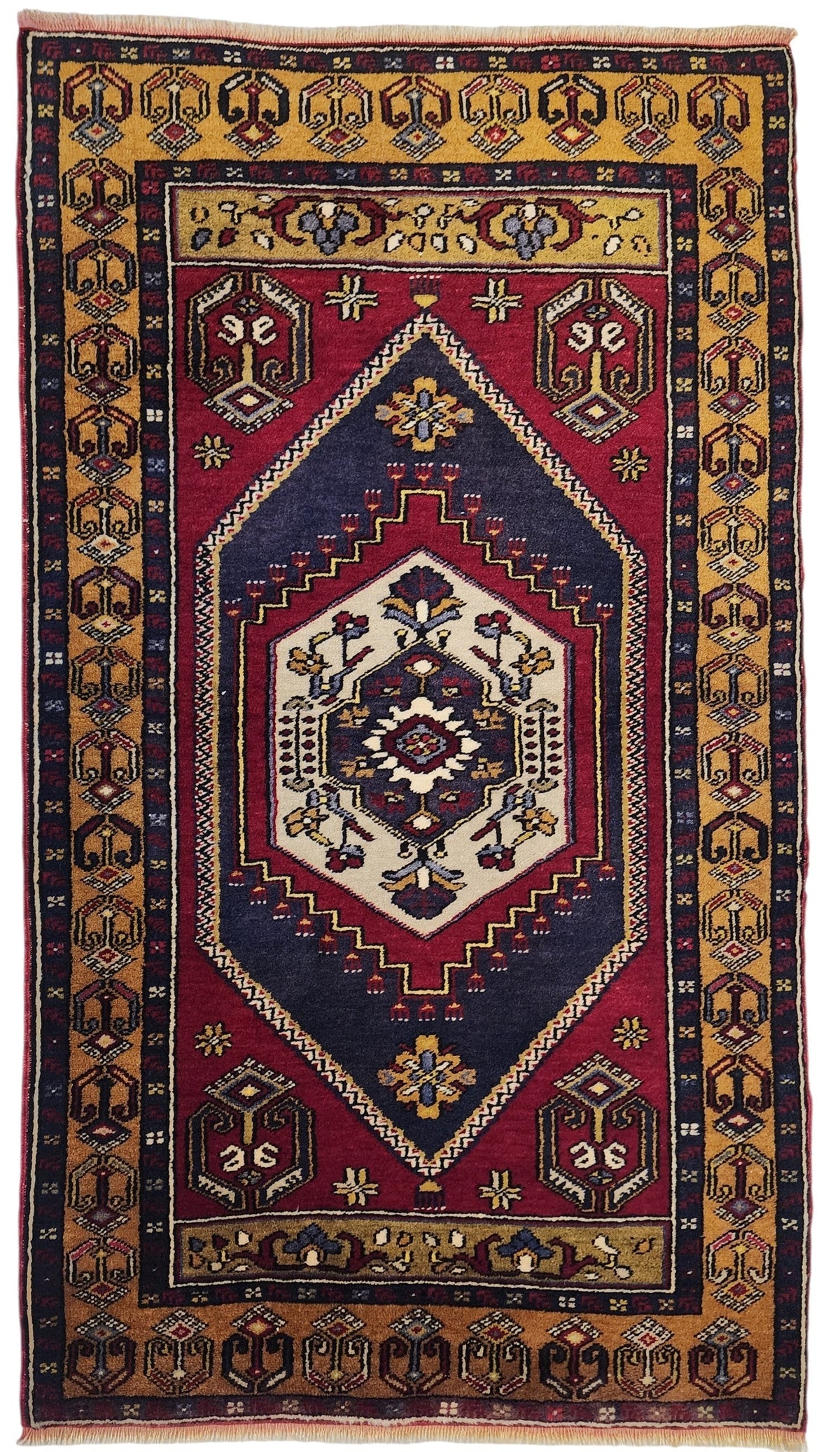
If a rug is expensive or you plan to treat it as a long-term piece, ask the seller for clear photos of the front, back, fringe and edges, and for the exact size. Each piece we sell is one of a kind and described individually, so you can judge the details yourself. You can browse our vintage rugs and antique rugs, or start with the hand-knotted rugs collection to see these details on real pieces. One example is the vintage Kayseri rug, 2x3, a small hand-knotted piece you can study for knot structure and edge finish.
Whatever you buy, remember that no single sign proves age. When the back, fringe, edges, dye and wear all tell the same story, you can be confident in what you are holding.
Pieces from our collection
Every piece below is one of a kind and in stock today:
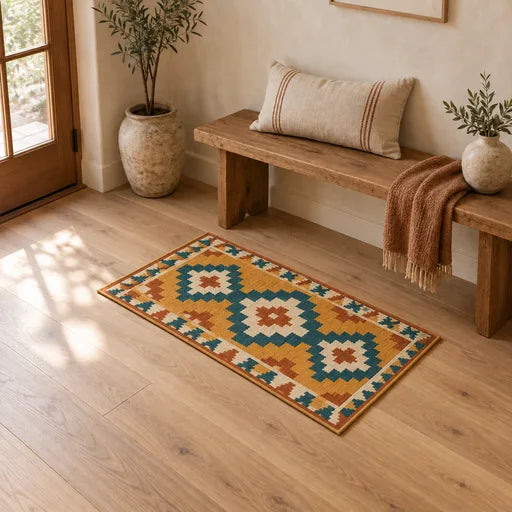
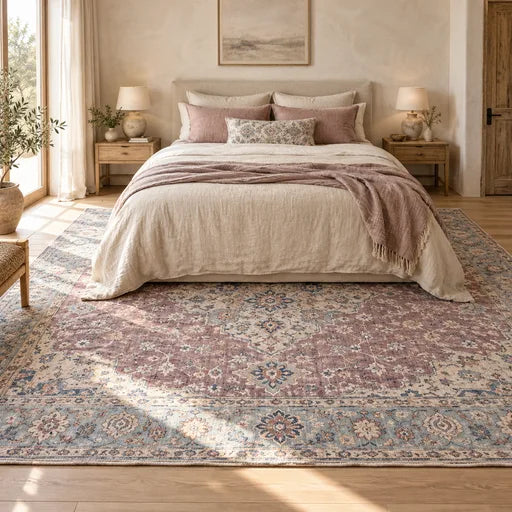
- Eulalia — Vintage Kayseri Rug, 2x3
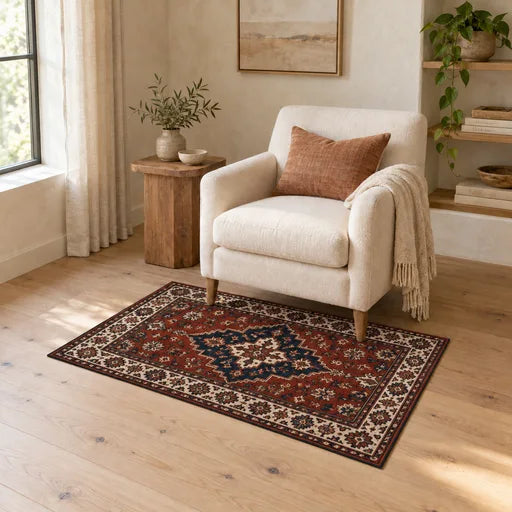
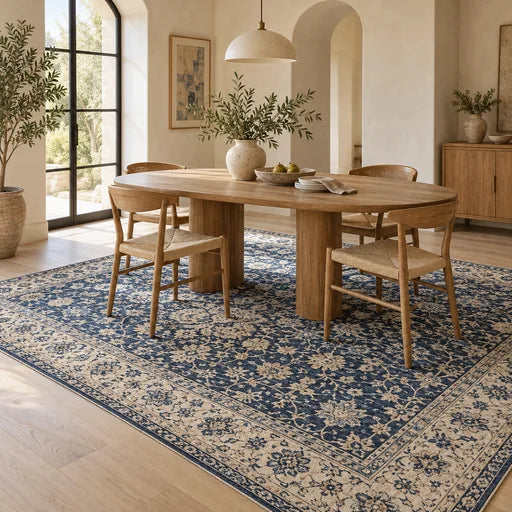
- Dione — Vintage Konya Rug, 2x3
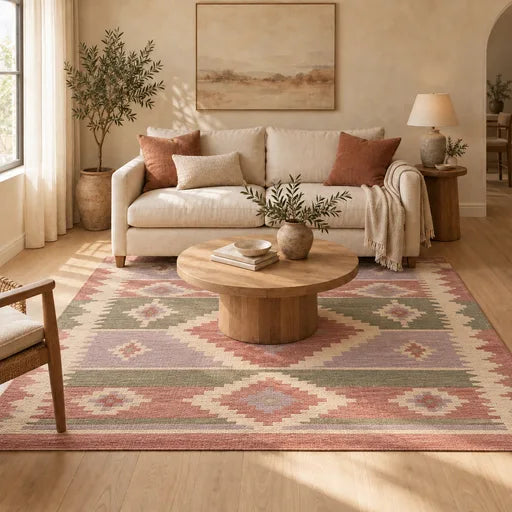
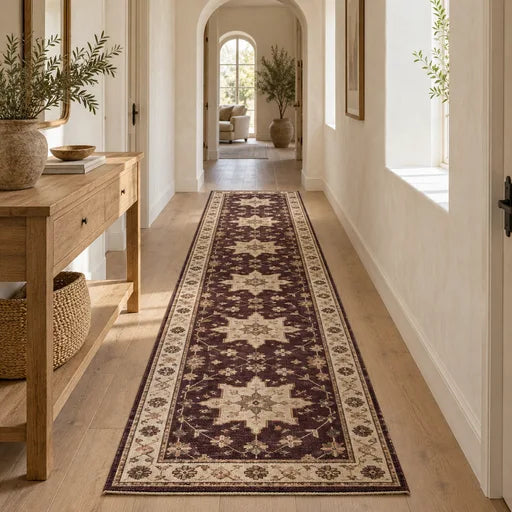
- Hekuba — Vintage Yahyalı Rug, 3x5
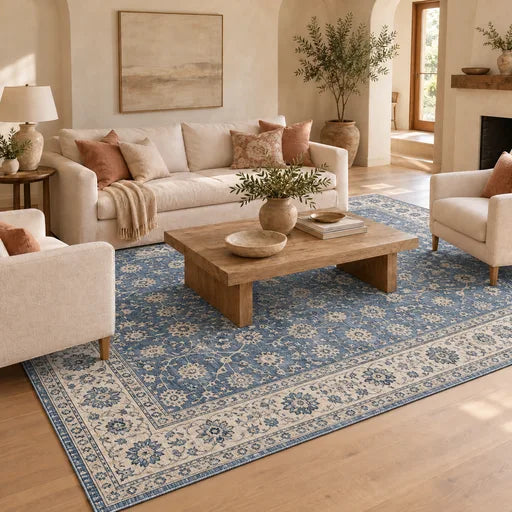
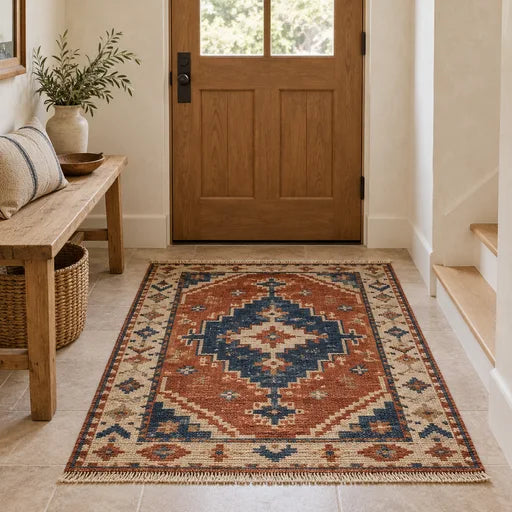
- Penthesilea — Vintage Işıklar Rug, 5x7
Frequently asked questions
How old does a rug have to be to be called vintage?
In the rug trade, vintage generally means at least about 20 years old and under 100, while antique means 100 years or more. These are trade conventions rather than legal definitions, so different sellers apply them slightly differently. Ask a seller what they base the label on, and look for physical signs of age yourself.
Can a machine-made rug look vintage?
Yes. Some machine-made rugs are printed or washed to look faded and worn. The tells are the back, which is uniform with a latex or fabric backing, plus an overlocked edge, sewn-on fringe and evenly distributed wear. Hand-knotted rugs show irregular knots on the back and fringe that continues from the warp threads.
Does fading mean a rug is old?
Not always. Natural fading from sunlight and years of use is gentle and uneven, with rich colour still visible deep in the pile. Chemical washing can produce a flat, even fade quickly. Part the pile and compare the colour at the base with the surface, and check whether the fading matches where light would have fallen.
Does a vintage rug need to be perfect?
No. Some wear, minor repairs and slight irregularity are normal in a hand-made rug that has been used. What matters is that the structure is sound, the wool is healthy and any repairs are well done. Ask for photos of the back and edges so you know the condition before you buy.
Written by the team at Heritage Nomadic Art Gallery in Sultanahmet, Istanbul, the gallery behind TurkishRug.com, where every rug and pillow is chosen, washed and photographed by hand. Last updated October 25, 2026.

