






























Article: Can You Wash Wool Pillow Covers? Tulu, Rug and Kilim Care
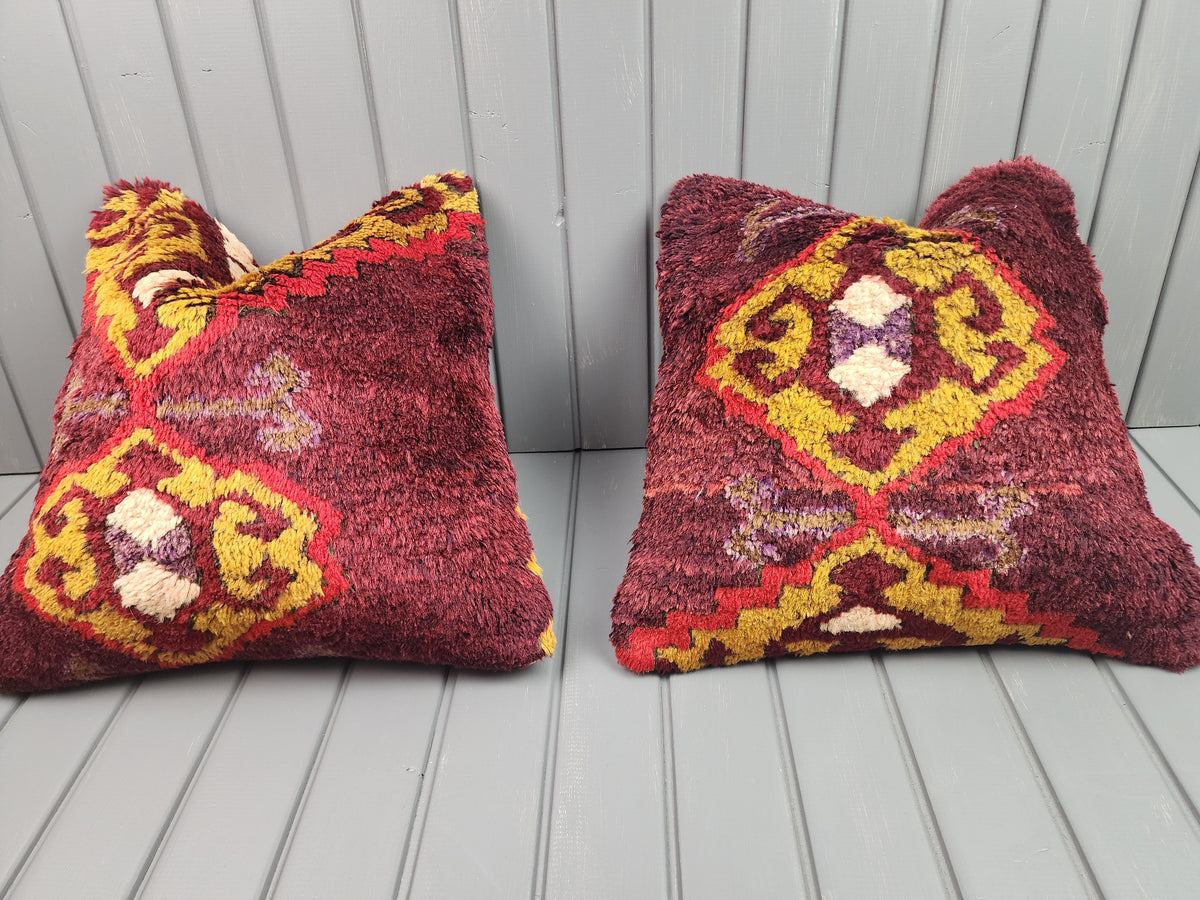
Can You Wash Wool Pillow Covers? Tulu, Rug and Kilim Care
Quick answer: Yes, you can clean wool pillow covers, but gently. Shake, vacuum on low suction, and spot clean with cool water and mild soap first. If the whole cover needs it, hand wash in cool water for 10 to 15 minutes and dry flat. Avoid the washing machine, hot water and tumble dryer, which mat tulu pile and can shrink the cover.
Can you wash wool pillow covers at all?
Yes, but "wash" needs a careful definition. A wool pillow cover can be spot cleaned, aired, brushed, vacuumed and, when it is truly dirty, hand washed in cool water. What we do not recommend is the washing machine, a hot cycle or the tumble dryer. Those are the three things that turn a soft, springy surface into a flat, tight, sometimes shrunken one.
The reason is the material. Wool fibres have microscopic scales. Heat, water and agitation together make those scales lock into each other, which is exactly how felt is made. A tulu cover, with its long, loose pile, is especially exposed to this, because the strands can tangle into clumps. A flat kilim cover is a tighter weave and more forgiving, but it has its own risk, covered below.
Our covers are cut from real vintage and antique rugs, kilims and tulu pieces, and finished with a cotton back and a concealed zipper. That means two different fibres in one object, which can shrink and dry at different rates. That is another good reason to keep the whole cover away from a hot, spinning drum.
First, work out which kind of cover you have
The right method depends on the face of the cover. The three faces we make are quite different to clean.
| Cover face | What it is | Washing risk | Best routine |
|---|---|---|---|
| Tulu | Long, shaggy hand-knotted pile | Matting and tangling when wet or rubbed | Shake, comb, spot clean, rare cool hand wash |
| Rug (pile) | Cut from a knotted rug such as an Oushak | Dye bleed, uneven drying | Vacuum with a brush head, spot clean, professional clean if needed |
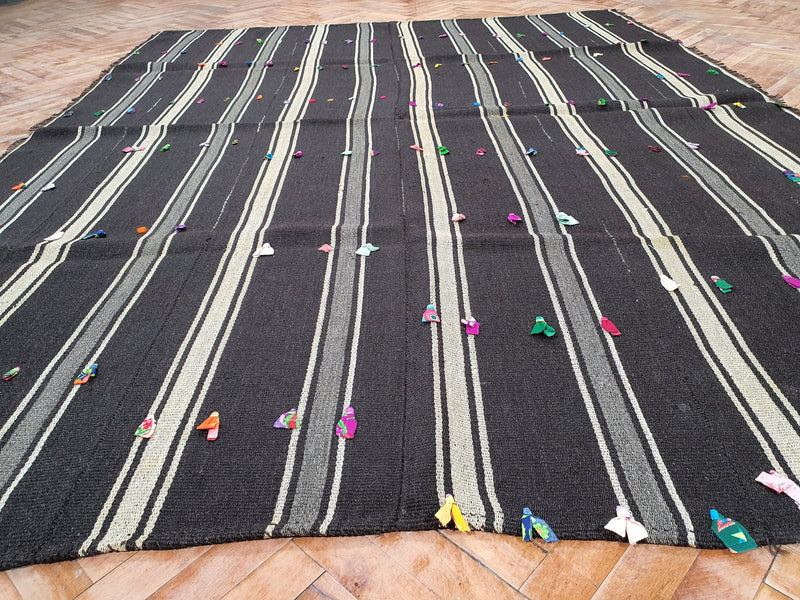
| Kilim | Flat woven, no pile | Dye bleed and edge distortion | Shake, vacuum gently, spot clean, cool hand wash if needed |
If you are still deciding between faces, our guide to kilim, rug and tulu pillow covers explains how they differ in feel and in day-to-day wear.
What should you do before you reach for water?
Most pillow covers never need a real wash. Dust and light grime sit on the surface, and dry methods remove them without any risk to colour or shape. Try these first:
- Take the insert out. Unzip the concealed zipper and remove the pillow insert. Inserts are not included with our covers, so yours is your own and can be cleaned or replaced on its own schedule.
- Shake it outdoors. Hold the cover by the zipper edge and shake it firmly. A surprising amount of dust leaves a pile cover this way.
- Vacuum on low suction. Use the soft brush attachment, lay the cover flat, and go in the direction of the pile. Never use a beater bar, which tears up loose strands.
- Comb a tulu face. A wide-tooth comb, lifted gently through the strands, separates tangles and brings the shaggy texture back.
- Air it. Leave the cover flat in shade with good air movement for several hours. Direct sun fades old dyes over time.
These steps take about ten minutes and are enough for most sofas and beds. They are also the basics we describe in our guide to caring for kilim and rug pillow covers.
How do you spot clean a wool pillow cover?
For a single mark, such as a coffee drip or a pet accident, spot cleaning does far less harm than a full wash.
- Blot, never rub. Press a clean white cloth onto the mark to lift liquid. Rubbing pushes the stain deeper and roughens wool fibres.
- Test for colour first. Dampen a white cloth with cool water and press it on an inconspicuous edge for ten seconds. If any colour transfers to the cloth, stop and take the cover to a professional rug cleaner.
- Use a small amount of mild cleaner. A few drops of a wool-safe or very mild liquid soap in a cup of cool water is plenty. Apply with a cloth, not poured on.
- Rinse by blotting. Use a second cloth with plain cool water to take the soap back out.
- Dry flat. Press out moisture with a dry towel and let the cover lie flat until the face and the cotton back are fully dry.
Avoid bleach, stain removers with optical brighteners, and anything labelled for synthetic carpet. Old and natural dyes can react to them.
How do you hand wash a wool pillow cover when it is really dirty?
If the whole cover has gone dull or smells stale, a gentle hand wash is the most we would attempt at home, and only after the colour test above passes.
- Fill a clean basin or bath with cool water, around 20 to 25 °C (68 to 77 °F). Never use hot water.
- Add a small amount of mild wool detergent and swish the water to mix it.
- Lay the cover in the water and press down gently a few times. Do not wring, twist or scrub.
- Leave it for no more than 10 to 15 minutes, then lift it out, supporting its full weight.
- Rinse in clean cool water until no soap remains.
- Press the water out between towels, reshape the cover to its original rectangle, and dry flat.
Drying takes a day or more, because the pile holds water. Keep it away from radiators and direct heat, and turn it over once. Do not hang a wet cover by one edge, because the weight of the water will stretch it.
For tulu, once it is dry, comb the strands gently to separate them. For a flat kilim cover, gently pull it square while still slightly damp to keep the edges true.
Can you put a wool pillow in the washing machine?
This question often means the insert rather than the cover, so it is worth splitting in two.
The cover: we say no. Even on a wool or delicate programme, tumbling and spinning will mat tulu pile and can distort the edges of a kilim. Cotton backing and wool face can also shrink unevenly, leaving a wavy surface and a zipper that no longer sits flat.
The insert: follow the care label on your own insert. Many polyester and feather inserts are washable, and washing them regularly keeps the whole cushion fresher, so the cover needs washing less often. Because our covers are sold without inserts, choosing a washable insert is a simple way to make life easier.
When should you call a professional instead?
Some situations are better handled by a specialist rug cleaner than by you:
- Colour transfers to your white cloth during the test.
- The cover is an antique piece with fragile, thin areas or old repairs.
- There is a pet urine stain or a large spill that has soaked through to the back.
- You see mould or a persistent damp smell.
A good cleaner treats these pieces the way they treat small rugs. To understand the principles behind that, see how we look after full-size pieces in our guide to caring for a vintage wool rug.
How can you keep wool covers clean for longer?
The easiest cleaning is the cleaning you avoid. A few habits stretch the time between washes by a long way:
- Place them thoughtfully. Tulu on a bed or reading chair that is used for sitting, not for eating, stays cleaner than on a family sofa with snacks.
- Rotate and plump. Turn the cushion over and move it around so one side does not take all the wear.
- Brush weekly. A soft brush or quick vacuum once a week stops dust settling into the pile.
- Keep them dry. Wool tolerates humidity, but not repeated wetting. Do not leave them on a damp window seat.
- Protect from sun. Move covers out of strong afternoon light now and then.
Tulu has a particular character: a deep, tactile surface that people love for exactly the reason it needs care. Our piece on choosing and styling fluffy wool cushion covers shows how to put it to use in a room so that it earns its place.
Choosing covers that are easy to live with
If low maintenance matters most, a kilim cover is the simplest to keep clean, because its flat face holds less dust. A rug-face cover sits in the middle. Tulu asks for a little more attention, and gives back the most texture. All three are cut from real handmade pieces, so every cover is one of a kind, and each is sold singly or as a pair, with free worldwide shipping and 14-day returns.
You can browse the tulu pillow covers, the rug pillow covers and the kilim pillow covers. A good example from the shaggy range is this antique Konya tulu shaggy pillow cover set of two in purple and yellow. Like every cover we sell, it has a cotton back and a concealed zipper.
Whichever you choose, the rule is the same. Go dry first, spot clean second, hand wash in cool water as a last resort, and never use heat. That keeps the wool soft, the colours steady and the cover looking right for many more years of daily use.
Pieces from our collection
Every piece below is one of a kind and in stock today:
- Termessa — Antique Konya Tulu Shaggy Pillow Covers, Set of 2
- Iconia — Antique Konya Tulu Shaggy Pillow Covers, Set of 2
Frequently asked questions
Can you wash a wool pillow cover in the washing machine?
We advise against it. Heat, spinning and agitation make wool fibres lock together, which flattens or mats tulu pile and can warp the edges of a kilim. The cotton back may also shrink differently from the wool face. Spot cleaning and a cool hand wash are much safer, and a specialist rug cleaner can handle heavy soiling.
How do you clean a shaggy tulu pillow cover?
Shake it outdoors, vacuum gently with a soft brush attachment on low suction, then comb the strands with a wide-tooth comb to lift tangles. For marks, blot with a cloth dampened in cool water and a drop of mild soap, then blot dry. Always dry it flat, away from radiators and direct sunlight.
Will the colours run when I wash a vintage kilim or rug cover?
They can, especially on older pieces with certain dyes. Before using any water, press a damp white cloth on a hidden edge for about ten seconds. If colour shows on the cloth, do not wash it at home. Take it to a professional rug cleaner who can test and treat the dyes safely.
How long does a wool pillow cover take to dry?
After a cool hand wash, expect a day or longer. The pile and the cotton back both hold water, so the cover should lie flat in a well-aired room and be turned once. Do not use a tumble dryer, heater or hair dryer, and never hang it wet by one edge.
Do your pillow covers come with an insert I can wash?
No. Our covers are sold without inserts, so you choose your own. A washable polyester or feather insert is practical because you can refresh it separately as often as needed, which means the wool cover only needs occasional gentle care.
Written by the team at Heritage Nomadic Art Gallery in Sultanahmet, Istanbul, the gallery behind TurkishRug.com, where every rug and pillow is chosen, washed and photographed by hand. Last updated November 10, 2026.